How to Remove Collections From Your Credit Report: Every Method, Step by Step
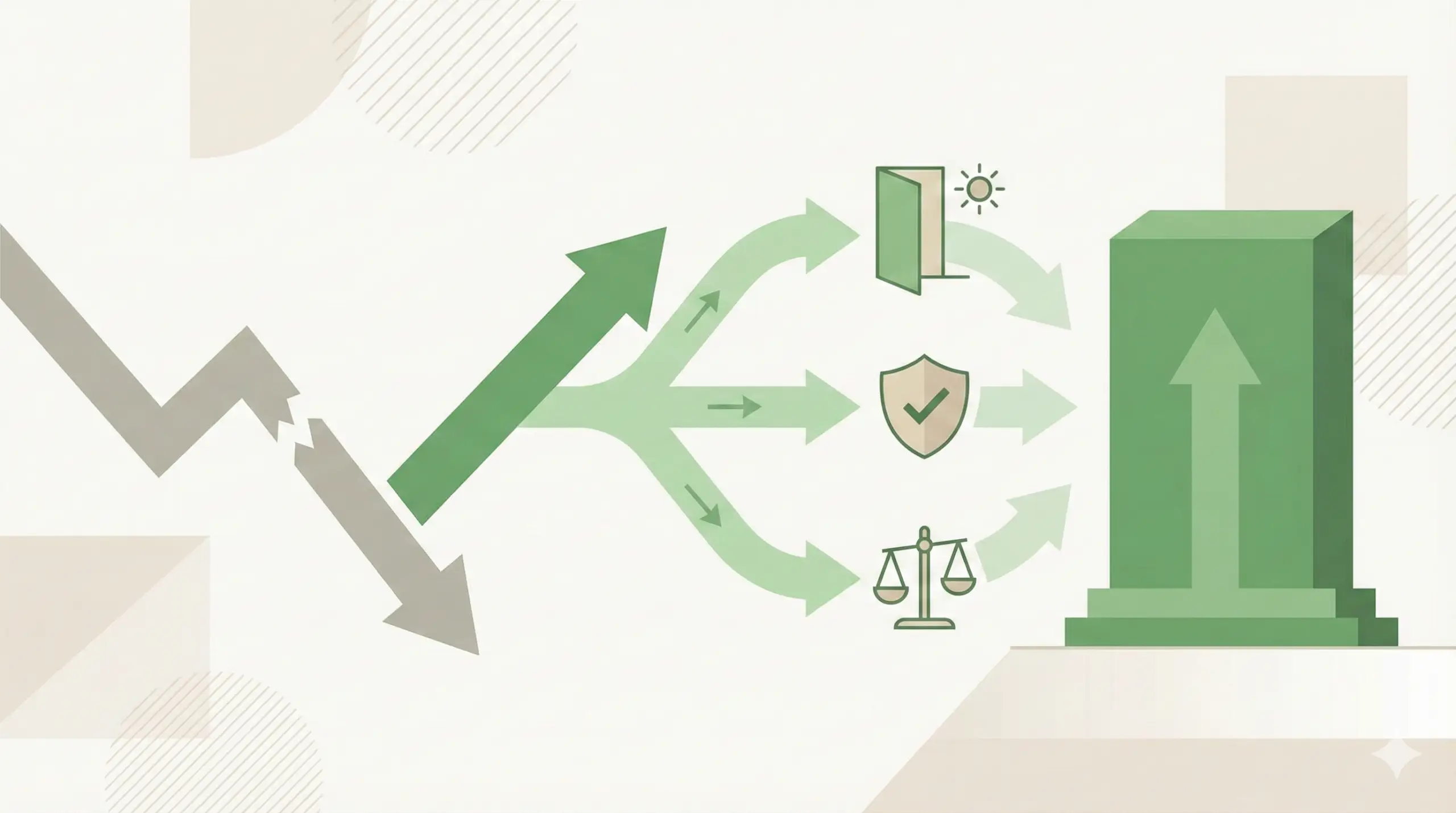
Collection accounts can be removed from your credit report through four distinct mechanisms: successful dispute of inaccurate information, debt validation failure, negotiated pay-for-delete agreements, and natural aging off the report after seven years. Here is the complete process for each, including what works, what doesn’t, and how to execute each step correctly.
A collection account on your credit report affects more than your credit score. It affects the interest rate you qualify for on a mortgage, the terms available on a car loan, and in some cases your ability to rent an apartment or pass an employer background check. Removing it — or understanding precisely when it will age off — is among the highest-return activities in personal credit management.
There are legitimate methods for removing collection accounts before the seven-year reporting period expires, and there are approaches that waste time or backfire. This guide covers the legitimate methods in full detail, explains what each one requires, and gives you the complete execution process for each approach.
The Foundation: How Collection Accounts Work on Your Credit Report
Before addressing removal, understanding what a collection account actually represents on your report matters.
When an original creditor — a credit card issuer, medical provider, utility company, or lender — concludes that a debt is uncollectable through its own efforts, it typically charges off the account and either transfers it to an internal collections unit, assigns it to a third-party collector, or sells it outright to a debt buyer. The collection agency then reports a new account entry under their name.
The result is that your credit report may contain: the original account from the original creditor (showing the late payment history and charge-off status), and the collection account from the collector (showing the balance and collection status). These are two separate entries, each affecting your score, both subject to the same seven-year reporting clock — starting from the date of first delinquency on the original account.
The date of first delinquency is the foundational date for everything that follows. It is the date of the first missed payment that led — without a subsequent period of being brought current — to the eventual charge-off and collection. It is not the date the debt was sold, not the date you were first contacted by the collector, and not the date you made any payment to the collector. Seven years from this date, both the original charge-off entry and the collection account entry must be removed from your report.
Method 1: Dispute Inaccurate Information
This is the most powerful and most frequently applicable removal mechanism. The Fair Credit Reporting Act (FCRA) requires that credit bureaus maintain accurate, complete, and verifiable information. Any collection account entry that contains inaccurate information — in any material detail — is disputable, and if the bureau cannot verify the accuracy, they must correct or remove it.
What Constitutes Disputable Inaccuracy
Incorrect date of first delinquency: This is the most impactful inaccuracy to identify and dispute. If the date is reported as more recent than the actual date — a practice called re-aging — the collection account will appear on your report for longer than the law permits. Verify this date against your original account records, prior credit report snapshots, or the original creditor’s documentation.
Incorrect balance: Collection balances sometimes include fees, interest, or charges not authorized by the original credit agreement or state law. If the reported balance exceeds what was legitimately owed, this is disputable.
Incorrect account status: An account reported as “open” or “active” that should be “closed” or “paid” is inaccurate. An account reported with an outstanding balance after a payment or settlement that closed it is inaccurate.
Duplicate entries: When debt is sold between collectors, multiple agencies may report the same underlying debt as separate collection entries. A single debt can only be legitimately reported once — duplicate entries are disputable.
Account belonging to someone else: Identity theft, data entry errors, or file-mixing (where two consumers’ data is merged) can produce collection accounts that belong to another person. These are disputable and removable.
Entries beyond the seven-year reporting window: If a collection account’s date of first delinquency was more than seven years ago, the entry should have been removed automatically. If it hasn’t been, it is disputable on this basis.
How to File a Credit Bureau Dispute Correctly
Step 1: Pull all three bureau reports and identify every inaccuracy. Use AnnualCreditReport.com to access your reports from Equifax, Experian, and TransUnion. Review the collection account in question on each bureau’s report separately — the same account may be reported differently across bureaus, and each requires a separate dispute.
Step 2: Gather documentation that supports your dispute. The strength of your dispute is directly proportional to the quality of your supporting documentation. Original account statements, prior credit report printouts showing the correct date of first delinquency, payment confirmations, settlement agreements, and correspondence from the original creditor or collector all constitute relevant documentation.
Step 3: Write a specific, documented dispute letter. A vague dispute — “this account is wrong, please remove it” — produces a superficial investigation and a likely verification response. A specific, documented dispute identifies the exact inaccuracy, states the correct information, and provides documentation supporting your position.
Your dispute letter should include:
- Your full name, address, date of birth, and Social Security number (the last four digits is sufficient for identification)
- A clear identification of the account: creditor name, account number, and the bureau’s reference number for the entry
- The specific inaccuracy you are disputing, stated precisely
- The correct information and your basis for knowing it is correct
- A list of the documentation you are including
Step 4: Send via certified mail with return receipt. Online dispute portals are convenient but create a thinner documentation trail than certified mail. For collection accounts — particularly where you anticipate a possible re-dispute or escalation — mailed disputes produce a better evidentiary record. Send copies of your documentation, never originals. Retain your certified mail receipt and return receipt card as proof the bureau received your dispute.
Step 5: The bureau’s investigation timeline. Bureaus are required to investigate within 30 days of receiving your dispute — extended to 45 days if you submit additional information during the investigation period. The bureau contacts the collector to verify the disputed information. If the collector cannot verify it — meaning they cannot confirm the specific disputed information is accurate — the bureau must correct or remove the entry.
Step 6: Review the investigation result. The bureau will send you the result of their investigation in writing. If the item was corrected or removed, verify the change appears on your updated report. If the bureau responded that the information was “verified” without correcting it, you have additional options.
When the Initial Dispute Is Denied
A bureau response stating that disputed information was “verified” does not necessarily end the process. You have the right to request the method of verification — specifically, what information the bureau obtained from the data furnisher and how it was verified. If the collector verified the account by confirming basic identifying information without actually producing documentation of the debt’s validity, this may be challengeable.
You can also file a complaint with the Consumer Financial Protection Bureau (CFPB) if you believe the bureau conducted an inadequate investigation. The CFPB complaint process creates regulatory visibility into the dispute and often prompts re-investigation.
Method 2: Debt Validation — Making the Collector Prove the Debt
The FDCPA requires third-party collectors to provide debt validation upon request. This right is most powerful within 30 days of first contact — during which period the collector must cease collection activity until they provide validation. Outside this window, you can still request validation, but the collector is not required to suspend collection activity while doing so.
Debt validation is relevant to credit report removal when: the collector cannot produce adequate documentation of the debt, the collection entry contains inaccuracies revealed by the validation documents, or the collector stops responding after receiving a validation request.
What Adequate Validation Requires
Send your validation request via certified mail with return receipt requested. Keep a copy. Request that the collector provide:
- Documentation confirming their legal right to collect this debt — typically the purchase agreement or assignment from the original creditor
- A complete accounting of the balance claimed, showing how each component was calculated
- The name and address of the original creditor
- The date of first delinquency
- Proof that the collector is licensed to collect debts in your state (where state licensing is required)
Using Failed Validation to Dispute With Bureaus
If the collector fails to respond with adequate documentation, or if the documentation they provide reveals inaccuracies in what was reported to the bureaus, use this as the basis for a bureau dispute. Include documentation of your validation request and the inadequate or nonexistent response. If the collector cannot validate the debt, they cannot verify it to the bureau — which means the bureau cannot verify it either, and the entry should be removed.
Method 3: Pay-for-Delete Negotiation
Pay-for-delete is an agreement to pay the collection account — in full or at a negotiated settlement amount — in exchange for the collector requesting deletion of the collection entry from your credit reports. It is not a legal right. It is a negotiated outcome that requires the collector’s agreement.
Who Will and Won’t Agree to Pay-for-Delete
More likely to agree: Smaller, independent third-party collection agencies — particularly those who purchased the debt at significant discount and have flexibility in their reporting decisions.
Less likely to agree: Major credit card issuer collections departments, large national debt buyers with standardized reporting procedures, and medical debt collectors operating under hospital system policies. These entities typically cite their data furnisher agreements with the credit bureaus as the basis for declining.
The practical reality: pay-for-delete is worth requesting in every situation, because the cost of asking is zero and the benefit of a successful negotiation — complete removal of the entry under any scoring model — is significant. Request it as a condition of settlement, before paying, even if you expect it to be declined.
How to Negotiate Pay-for-Delete
Contact the collection agency and request to speak with someone in an account resolution or settlement capacity. Make clear that you are interested in resolving the account and ask whether they have flexibility to remove the credit entry as part of a settlement.
If they express openness, propose specific terms: payment of [amount] in exchange for a written commitment to request deletion of the account from Equifax, Experian, and TransUnion within [timeframe — typically 30 days of confirmed payment receipt].
Critical requirement: Do not make any payment until you have the pay-for-delete agreement in writing, on company letterhead, signed by an authorized representative, and containing the specific terms: the payment amount, the accounts to be deleted, the bureaus from which deletion will be requested, and the timeframe for the deletion request.
A verbal promise from a phone representative is not enforceable. Collectors who agree verbally but decline to put it in writing are not offering a genuine pay-for-delete agreement.
After payment, verify deletion by pulling all three bureau reports 30 to 60 days later. If the entry has not been deleted, follow up with your written agreement as documentation. If the collector does not fulfill the written commitment, you may have a breach of contract claim.
When Pay-for-Delete Isn’t Available: “Paid in Full” as an Alternative
If pay-for-delete is declined, negotiating for the account to be updated to “Paid in Full” — rather than “Settled” or “Settled for Less Than Full Amount” — is still a meaningful improvement. Under FICO 9 and VantageScore 3.0 and 4.0, paid collection accounts are ignored entirely. For borrowers whose lenders use these models, paying a collection account produces credit score improvement even without deletion. The entry remains on the report but stops affecting the score.
Method 4: Goodwill Deletion Request for Paid Accounts
If you have already paid a collection account in full and did not negotiate pay-for-delete at the time of payment, a goodwill deletion request — sent directly to the original creditor or the collector — asks them to remove the entry as an accommodation based on your subsequent payment history or the circumstances of the original delinquency.
Goodwill deletion requests are long shots. They are more likely to succeed when: the delinquency was genuinely isolated (a medical emergency, job loss, or administrative error rather than a pattern), you have a strong payment history before and after the delinquency, and you’re requesting from a creditor with whom you have an established relationship.
The request should be brief, factual, and specific. Explain the circumstances that led to the delinquency, reference your payment history, and ask — politely and directly — whether the creditor would consider requesting removal of the collection entry as a goodwill accommodation.
Goodwill deletion requests produce results occasionally, not reliably. But the cost of sending a well-written letter is low, and successful cases are documented across a range of collection and original creditor types.
Method 5: Wait for Natural Aging and Expiration
Every collection account — paid or unpaid, disputed or not — is legally required to be removed from your credit report seven years after the date of first delinquency. This is not optional, it is not subject to collector cooperation, and it applies regardless of whether the debt has been resolved.
Calculate your specific removal date: Add seven years to the date of first delinquency for the account in question. This is when the entry must be removed from your report. Set a calendar reminder one month before this date.
After the date passes: Pull all three bureau reports to confirm the entry has been removed. If it has not been removed after the seven-year window has expired, dispute it with the bureau — this is one of the strongest possible disputes, as the FCRA is unambiguous about the reporting window. Bureaus typically remove clearly expired entries quickly upon dispute.
The diminishing impact before removal: Even before an account ages off completely, its impact on your score diminishes progressively as it ages. A collection account that is five or six years old has considerably less scoring impact than one that is one or two years old — particularly when positive account history has accumulated alongside it. The credit trajectory improves throughout the seven-year period, not just at the removal date.
What Does Not Work: Approaches That Waste Time or Backfire
Disputing Accurate, Verifiable Information as “Not Mine”
Disputing a legitimate, accurately reported collection account on the basis that it’s “not mine” when it is yours — hoping the collector won’t bother to verify it — is a strategy occasionally recommended by disreputable credit repair services. It is unreliable, often unsuccessful, and can be characterized as credit repair fraud when done in bad faith. Bureaus are increasingly sophisticated about recognizing and declining frivolous disputes.
Credit Repair Companies Promising “Guaranteed” Removal
No legitimate service can guarantee removal of accurate, verifiable information from a credit report. Any service making this promise is misrepresenting what credit repair can accomplish. The Credit Repair Organizations Act (CROA) prohibits credit repair companies from making false claims about their services, and the CFPB actively pursues enforcement against deceptive credit repair operations. Legitimate credit counseling services — accredited through the NFCC — provide genuine guidance without false guarantees.
Paying Without a Written Agreement
Paying a collection account without a documented agreement on the credit reporting outcome leaves you in a position where you’ve paid the debt but have no leverage over how it’s reported. Always establish the credit reporting terms in writing before payment.
Frequently Asked Questions
My dispute was “verified” but I believe the information is still wrong. What can I do?
Request the method of verification from the bureau — specifically, what steps they took and what information the data furnisher provided. If the verification was inadequate (for example, if the collector confirmed basic account identifiers without producing actual debt documentation), you can re-dispute with additional evidence, file a CFPB complaint, or consult a consumer protection attorney about a potential FCRA violation claim against the bureau or collector.
Can the same collection account appear multiple times on my report?
The same underlying debt should appear only once per bureau as a collection account. If a debt is sold between collectors, the new collector can open their own account entry, but they should carry over the original date of first delinquency — and the previous collector’s entry should be updated to reflect that the account was sold. Multiple entries from different collectors on the same debt are disputable.
What is the fastest way to remove a collection from my credit report?
If the collection contains verifiable inaccuracies, a well-documented dispute is the fastest mechanism — investigations complete within 30 to 45 days. If the collection is accurate, a negotiated pay-for-delete — executed with a written agreement before payment — can produce removal within 30 to 60 days of payment confirmation. There is no mechanism for same-day or week-long removal of accurately reported collections.
Building Your Credit Profile Alongside the Removal Process
Removing collection accounts is one component of credit recovery. What happens to the rest of your credit profile while the process unfolds matters significantly.
Maintain perfect payment history on every current account. Payment history is the largest factor in your credit score — approximately 35% of the FICO calculation. A single 30-day late mark on a current, active account can produce more immediate score damage than a collection account removal produces benefit. Autopay every current account for at least the minimum payment, without exception.
Manage revolving utilization actively. Keeping credit card balances below 30% — and ideally below 10% — of your total revolving credit limits produces score improvement within a single billing cycle. Utilization is recalculated monthly, making it the most responsive credit factor to deliberate management.
Allow positive history to accumulate. The relative weight of negative items diminishes as positive history accumulates alongside them. A credit profile with three years of perfect payment history following a collection carries the collection’s mark more lightly than one with minimal positive history. Time plus consistent positive behavior compounds.
This article is intended for informational purposes only and does not constitute legal or financial advice. Credit reporting laws and practices may vary and are subject to change. Please consult a qualified financial advisor or consumer protection attorney for guidance specific to your situation.