A credit report is a detailed record of your credit history that shows your accounts, balances, payment behavior, and negative items such as collections. Learning how to read a credit report helps you understand how lenders view your credit and identify errors that may affect future decisions.
A credit report can look confusing at first glance—pages of accounts, codes, dates, and numbers that don’t always come with clear explanations. Yet understanding how to read a credit report is essential for managing credit, correcting errors, and making informed financial decisions.
This guide explains how to read a credit report step by step, breaks down each credit report section, and clarifies common terms—such as what a tradeline means—so you know exactly what you’re looking at and why it matters.
What Is a Credit Report?
A credit report is a detailed record of your credit history, compiled by credit bureaus using information reported by lenders, creditors, and collection agencies.
It shows:
- Who you owe (or owed) money to
- How much credit you use
- Whether you pay on time
- Any negative events, such as collections or bankruptcies
Credit reports are used by lenders, landlords, insurers, and sometimes employers to assess financial risk.
How to Read a Credit Report (Overview)
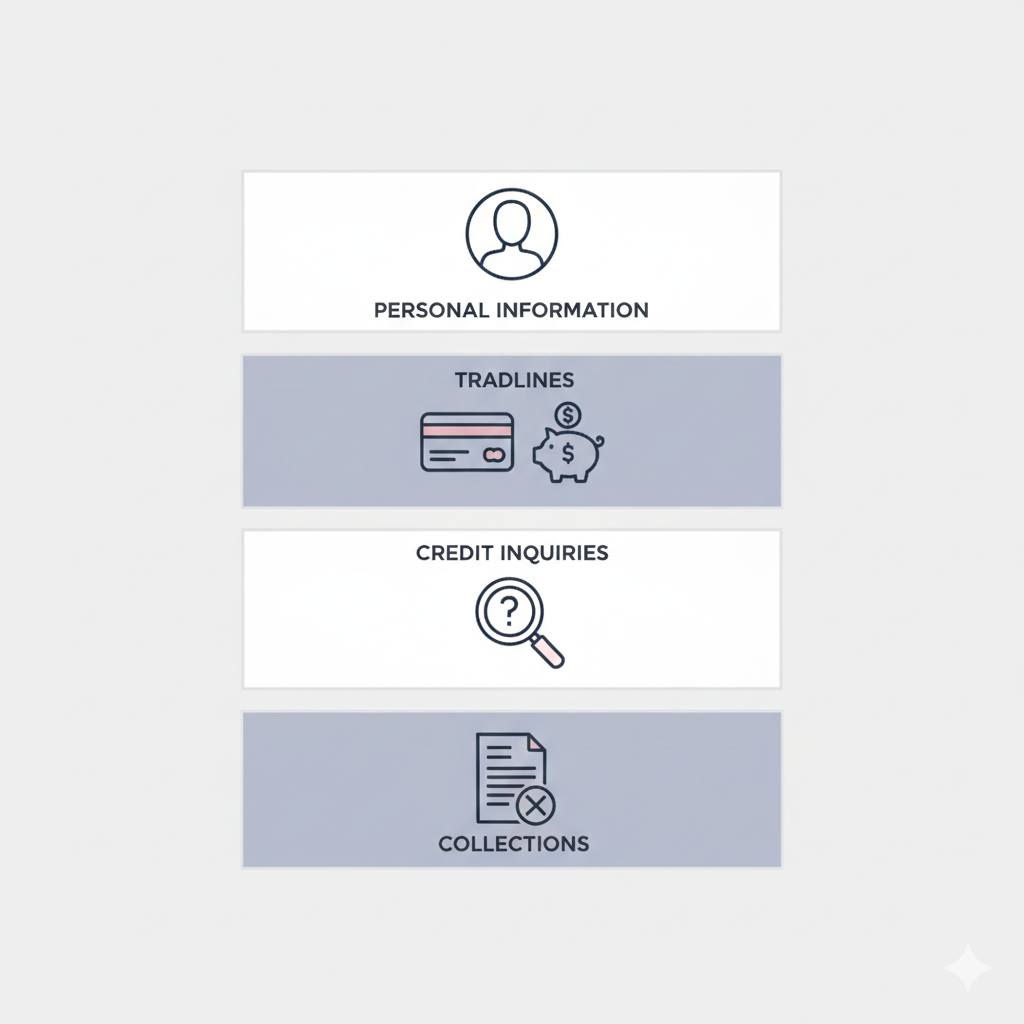
- Review personal information for accuracy
- Examine credit accounts (tradelines) and balances
- Check payment history for late or missed payments
- Review credit inquiries
- Look for collections or public records
While formatting varies slightly by bureau, most credit reports follow the same structure
Understanding each section makes the entire report easier to interpret.
Credit Report Sections Explained
1. Personal Information Section
This section lists identifying details used to match the report to you.
What you’ll see:
- Full name and name variations
- Current and previous addresses
- Date of birth
- Partial Social Security number
- Employment information (if reported)
What to check:
- Accuracy only
- Incorrect information here usually doesn’t affect your score, but errors can indicate mixed files or identity issues
2. Credit Accounts (Tradelines)
This is the most important section of your credit report.
Each account listed is called a tradeline.
Tradeline Meaning
A tradeline is an individual credit account reported to a credit bureau, such as:
- Credit cards
- Personal loans
- Auto loans
- Mortgages
- Student loans
Each tradeline shows how that specific account has been managed over time.
What a Tradeline Includes
Each tradeline typically displays:
- Creditor name
- Account type (revolving or installment)
- Date opened
- Credit limit or loan amount
- Current balance
- Payment history
- Account status (open, closed, delinquent)
How to Read Payment History
Payment history is often shown as a monthly grid or coded system.
Common indicators:
- OK / Paid as agreed: On-time payment
- 30 / 60 / 90: Days late
- CO: Charged off
Late payments are one of the strongest negative factors in credit evaluation.
Revolving vs Installment Accounts
- Revolving credit: Credit cards and lines of credit (balances fluctuate)
- Installment credit: Loans with fixed payments and timelines
A healthy mix of both is generally viewed positively.
3. Credit Inquiries Section
This section shows who has accessed your credit report.
Hard Inquiries
- Occur when you apply for credit
- Can slightly impact your credit score
- Remain visible for up to two years
Soft Inquiries
- Occur from background checks, pre-approvals, or personal checks
- Do not affect your credit score
Review hard inquiries carefully to ensure they’re authorized.
4. Collections and Public Records
This section lists serious negative items.
May include:
- Collection accounts
- Judgments
- Bankruptcies
These items have a significant impact on creditworthiness and remain on reports for several years, depending on the event type.
How to Spot Errors on a Credit Report
Credit report errors are more common than many people expect.
Look for:
- Accounts that don’t belong to you
- Incorrect balances or limits
- Late payments reported inaccurately
- Duplicate tradelines
- Incorrect account statuses
Disputing errors can improve report accuracy and, in some cases, credit outcomes.
How Credit Reports Differ From Credit Scores
| Item | Credit Report | Credit Score |
|---|---|---|
| What it is | Detailed credit history | Numerical summary |
| Changes when | Accounts update | Data is recalculated |
| Used by | Lenders, landlords | Lenders |
A credit report and a credit score are related—but not the same.
- Credit report: Raw data and account history
- Credit score: A numerical summary calculated from that data
Errors on a credit report can influence credit scores indirectly.
How Often Should You Check Your Credit Report?
Most consumers benefit from reviewing credit reports:
- At least once per year
- Before applying for major credit
- After being denied credit
- Following identity theft or fraud
Monitoring helps catch issues early.
Credit Report FAQs
How many credit reports do I have?
Most people have reports from three major bureaus: Equifax, Experian, and TransUnion.
Are all tradelines included on every report?
No. Some creditors report to only one or two bureaus.
Does checking my own credit report hurt my score?
No. Personal checks are soft inquiries and do not affect credit.
Final Thoughts
Learning how to read a credit report makes credit far less intimidating. By understanding each section, recognizing what a tradeline represents, and knowing what to check for accuracy, you gain more control over your financial profile.
Credit reports aren’t just records of the past—they’re tools for making better decisions going forward.
📈 Credit Score Factor Estimator
📈 Credit Score Factor Estimator
📖 Complete guide: How to Improve Your Credit Score: The Complete 2026 Guide
Related: How Credit Scores Work Fico Reports Improvement Guide · How To Remove Negative Items From Your Credit Report Fast · How To Remove Collections From Your Credit Report