Life as a working professional is a balancing act. Between managing a career, perhaps juggling a mortgage, and trying to save for a future that feels like it’s arriving faster every year, student loan payments can start to feel like an anchor you didn’t sign up to carry forever. Maybe you’re feeling the squeeze of inflation, or perhaps you’ve simply hit a point of financial fatigue.
The thought has probably crossed your mind—or maybe it’s currently keeping you up at 2 AM—what actually happens if you just… stop? If you stop paying your student loans?
It’s a heavy question. And while the temptation to simply hit “pause” on your obligations is understandable, the reality of what follows is rarely as simple as just ignoring a bill. In this guide, we’re going to walk through the mechanics of what happens when you default on your student loans, how it impacts your professional life, and—most importantly—what steps you can take right now to avoid falling into a trap that could haunt your credit score for years.
The Reality Check: What Does “Default” Actually Mean?
Before we dive into the consequences, let’s clear up a common misconception. Missing one payment doesn’t throw you into the deep end of “default.”
Usually, there is a grace period. Most federal loans consider you “delinquent” the day after a missed payment. You have a little bit of breathing room. However, once you hit the 270-day mark without payment, you officially cross the threshold into default.
Think of it like a snowball rolling down a hill. At the top, it’s just a bit of snow—an inconvenience. By the time it hits the 270-day mark, it’s an avalanche. And honestly? This is where things get messy for your professional and personal financial health.
The Timeline: From Delinquency to Default
| Days Late | Status | What Happens |
|---|---|---|
| 1-30 days | Delinquent | Late fees may apply; servicer begins contact attempts |
| 30-90 days | Seriously Delinquent | May be reported to credit bureaus; more aggressive contact |
| 90-270 days | Severely Delinquent | Reported to all credit bureaus; credit score damage begins |
| 270+ days | Default | Full balance due immediately; wage garnishment and collection actions begin |
Note: Private loans can default much faster—sometimes after just 120 days or even 90 days. Always check your specific loan terms.
Phase 1: The Immediate Aftermath (The “Niggle” Phase)
When you miss that first payment, the lenders will try to get in touch. You’ll get emails, automated calls, and paper notices in the mail. It’s annoying, sure, but it’s manageable.
The Pitfall Here:
The biggest mistake professionals make at this stage is avoidance. You might think, “I’ll just ignore them until I have the cash.” Please, don’t. Ignoring the communication is exactly what turns a temporary financial hiccup into a long-term credit nightmare.
What You Should Do Instead:
Even if you can’t pay the full amount, call them. Communication is your best currency here. Many lenders have hardship programs that you might not even know exist. They would much rather work out a temporary reduction than deal with the administrative headache of a default.
Script to use:
“I’m calling about my student loan account [number]. I’m experiencing temporary financial hardship and want to explore my options to stay current. Can we discuss deferment, forbearance, or income-driven repayment plans?”
Phase 2: Credit Score Impact (The “Quiet Damage”)
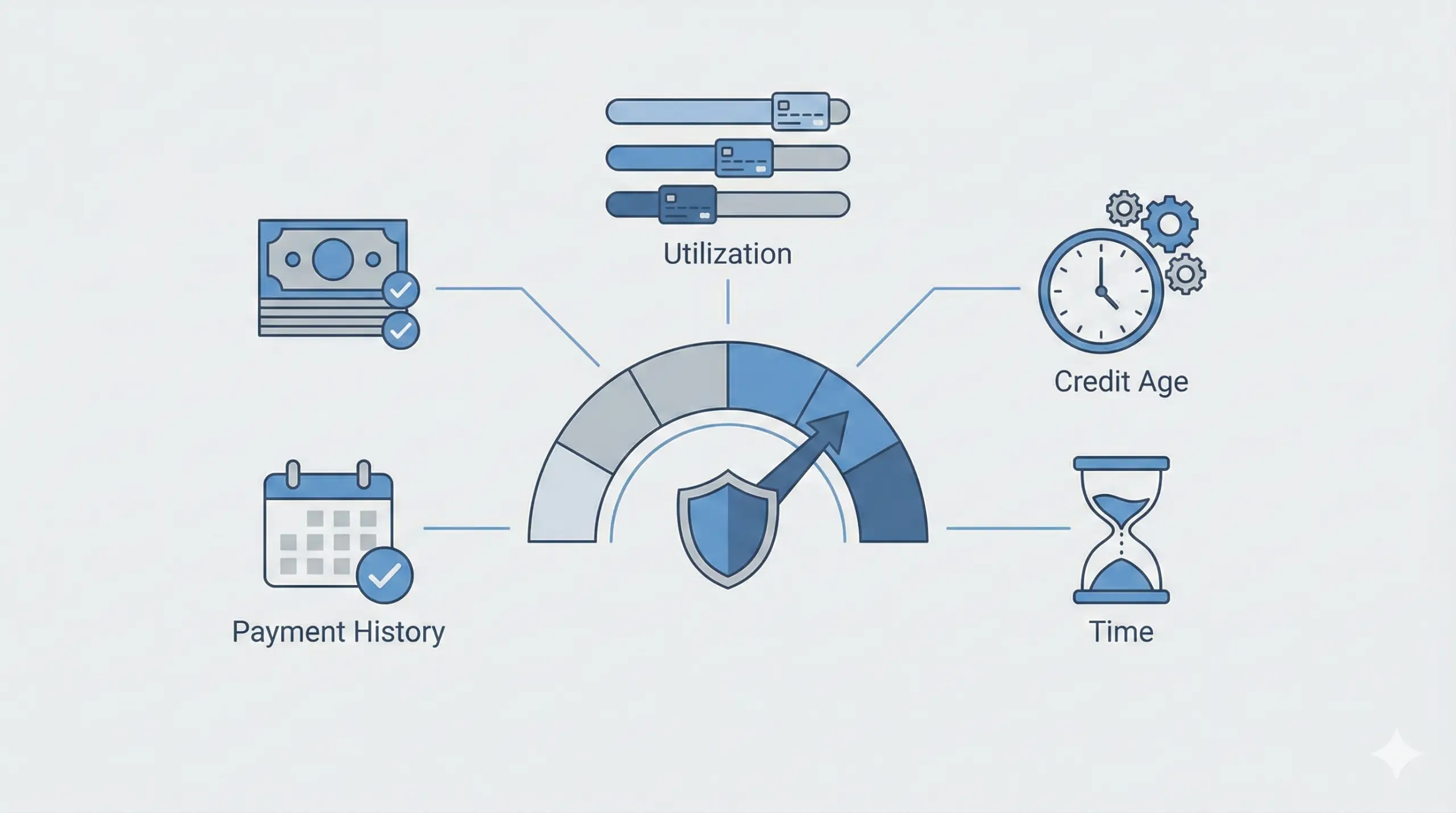
You’ve likely worked years to build a strong credit profile. You want that low interest rate on a car loan or you’re dreaming of a future home upgrade. Defaulting on student loans acts like a wrecking ball to that effort.
Once you are in default, your credit score doesn’t just dip; it takes a hit that can stay on your report for up to seven years. And because you’re a professional, this isn’t just about personal loans. Depending on your industry—especially if you work in finance, government, or security—a damaged credit score can sometimes even affect your employability.
The Real Numbers:
- 30 days late: 60-80 point drop
- 90 days late: 90-110 point drop
- Default: 150+ point drop, plus the account is marked as “charged off”
It’s a frustrating reality, but credit history is often seen as a proxy for personal responsibility. Don’t let a loan balance define your professional reputation.
Phase 3: The “Big Guns” (When the Government Steps In)
If you have federal student loans, the government isn’t a bank that just writes off bad debt. They have mechanisms that are, quite frankly, terrifyingly efficient.
1. Wage Garnishment
Yes, they can take a portion of your paycheck without needing a court order. They notify your employer, and suddenly, your hard-earned salary is smaller than expected.
How much can they take?
- Up to 15% of your disposable income (after taxes and mandatory deductions)
- This happens automatically through “Administrative Wage Garnishment”
It’s a jarring experience that can throw your entire monthly budget into chaos.
2. Tax Refund Seizure
You know that tax refund you’ve been counting on for a vacation or a small investment? The government can intercept it. They simply divert those funds to cover your defaulted balance through a process called “Treasury Offset.”
3. Social Security Offsets
Even if you aren’t thinking about retirement yet, it’s worth noting that they can eventually garnish your Social Security benefits. This is a long-term consequence that shadows you even into your golden years.
They can take:
- Up to 15% of Social Security Disability and retirement benefits
- The first $750/month is generally protected
4. Loss of Federal Benefits
Once in default, you become ineligible for:
- Additional federal student aid
- Deferment or forbearance options
- Income-driven repayment plans (until you rehabilitate)
- Federal employment in some cases
5. Legal Action
The government or your loan holder can sue you for the full balance plus:
- Collection fees (up to 25% of principal and interest)
- Court costs
- Attorney fees
If they win (and they usually do), they can:
- Place liens on your property
- Garnish bank accounts
- Seize assets
How to Get Back on Track (Step-by-Step)
If you are already staring down the barrel of default, don’t panic. There is a way out. It isn’t always fast, but it is possible to regain control.
Step 1: Assess Your Total Debt
Get everything in one place. Log into your loan servicer’s portal, pull your credit report, and know exactly what you owe. You can’t fight an enemy you haven’t clearly identified.
Step 2: Look into Loan Rehabilitation
This is your “get out of jail free” card—sort of. Loan rehabilitation involves making a series of nine “reasonable and affordable” monthly payments over a 10-month period. Once you complete this, the default status is removed from your credit report.
Key benefits:
- Default removed from credit report
- Wage garnishment stops
- Access to deferment, forbearance, and IDR plans restored
- Can only be used once per loan
How “affordable” is determined:
- Based on your income and expenses
- Typically 15% of discretionary income
- You must provide income documentation
Step 3: Explore Consolidation
If you have multiple loans, you might consider consolidating them into a Direct Consolidation Loan. This simplifies your life by turning several payments into one, often with a fixed interest rate.
Caution: This can sometimes reset your payment timeline, so read the fine print. Also, the default will remain on your credit report (unlike rehabilitation).
Step 4: Income-Driven Repayment (IDR) Plans
If your income truly doesn’t cover your current loan obligations, switch to an Income-Driven Repayment plan. These programs base your monthly payment on your discretionary income.
For many professionals starting out or those in transition, this can drop a $600 monthly payment down to something much more realistic—even $0 if your income is low enough.
Options include:
- SAVE Plan (newest, most generous)
- PAYE (Pay As You Earn)
- IBR (Income-Based Repayment)
- ICR (Income-Contingent Repayment)
Pitfalls to Avoid: Don’t Repeat History
I’ve seen many talented people fall into the same traps. Here is what you need to avoid at all costs:
The “Wait and See” Approach
Hoping the debt will just disappear because you’re busy is not a strategy. It’s a recipe for disaster.
Borrowing from One Place to Pay Another
Using high-interest credit cards to pay off student loans is a classic “robbing Peter to pay Paul” move. Don’t trade a low-interest federal loan for high-interest, non-dischargeable credit card debt.
Ignoring the Mail
If you see an envelope from your loan servicer, open it. It’s rarely going to be good news if you ignore it, but the worst news always starts with a notice you didn’t read.
Thinking Bankruptcy Will Help
Student loans are notoriously difficult to discharge in bankruptcy. You’d need to prove “undue hardship” through a separate adversary proceeding—a high legal bar that few people clear.
Why This Matters for Your Long-Term Goals
Ultimately, student loans are just one piece of your financial puzzle. When they go into default, they disrupt everything else. You lose the ability to leverage your credit for life’s big wins—the new office space, the investment property, or even just the peace of mind that comes with knowing you’re in control of your financial destiny.
You’ve put in the work to become the professional you are today. Your education was an investment in yourself, even if the payback period is longer than you anticipated. Instead of viewing your loan servicer as an adversary, try to view them as a business partner you’re negotiating with. Be firm, be honest about your financial situation, and be proactive.
If You’re Already in Default: Emergency Action Plan
- ☐ Contact your loan servicer within 48 hours
- ☐ Request loan rehabilitation (best credit repair option)
- ☐ OR explore Direct Consolidation if you need immediate relief
- ☐ Gather income documentation for affordable payment calculation
- ☐ If wages are being garnished, request a hearing (you have 30 days)
- ☐ Apply for income-driven repayment once eligible
- ☐ Check for employer student loan repayment assistance
- ☐ Consider free credit counseling (NFCC-accredited)
- ☐ Document all communications with servicers
- ☐ Set up payment reminders/autopay once plan is established
Final Thoughts
It’s easy to feel embarrassed about debt. But remember: you aren’t the first professional to struggle with this, and you won’t be the last. The system is complex, and it’s designed to be navigated with expert help—not handled in isolation.
If you find yourself overwhelmed, don’t hesitate to reach out to a financial advisor or a reputable debt counselor. You have options. You have a career. You have a future. Don’t let a period of financial tension become a permanent state of affairs.
Take one step today—whether it’s logging into your portal or making that first call—and start reclaiming your financial independence. You’ve got this.