Let’s be honest: financial jargon has a way of making simple concepts feel like they were written in ancient Greek. When you’re staring down the barrel of student loans or credit obligations, the terms “deferment” and “forbearance” often show up as the two main options for relief. But if you think they’re just two names for the same “hit the pause button” strategy, you’re not alone—and you could be costing yourself more money than you realize.
As professionals, we value precision. We want to know exactly how a decision today impacts our cash flow tomorrow. In this guide, we’re going to cut through the bureaucratic noise and look at exactly what these terms mean, how to choose between them, and the common traps you need to dodge.
What Exactly is the Difference? The “High-Level” Overview
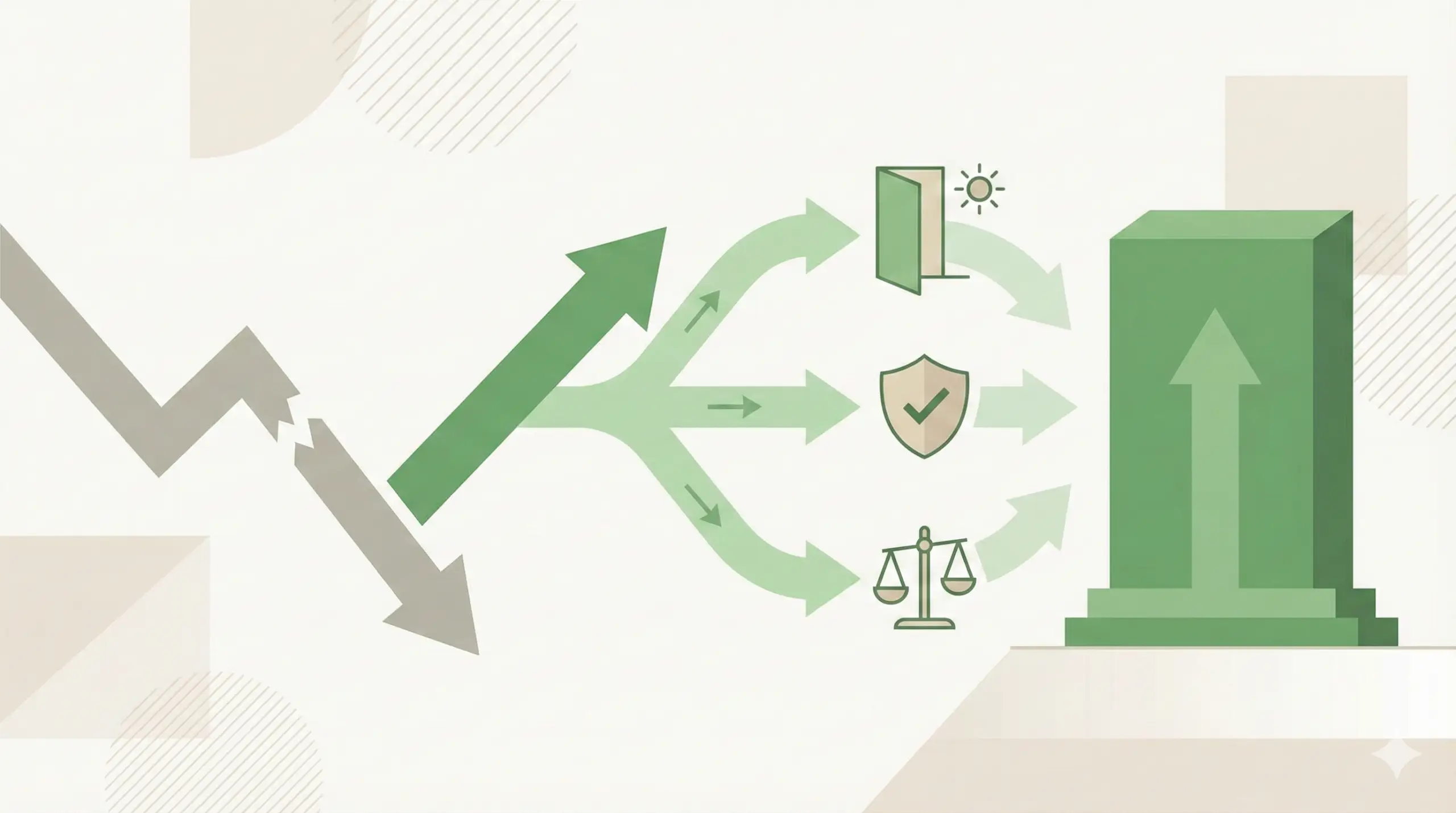
At their core, both deferment and forbearance are temporary pauses on your monthly payments. They are the “emergency brake” for your budget when life—or a career pivot—throws you a curveball. However, the mechanism under the hood is vastly different.
Deferment: The “Interest-Friendly” Pause
Think of deferment as the gold standard of temporary relief, provided you qualify. In many cases (specifically with subsidized federal student loans), the government may actually pay the interest on your behalf while your payments are paused. It’s like hitting a true “mute” button on your debt growth.
Forbearance: The “Interest-Accruing” Reality
Forbearance is more like a “pause” where the debt continues to grow in the background. While your monthly bills stop, the interest clock keeps ticking—often at a compounding rate. You aren’t paying the bill, but the balance you’ll face at the end of the period will be higher than when you started. It’s a solution, sure, but it comes with a price tag attached.
The Key Differences: Side-by-Side Comparison
| Feature | Deferment | Forbearance |
|---|---|---|
| Eligibility | Must meet specific criteria (unemployment, school, military, etc.) | Easier to qualify; general financial hardship |
| Interest on Subsidized Loans | Government pays interest | Interest accrues (you pay) |
| Interest on Unsubsidized Loans | Interest accrues (you pay) | Interest accrues (you pay) |
| Documentation Required | Extensive (proof of eligibility) | Minimal (request-based) |
| Typical Duration | Up to 3 years (varies by type) | Up to 12 months at a time |
| Impact on Credit | Neutral (account in good standing) | Neutral (account in good standing) |
| Best For | Extended relief with minimal cost | Quick, short-term emergency relief |
When to Choose Deferment (The Step-by-Step Approach)
Deferment isn’t just a right; it’s an application process. If you’re considering this route, here is the professional workflow you should follow to ensure you don’t hit unnecessary roadblocks.
Step 1: Check Your Eligibility
Most deferment programs are tied to specific life circumstances. Common qualifying reasons include:
- In-school deferment: Enrolled at least half-time in an eligible program
- Unemployment deferment: Receiving unemployment benefits or actively seeking work
- Economic hardship deferment: Receiving means-tested benefits or Peace Corps service
- Military deferment: Active duty service
- Graduate fellowship deferment: Participating in approved graduate fellowship programs
- Rehabilitation training deferment: Enrolled in rehabilitation training
You’ll need to prove your status. Don’t wait until your next payment is due to pull these documents together.
Step 2: Identify Your Loan Type
This is where people get tripped up. Deferment benefits vary wildly between subsidized and unsubsidized loans:
- Direct Subsidized Loans: Government pays interest during deferment ✓
- Direct Unsubsidized Loans: Interest continues to accrue ✗
- PLUS Loans: Interest continues to accrue ✗
- Private Loans: Interest continues to accrue ✗
Check your loan servicer’s portal. If you have a mix of loan types, note which ones qualify for interest subsidies and which ones don’t.
Step 3: Request the Documentation Early
Servicers move at their own pace. Submit your request for deferment at least 30 days before your next payment due date. If you wait until the last minute, you might get hit with a late fee before the system processes your status change.
When to Choose Forbearance (The “Break Glass in Case of Emergency” Strategy)
Sometimes life happens too fast for the paperwork required for deferment. This is where forbearance shines. It’s usually easier to qualify for, but—and I cannot stress this enough—it should be your last resort.
Types of Forbearance
General Forbearance (Discretionary):
- Lender decides whether to grant it
- Typically for financial difficulties, medical expenses, or employment changes
- Available on most federal and private loans
Mandatory Forbearance:
- Lender must grant if you meet criteria
- Situations include: serving in medical/dental internship, monthly debt exceeding 20% of gross income, serving in AmeriCorps, or teacher loan forgiveness eligibility
Step 1: Contact Your Servicer Proactively
Don’t just stop paying. That’s the quickest way to wreck your credit score. Call your servicer and ask for a “general forbearance.” Explain your situation—whether it’s a medical emergency, a change in employment, or unexpected family expenses.
Step 2: Calculate the “Interest Damage”
Before you sign on the dotted line, ask your servicer for an estimate of the interest that will accrue during the forbearance period. Seeing that number in black and white is a sobering experience, but it’s the only way to make an informed decision.
Example: On a $30,000 loan at 6% APR, you’ll accrue approximately $150 in interest per month = $1,800 over a year of forbearance.
Step 3: Set a Re-entry Date
Forbearance is not a permanent state. Create a calendar alert for when your forbearance period ends. Use this time to rebuild your liquidity so you aren’t blindsided by the restart of your monthly payments.
Common Pitfalls: Where Most Professionals Go Wrong
We’ve all seen it happen. A colleague thinks they’re “taking a break” from their debt, only to find that their total balance has ballooned by thousands of dollars a year later. Avoid these traps:
1. The “Silence is Golden” Fallacy
Never assume that missing a payment without a formal agreement is okay. Communication with your lender is everything. If you don’t communicate, you’re not in forbearance; you’re in default.
2. Ignoring the Capitalization of Interest
In many forbearance agreements, the unpaid interest gets “capitalized” at the end of the term. This means the interest gets added to your principal, and then you start paying interest on that new, larger total. It’s a vicious cycle if you aren’t careful.
Example: $30,000 loan with $1,800 accrued interest becomes a $31,800 loan. Now all future interest is calculated on $31,800.
3. Forgetting to Renew
Both programs often have time limits. If you reach the end of your deferment or forbearance and haven’t updated your status, your payments will resume automatically. If you aren’t ready, you’re back to square one.
4. Assuming Eligibility is Automatic
Just because you hit a rough patch doesn’t mean you automatically qualify for a subsidized deferment. Always verify your specific loan terms.
Tactical Advice: Which One Should You Actually Pick?
If you have the choice, always prioritize deferment.
Think of it this way: if your home needs a repair, would you rather have a low-interest loan or a credit card with a 25% APR? Deferment is the low-interest loan; forbearance is the credit card.
The Decision Tree:
Do you qualify for deferment?
- ✓ Yes → Choose deferment (especially if you have subsidized loans)
- ✗ No → Proceed to next question
Can you afford interest-only payments?
- ✓ Yes → Make interest-only payments to prevent capitalization
- ✗ No → Request forbearance as last resort
Pro Tip: If you absolutely must enter forbearance because you don’t qualify for deferment, try to make “interest-only” payments if your budget allows. Even if you can’t pay the principal, keeping the interest from accumulating (and capitalizing) can save you a massive headache in the long run. It’s a small move that pays huge dividends when you eventually return to full repayment.
How to Manage the Mental Load
Financial stress is a real weight. It’s easy to feel like you’re “failing” because you need to pause your payments. Let me be clear: these programs exist for a reason. Using them isn’t a sign of weakness; it’s a sign of a professional taking control of their balance sheet.
Treat your debt management like any other project at work. Map it out, understand the risks, and have a contingency plan. You aren’t just paying back a loan; you’re managing your long-term financial health.
Deferment/Forbearance Decision Checklist
- ☐ Identify all loans and their types (subsidized vs. unsubsidized)
- ☐ Check eligibility for deferment options
- ☐ Calculate projected interest accrual during relief period
- ☐ Contact servicer at least 30 days before next payment
- ☐ Request written confirmation of approval
- ☐ Set calendar reminder for end of relief period
- ☐ Determine if interest-only payments are affordable
- ☐ Plan budget for payment resumption
- ☐ Document all communications with servicer
- ☐ Review impact on loan forgiveness eligibility (if applicable)
Frequently Asked Questions (FAQ)
1. Does taking forbearance hurt my credit score?
A: Technically, no—if you have an approved forbearance agreement, your account is considered “in good standing.” However, the increased debt balance can affect your debt-to-income ratio, which might impact future loan applications.
2. Can I switch from forbearance to deferment?
A: Yes. If your situation changes (for example, you go back to school), you can apply for deferment even if you were previously in forbearance. Just be aware that you will need to meet the specific requirements for the deferment program.
3. How often can I request a forbearance?
A: Most lenders have a cumulative limit for how long you can remain in forbearance (often 12 to 36 months total over the life of the loan). Check your master promissory note to see what your specific limits are.
4. Will deferment or forbearance affect loan forgiveness programs?
A: It depends. For Public Service Loan Forgiveness (PSLF), deferment and forbearance periods generally don’t count toward your 120 qualifying payments. If you’re pursuing forgiveness, income-driven repayment with $0 payments may be a better option.
5. Can I use deferment or forbearance on private student loans?
A: Private lenders have their own policies. Some offer forbearance options, but they’re typically shorter (3-6 months) and less generous than federal programs. Contact your lender directly to discuss options.
Final Thoughts: The Path Forward
Navigating the nuances of deferment versus forbearance might seem tedious, but it is one of the most effective ways to protect your wealth during transitional periods. By understanding the interest implications and staying proactive with your servicer, you can turn a financial “emergency brake” into a strategic move.
Take a breath, look at your loan documents, and don’t be afraid to ask for help. You’re doing exactly what a savvy professional should do: finding the most efficient way through a challenge.