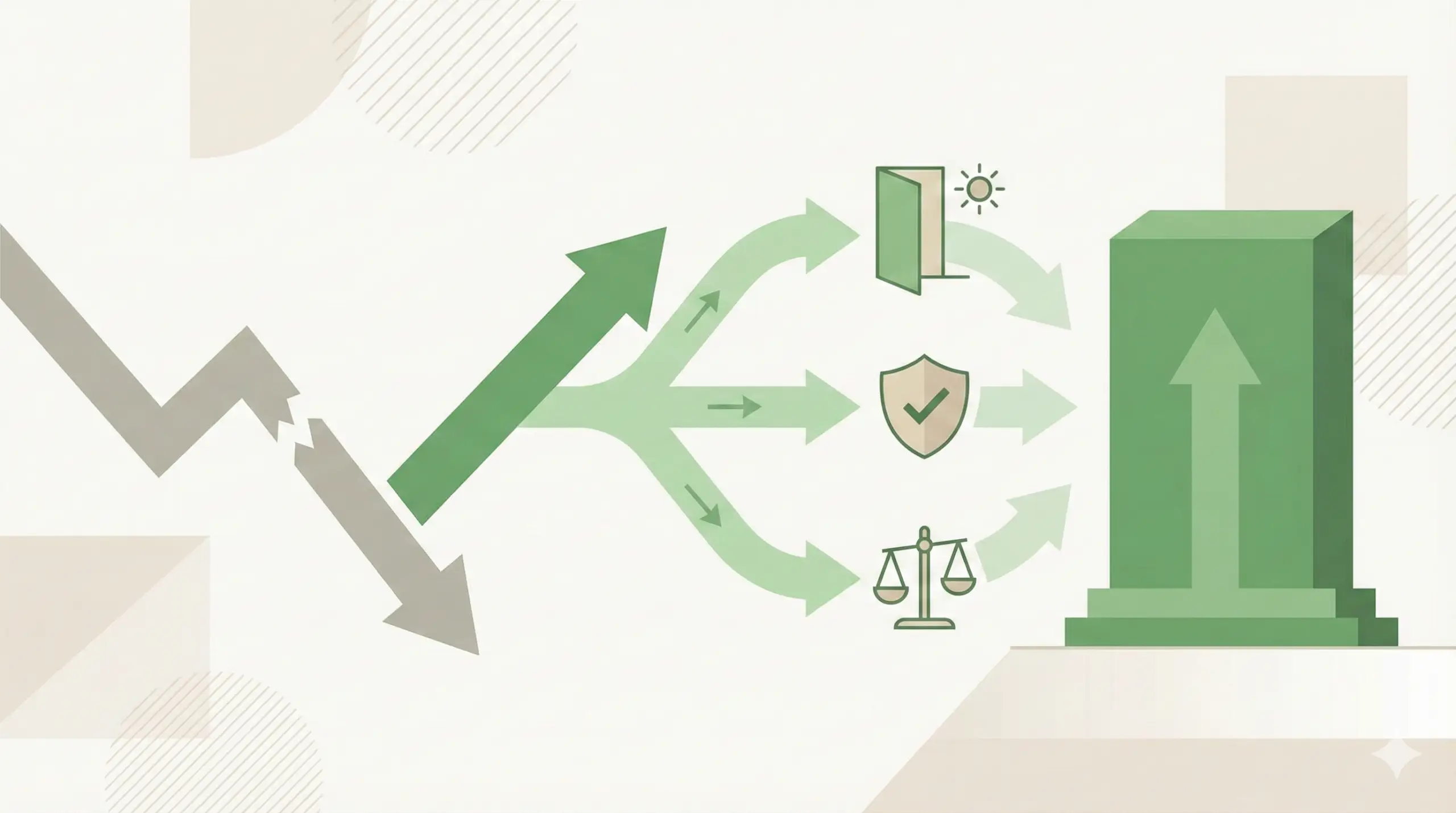
If you’ve spent any time researching student loan relief, you’ve almost certainly encountered some version of this statement: “Student loans can’t be discharged in bankruptcy.”
It gets repeated so often — by friends, financial blogs, even well-meaning advisors — that most borrowers never bother to question it. And that’s exactly why so many professionals spend decades trapped under debt that may have been legally manageable all along.
Here’s the truth: student loans can be discharged in bankruptcy. It’s not easy, it’s not common, and it’s not the right move for everyone — but it is possible. And if you are genuinely struggling under the weight of student debt with no realistic path forward, understanding your legal options is not optional. It’s essential.
This guide breaks down how student loan bankruptcy discharge actually works, what you need to prove, how the process unfolds step by step, and where people go wrong along the way.
Why Student Loans Are Different in Bankruptcy
Most unsecured debts — credit card balances, medical bills, personal loans — are dischargeable in a standard bankruptcy filing. Student loans are treated differently under federal law. To discharge them, you must clear an additional legal hurdle known as the “undue hardship” standard.This requirement exists because Congress wanted to prevent borrowers from strategically filing for bankruptcy immediately after graduating and before earning significant income. In practice, however, the standard has historically been applied very strictly — often too strictly — leaving many genuinely struggling borrowers without relief.
The legal landscape has been shifting. In 2022, the U.S. Department of Justice and the Department of Education jointly updated their guidelines to make the process more accessible for borrowers who are truly unable to repay. Courts are increasingly willing to engage with these cases seriously — but you still need to meet the standard.
Understanding the Brunner Test: The Three-Part Standard
Most federal courts use a framework known as the Brunner Test to evaluate whether a borrower qualifies for student loan discharge under the undue hardship standard. It requires you to satisfy three distinct criteria simultaneously.1. Minimal Standard of Living
The first prong asks a straightforward question: If you are required to continue repaying your student loans, can you maintain a minimal standard of living for yourself and anyone who depends on you?This doesn’t mean you need to be living on the street to qualify. It means demonstrating that after accounting for your loan payments, your remaining income is insufficient to cover genuine basic necessities — housing, food, utilities, transportation to work, and essential medical care.
Courts look at your actual income, your actual essential expenses, and whether there is any realistic margin left over.
2. Persistence of Financial Hardship
This is the prong that most often determines whether a case succeeds or fails. The court needs to be convinced that your financial difficulties are not temporary. You must show that your hardship is likely to persist for a significant portion of the remaining loan repayment period.This is where documentation and credibility matter enormously. A temporary job loss or a short-term income dip is unlikely to satisfy this requirement. However, a long-term disability, a chronic illness that limits your earning capacity, or a career disruption with documented structural barriers can all support this argument.
If you are a professional in mid-career transition, be prepared to demonstrate not just your current situation, but why it is not simply a momentary setback.
3. Good Faith Effort to Repay
The third prong examines your behavior as a borrower before filing. Have you made genuine attempts to repay your loans? Have you enrolled in or applied for income-driven repayment plans? Have you sought additional work or explored ways to increase your income? Have you engaged with your loan servicer rather than simply ignoring the debt?Courts are not looking for perfection here — they are looking for honest effort. A borrower who ran up private student debt and never made a single payment looks very different to a court than a borrower who spent years on IDR plans, applied for deferment during hardship, and exhausted every available federal option before concluding that repayment was genuinely impossible.
The Step-by-Step Bankruptcy Process for Student Loans
Filing for bankruptcy with the intent to discharge student loans is a multi-stage legal process. Here’s how it works in practice.Step 1: File Your Bankruptcy Petition
You begin by filing for either Chapter 7 or Chapter 13 bankruptcy in federal court. Chapter 7 involves the liquidation of eligible assets to pay creditors, while Chapter 13 involves a structured repayment plan lasting three to five years.For most borrowers, Chapter 7 is the more straightforward starting point. However, Chapter 13 can be strategically useful for student loan purposes — it allows a court to restructure how your debt is managed during the repayment period, and in some cases, positions borrowers for a more favorable outcome on the discharge question.
An experienced bankruptcy attorney can advise which chapter makes sense based on your income, assets, and goals.
Step 2: Initiate an Adversary Proceeding
This is the step most borrowers don’t know exists — and it’s the one that actually matters for student loans. Student loans are not automatically discharged when you file for bankruptcy. They will survive the bankruptcy unless you take an additional, separate legal action called an Adversary Proceeding.An Adversary Proceeding is essentially a lawsuit filed within your bankruptcy case. You are formally asking the court to evaluate your specific circumstances and declare your student loan debt dischargeable under the undue hardship standard. It has its own filing, its own legal arguments, and its own hearing.
This is not optional. Without an Adversary Proceeding, your student loans remain fully intact after bankruptcy, regardless of what happens to your other debts.
Step 3: Build and Present Your Evidence
The strength of your Adversary Proceeding rests almost entirely on the quality and depth of your documentation. Showing up with a verbal account of your financial struggles will not be enough. Strong evidence packages typically include:- Several years of federal tax returns
- Recent pay stubs and complete income documentation
- Monthly budget breakdowns with supporting receipts or bank statements
- Medical records or disability documentation, if applicable
- Employment history and documentation of job search efforts
- Correspondence with your loan servicer showing attempts to resolve the debt
- Any documentation of applications for income-driven repayment or other federal programs
Step 4: Negotiate or Proceed to Litigation
Here’s something many borrowers don’t realize: the act of filing an Adversary Proceeding often brings lenders to the negotiating table.Litigation is expensive for loan servicers too. If your documentation is solid and your case is credible, many lenders will prefer to negotiate a settlement — which could mean a partial discharge, a reduced principal balance, a lower interest rate, or modified repayment terms — rather than take the case to a full hearing.
A skilled bankruptcy attorney will know how to leverage this dynamic effectively. Negotiating from a position of legal action is fundamentally different from calling your servicer to ask for help.
Critical Mistakes to Avoid
Even borrowers with legitimate hardship claims can undermine their own cases. These are the most common errors.Not Exhausting Federal Repayment Options First
If you’ve never enrolled in an income-driven repayment plan, never applied for deferment, and never communicated with your servicer about your situation, a court is unlikely to view your case favorably on the “good faith” prong. Always exhaust federal options before pursuing discharge.Voluntary Underemployment
Courts can and do “impute” income. If you hold a professional degree and are voluntarily working a job far below your qualifications, the court may attribute a higher earning potential to you — effectively weakening your hardship claim. This doesn’t mean you must be employed in your field, but you should be prepared to explain and document the circumstances.Relying on Verbal or Narrative Arguments Alone
Personal financial struggles can feel overwhelming and self-evident to you. To a court, they are simply claims without documentation. Numbers, records, and paper trails are what move these cases. “I can’t afford my payments” is a starting point. Bank statements, tax records, and a detailed monthly budget are legal arguments.Attempting to Represent Yourself
Bankruptcy law is complex. Adversary Proceedings involve procedural rules, evidentiary standards, and strategic considerations that take attorneys years to develop expertise in. Representing yourself in this process — known as appearing pro se — dramatically reduces your chances of a successful outcome and can result in mistakes that permanently damage your case.If cost is a concern, some bankruptcy attorneys work on payment plans, and nonprofit legal aid organizations may be able to assist qualifying borrowers.
The Credit Impact: An Honest Assessment
A bankruptcy filing will remain on your credit report for seven to ten years, depending on the chapter filed. That is a real consequence that deserves honest consideration.However, there’s an important counterpoint worth examining: if your current debt load is so high that your debt-to-income ratio is already disqualifying you from mortgages, business financing, or other credit you need to build your future — is your credit score actually protecting anything valuable right now?
For some professionals, the short-term credit impact of bankruptcy is outweighed by the long-term financial freedom it creates. A clean balance sheet can make it possible to qualify for a mortgage in five years that would have been completely inaccessible otherwise. That is a strategic calculation, not a moral one.
This is a deeply personal decision that should be made with clear eyes and qualified legal and financial advice — not avoided simply because bankruptcy carries a stigma.
Frequently Asked Questions
Does bankruptcy discharge apply to private student loans as well?
Yes — and private student loans can sometimes be easier to discharge than federal loans. Unlike federal loans, private student loans do not come with income-driven repayment options, deferment protections, or forgiveness programs. This absence of alternatives can actually work in a borrower’s favor when demonstrating that repayment is genuinely impossible.Can the court discharge only a portion of my student loan debt?
Absolutely. Courts have the authority to grant a partial discharge — eliminating a portion of the balance, reducing the interest rate, or restructuring repayment terms — even if a full discharge is not warranted. An all-or-nothing outcome is not required.What happens to my co-signer if my debt is discharged?
This is a critical question that many borrowers overlook. If your student loans are discharged in bankruptcy, your co-signer may still remain legally responsible for the full balance. This is true even if you are relieved of your obligation. Before proceeding, have an explicit conversation with your attorney about the potential impact on any family members or friends who co-signed your loans.How do I find an attorney with the right experience?
Not all bankruptcy attorneys handle student loan Adversary Proceedings. When consulting with a bankruptcy lawyer, ask directly: “Do you have experience filing Adversary Proceedings specifically for student loan discharge?” Their answer — and the specificity of their response — will tell you a great deal about their relevant expertise.The Bottom Line: You Have Legal Options Worth Exploring
The most damaging thing about the “student loans can never be discharged” myth is not that it’s wrong — it’s that it causes people to stop asking questions. Thousands of professionals who may have qualified for discharge, negotiation, or meaningful restructuring of their student debt have simply accepted a status quo that wasn’t legally inevitable.Student loan bankruptcy is not a simple process, and it is not the right choice for everyone. But if you are facing genuine, persistent financial hardship with no credible path to repayment, you owe it to yourself to understand what the law actually allows.
Start by consulting with a bankruptcy attorney who specializes in student loan cases. Come prepared with your loan documents, your income history, and an honest picture of your financial situation. One informed conversation may open options you didn’t know existed.You invested in your education to build a future. That investment should not become a permanent obstacle to the life you were building toward.
This article is intended for informational purposes only and does not constitute legal advice. Bankruptcy laws vary by jurisdiction and individual circumstances. Please consult a qualified bankruptcy attorney before making any decisions regarding your financial or legal situation.
🎓 Student Loan Payoff Calculator
📖 Complete guide: Debt Management: The Complete 2026 Guide
Related: Chapter 7 Bankruptcy A Professional Guide To A Fresh Start · Chapter 7 Vs Chapter 13 A Guide For Professionals · Student Loan Forgiveness A Comprehensive Guide For Professionals