Divorce is rarely just an emotional ending; it is often a seismic shift in your financial architecture. If you are a professional navigating the aftermath of a separation, you are likely dealing with a dual burden: the emotional weight of a new chapter and the stark reality of post-marital debt.
Let’s be honest: balancing a career while untangling joint credit cards, mortgage responsibilities, and tax implications feels less like financial planning and more like performing surgery on your own bank account. But here is the good news—you have the professional skills to solve this. It is time to treat your personal finances with the same strategic rigor you apply to your career.
In this guide, we will walk through a step-by-step process to reclaim your financial autonomy, reduce your debt load, and build a foundation that is entirely your own.
1. The Audit: Knowing Exactly Where You Stand
Before you can pay off debt, you have to look it in the eye. Many people avoid this step because, frankly, it’s painful to see the numbers in black and white. But you can’t manage what you don’t measure.Gather Your Financial Documents
Start by creating a master document—a “Financial Inventory.” You need to pull:- Credit reports: Check all three major bureaus (Equifax, Experian, TransUnion) to see what accounts are still open in your name or as a joint holder.
- The Divorce Decree: Review the settlement carefully. Does your agreement specify who is responsible for which debts? Keep in mind, creditors don’t care about your divorce decree; if your name is on the loan, you are liable.
- Statements: Print everything from the last 90 days.
Categorize Your Debt
Split your debt into two buckets:- Shared/Joint Debt: Credit cards, mortgages, or loans where both names are listed.
- Individual Debt: Student loans or credit cards opened solely in your name.
2. The Communication Barrier: Dealing with Creditors
This is where things get tricky. You might assume that if your ex-spouse agreed to pay the car loan, the bank will just let you off the hook. Unfortunately, that isn’t how it works.If you have joint debt, contact the lenders immediately. Inform them of the change in marital status. Ask them if they are willing to remove one name from the account—though, realistically, most banks will require you to refinance the debt solely in your name to release the other party.
Common Pitfall:
Never stop making payments while waiting for a divorce settlement to be “finalized.” A late payment on a joint account will tank your credit score just as quickly as it ruins your ex’s. Protect your credit rating at all costs; you will need it for your next chapter.3. The “New Life” Budget: Pruning the Excess
When you were part of a couple, your expenses were likely inflated by household overhead. As a single professional, you have a unique opportunity to reset your lifestyle.Don’t look at this as “budgeting.” Look at it as strategic capital allocation.
Audit Your Fixed Costs:
- Can you downsize your living situation?
- Can you negotiate your utilities?
The “Double Life” Tax:
If you are paying for streaming services, gym memberships, or subscriptions you haven’t touched in months, cancel them. It’s a small, satisfying win that gives you immediate cash flow.The 50/30/20 Rule (Revisited):
Aim to put 50% toward needs, 30% toward debt reduction, and 20% toward savings. If your debt is high-interest, flip that: put as much as possible toward debt, even if it means sacrificing some of the “wants” for a few months.4. Choose Your Strategy: Avalanche vs. Snowball
Once you have your budget in place, you need to decide how to attack the debt. There is no “perfect” way, only the way that keeps you motivated.The Debt Avalanche (Mathematically Superior)
Focus your extra payments on the debt with the highest interest rate.- Why it works: You pay less interest over time.
- Who it’s for: The analytical mind who wants to save money long-term.
The Debt Snowball (Psychologically Superior)
Focus your extra payments on the smallest debt balance first.- Why it works: You get a quick win. Closing an account feels like a victory—and after a divorce, you need victories.
- Who it’s for: The professional who needs momentum to stay the course.
5. Avoiding the “Divorce Recovery” Spending Trap
It’s easy to fall into the trap of “retail therapy” or trying to maintain the lifestyle you had when you were a two-income household. We’ve all seen it: the sudden car upgrade or the expensive social life to “show them you’re doing fine.”The trap:
You want to prove you’re thriving, so you spend money you don’t have.The reality:
True “thriving” is having a zero-balance credit card and a healthy investment portfolio. Keep your professional head in the game. Do not let your ego dictate your bank statement.6. Protecting Your Future Self: Emergency Funds
Before you throw every spare dollar at debt, ensure you have a “sanity fund.” Life happens—a broken appliance, a car repair, a sudden medical bill. If you don’t have cash set aside for these, you’ll be forced to put them on a credit card, which defeats the purpose of your entire debt-payoff journey. Aim for $1,000 to $2,000 as a starting point. It’s not much, but it’s enough to prevent a minor emergency from becoming a major financial disaster.7. Refinancing and Consolidation: Is It for You?
If you are drowning in high-interest credit card debt (usually 20%+ APR), consolidation might be your best friend.Balance Transfer Cards:
If your credit score is still strong, look for 0% APR balance transfer cards. This gives you an 18-month window to pay off the principal without the interest eating away at your progress.Personal Loans:
A fixed-rate personal loan can consolidate multiple debts into one monthly payment. It simplifies your life, and simplicity is the ultimate form of stress reduction.Warning:
Do not consolidate if you haven’t fixed the underlying spending habits that led to the debt. If you consolidate and then keep using those credit cards, you’ll end up with double the debt in two years.8. Legal and Financial Separation: Critical Steps
Remove Your Ex from Joint Accounts
Once legally permissible, work to:- Close joint credit cards (after paying them off or transferring balances)
- Refinance mortgages or car loans into one person’s name
- Update beneficiaries on retirement accounts and life insurance
- Separate joint bank accounts
Update Your Credit Monitoring
Set up alerts for any new accounts opened in your name. Identity theft and fraudulent activity can be more common during divorce proceedings.Tax Implications
Consult with a CPA about:- Filing status changes
- Dependency exemptions for children
- Alimony and child support tax treatment
- Division of retirement accounts (QDRO requirements)
9. Building Your Post-Divorce Financial Identity
Establish Credit in Your Own Name
If most credit was in your spouse’s name, you’ll need to build your own credit history:- Open a credit card in your name only
- Consider becoming an authorized user on a trusted family member’s account temporarily
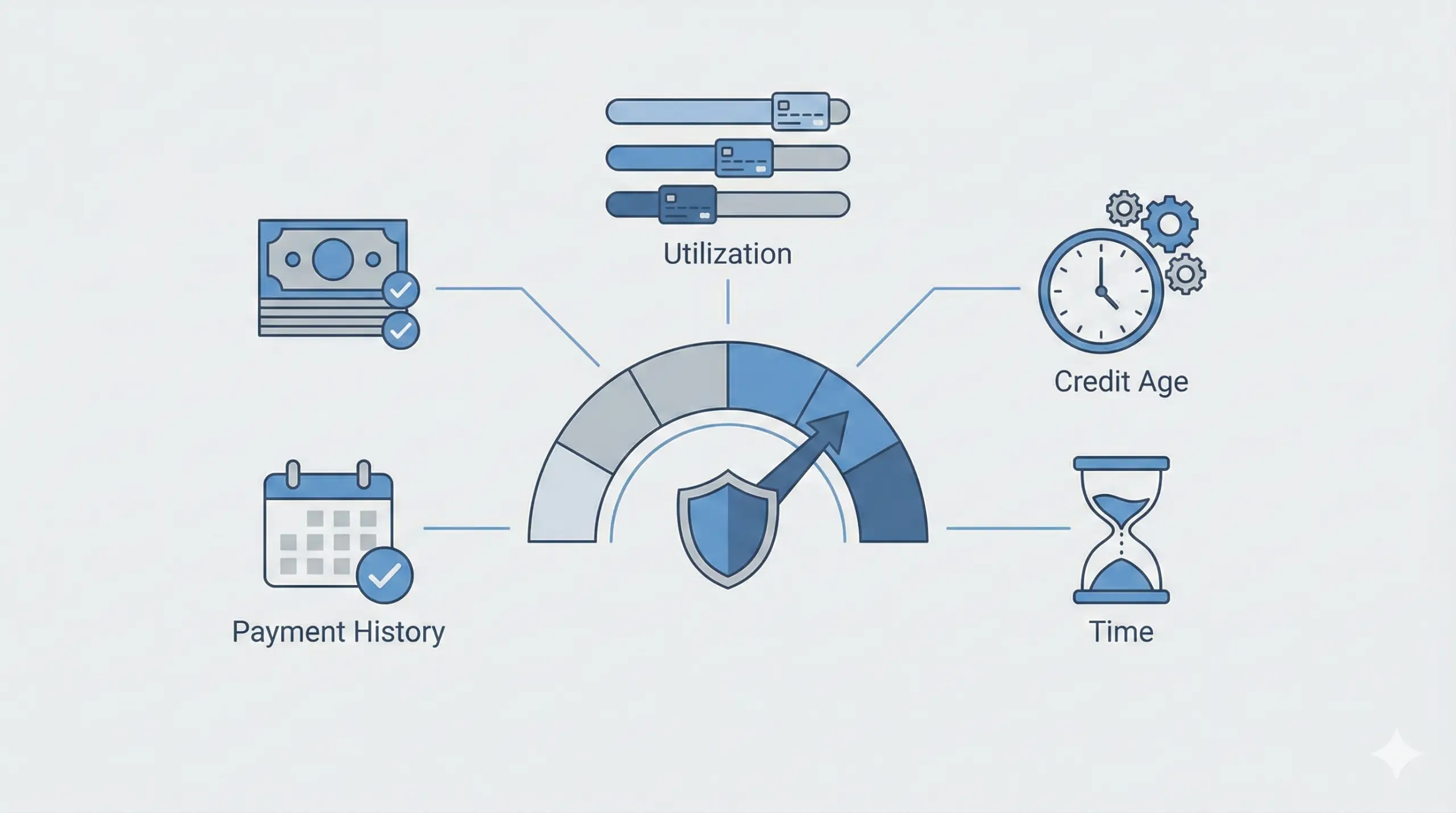
- Keep credit utilization below 30%
Set New Financial Goals
This is your fresh start. Define what financial independence looks like:- Emergency fund target (aim for 6 months of expenses eventually)
- Retirement contribution goals
- Debt-free date
- Major purchases (home, car, education)
10. When to Seek Professional Help
There is no shame in bringing in a pro. If your debt exceeds your annual income or if you feel completely overwhelmed by the legal complexities of marital debt, seek out:- Certified Financial Planner (CFP): For comprehensive financial planning
- Certified Divorce Financial Analyst (CDFA): Specializes in divorce financial issues
- Credit Counselor: For debt management strategies
- Family Law Attorney: If your ex isn’t honoring the settlement agreement
Final Thoughts: The Long Game
Getting out of debt after a divorce is a marathon, not a sprint. Some months will feel like you’re making massive progress; others will feel like you’re standing still. That is normal.The most important thing you can do is stay consistent. Every dollar you pay down is a dollar of interest you don’t have to pay later. Every account you close is a tether to your past that you are cutting away.
You are a professional. You’ve navigated complex projects, difficult teams, and high-stakes deadlines. This is just another project—and it is one that will lead to the most important outcome of all: your independence.
Take it one step at a time, celebrate the small wins, and remember that this season of financial restriction is only temporary. Your future, debt-free self will thank you for the work you are doing right now.
Post-Divorce Financial Recovery Checklist
- ✓ Pull credit reports from all three bureaus
- ✓ Create comprehensive debt inventory (joint vs. individual)
- ✓ Review divorce decree for debt responsibility assignments
- ✓ Contact all creditors to update marital status
- ✓ Close or refinance joint accounts where possible
- ✓ Build $1,000-$2,000 emergency fund
- ✓ Create new single-income budget
- ✓ Choose debt payoff strategy (Avalanche or Snowball)
- ✓ Update beneficiaries on all accounts
- ✓ Consult with financial advisor or CDFA if needed
- ✓ Set up credit monitoring alerts
- ✓ Schedule quarterly financial reviews
Frequently Asked Questions (FAQ)
Q: Can I be held responsible for my ex-spouse’s debt?
A: In most jurisdictions, if your name is on the account, the creditor has a legal right to demand payment from you, regardless of your divorce decree. If your ex defaults, the creditor will come after you.Q: How does divorce affect my credit score?
A: Divorce itself does not appear on your credit report. However, missed payments during the transition and the process of closing or splitting joint accounts can impact your score. Monitor your credit report closely for the first year post-divorce.Q: Should I sell my house to pay off debt?
A: That depends on your equity and your post-divorce income. If the mortgage is a massive anchor, selling might be the best way to clear the slate. Consult with a real estate professional and your tax advisor before making this move.Q: What if my ex-spouse refuses to pay their share?
A: If they are violating the court order, you must return to family court or consult your divorce attorney. Do not simply let the debt go unpaid, as this will damage your own financial future.Q: How long does it typically take to recover financially from divorce?
A: Financial recovery varies widely, but most professionals find it takes 2-5 years to fully stabilize and rebuild emergency funds and retirement savings. The timeline depends on debt levels, income, and expense management.📖 Complete guide: Debt Management: The Complete 2026 Guide
Related: How To Get Out Of Debt With No Money A Strategic Guide · How To Pay Debt When Unemployed A Strategic Guide · How To Manage Debt In Retirement A Strategic Guide