The Debt Snowball Method: How It Works, What It Costs, and When to Use It
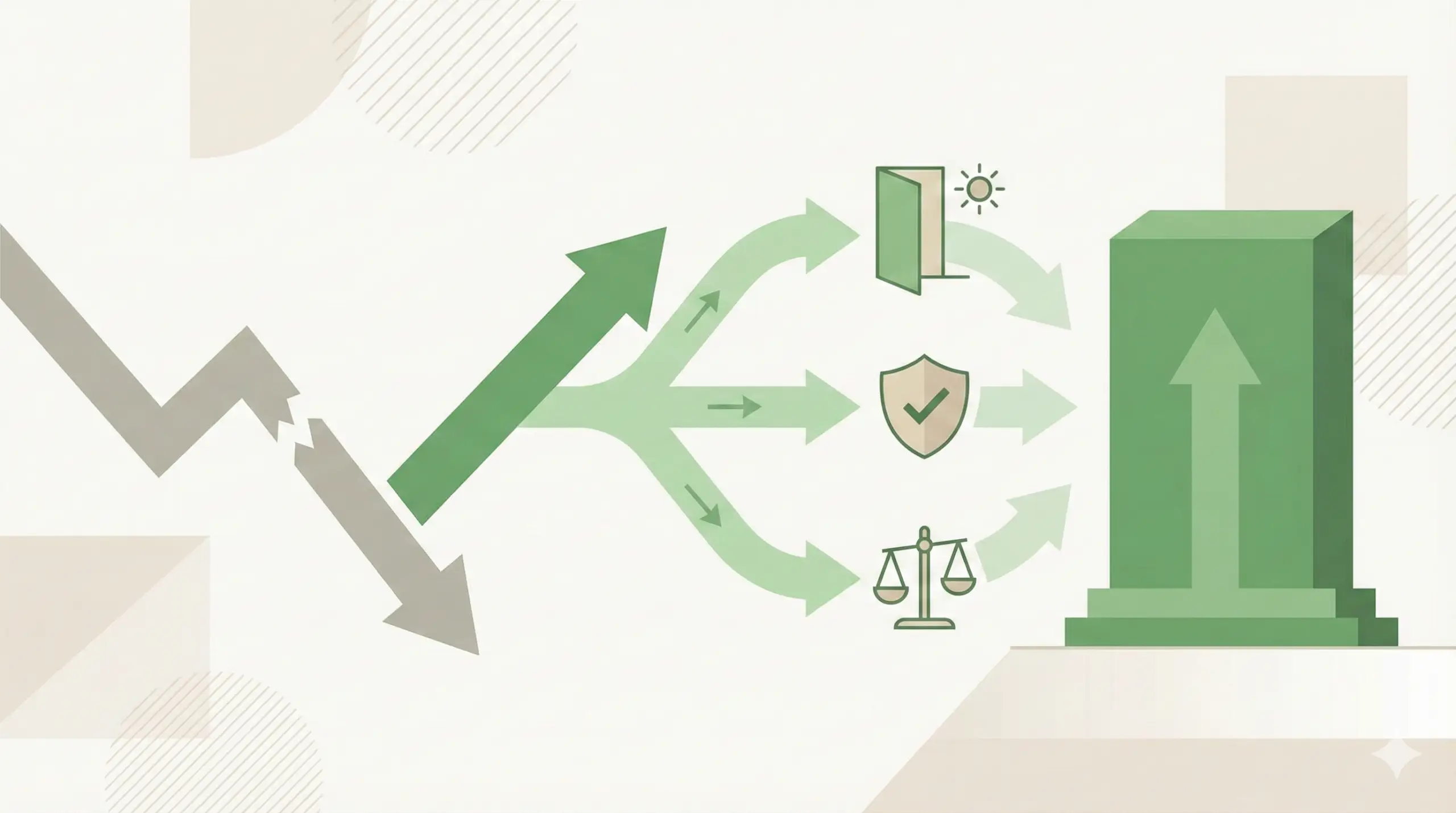
The debt snowball method eliminates debts in order of balance size — smallest to largest — regardless of interest rate. Each account closure frees the former minimum payment and redirects it to the next account, producing an accelerating payment cascade. The first account closure typically occurs within 2 to 5 months. The method costs more in total interest than the avalanche for most balance configurations — but produces higher completion rates for borrowers who need early progress evidence to sustain a multi-year payoff plan. Here is the complete mechanics, the real numbers, and the decision framework for when to use it.The debt snowball works because it is built around a behavioral reality that pure mathematical optimization ignores: most people who fail to pay off debt do not fail because they calculated the wrong sequence. They fail because they stopped executing the plan. Early account closures — seeing a balance reach zero and a minimum payment freed — provide the concrete evidence of progress that sustains execution through the months when the total outstanding balance is still large and the finish line is not yet visible.
Understanding exactly how the mechanics work, what the interest cost trade-off is, and under which specific conditions the snowball outperforms the mathematically optimal avalanche is the foundation for using it correctly.
The Precise Mechanics of the Debt Snowball
The Four-Step Sequence
Step 1: List all debts in ascending order by current outstanding balance — smallest at the top, largest at the bottom. APR is not a factor in this ranking. Step 2: Calculate the total minimum payment required across all accounts. Subtract this from your available monthly debt payment budget. The difference is your accelerated payment — the amount available to direct above minimums. Step 3: Pay the minimum on every account except Account 1 (the smallest balance). Direct the minimum plus the full accelerated payment to Account 1 each month until it reaches zero. Step 4: When Account 1 reaches zero, redirect its full former payment — minimum plus accelerated amount — to Account 2. The total monthly payment to Account 2 is now its minimum plus the freed payment from Account 1 plus the original accelerated amount. Continue this cascade through every remaining account.The Cascade Effect: Why Payments Accelerate Over Time
The payment cascade is the most important mechanical feature of the snowball. Each account closure increases the payment directed at the next account — not by adding new money, but by redeploying money already committed to debt repayment. Example cascade visualization:Starting surplus: $300/month above all minimums
| Phase | Account Receiving Accelerated Payment | Monthly Payment to That Account |
|---|---|---|
| Phase 1 | Account 1 (smallest balance) | Minimum ($40) + $300 extra = $340 |
| Phase 2 | Account 2 (next smallest) | Minimum ($75) + $340 freed from Account 1 = $415 |
| Phase 3 | Account 3 | Minimum ($120) + $415 freed from Account 2 = $535 |
| Phase 4 | Account 4 (largest balance) | Minimum ($200) + $535 freed from Account 3 = $735 |
The Complete Real-Number Example
The following example uses a four-account configuration representative of common multi-debt situations. All calculations use monthly compounding at the stated APR.Starting Position
| Account | Balance | APR | Minimum Payment | Snowball Rank |
|---|---|---|---|---|
| Store credit card | $820 | 22% | $25 | 1st (smallest) |
| Medical bill | $1,400 | 0% | $50 | 2nd |
| Auto loan | $6,200 | 7.5% | $185 | 3rd |
| Student loan | $14,800 | 6.5% | $168 | 4th (largest) |
| Total | $23,220 | — | $428 | — |
Phase 1: Targeting the Store Credit Card ($820 at 22%)
Monthly payment: $25 minimum + $322 extra = $347/month| Month | Balance | Interest Accrued | Payment | Ending Balance |
|---|---|---|---|---|
| 1 | $820.00 | $15.03 | $347 | $488.03 |
| 2 | $488.03 | $8.94 | $347 | $149.97 |
| 3 | $149.97 | $2.75 | $152.72 | $0 |
Phase 2: Targeting the Medical Bill ($1,400 at 0%)
Monthly payment: $50 minimum + $322 extra + $25 freed from Phase 1 = $397/monthAt 0% APR, every dollar of every payment reduces principal:
$1,400 ÷ $397 = approximately 3.5 months (4 months including partial payoff)
Medical bill paid off: Month 7 Total interest paid: $0 Freed payment: $50 + $25 + $322 = $397/month now available for Phase 3Phase 3: Targeting the Auto Loan ($6,200 at 7.5%)
Monthly payment: $185 minimum + $397 freed from Phase 2 = $582/monthAt 7.5% APR on $6,200 (balance has been declining with minimum payments for 7 months — approximately $5,910 remaining):
| Month | Approx. Balance | Monthly Payment |
|---|---|---|
| 8 | $5,910 | $582 |
| 12 | $3,667 | $582 |
| 16 | $1,336 | $582 |
| 17 | ~$0 | ~$761 (final) |
Phase 4: Targeting the Student Loan ($14,800 at 6.5%)
Monthly payment: $168 minimum + $582 freed from Phase 3 = $750/monthAt 6.5% APR on $14,800 (balance has been declining with minimum payments for 17 months — approximately $12,800 remaining):
$12,800 at 6.5% APR with $750/month payment: approximately 19 months to zero
Student loan paid off: approximately Month 36 Total interest paid on this account: approximately $970Complete Snowball Summary
| Account | Paid Off Month | Interest Paid |
|---|---|---|
| Store credit card | Month 3 | $27 |
| Medical bill | Month 7 | $0 |
| Auto loan | Month 17 | $220 |
| Student loan | Month 36 | $970 |
| Total | 36 months | ~$1,217 |
Snowball vs. Avalanche: The Interest Comparison for This Configuration
For the same starting position, the avalanche would sequence: Store credit card (22%) → Student loan (6.5%) → Auto loan (7.5%) → Medical bill (0%). Avalanche projection (same $750/month total payment):| Account | Paid Off Month | Interest Paid |
|---|---|---|
| Store credit card | Month 3 | $27 |
| Student loan | Month 24 | $780 |
| Auto loan | Month 33 | $188 |
| Medical bill | Month 36 | $0 |
| Total | 36 months | ~$995 |
The Comparison
| Snowball | Avalanche | Difference | |
|---|---|---|---|
| Total payoff | 36 months | 36 months | 0 months |
| Total interest | ~$1,217 | ~$995 | $222 more with snowball |
| First account closure | Month 3 | Month 3 | Tie (same smallest account) |
| Second account closure | Month 7 | Month 24 | Snowball: 17 months earlier |
| Third account closure | Month 17 | Month 33 | Snowball: 16 months earlier |
The snowball costs $222 more in total interest — but closes accounts 2 and 3 dramatically faster (17 and 16 months earlier respectively). For a borrower who needs regular account closure milestones to sustain the plan, the $222 cost is an investment in completion probability.
For a borrower who is analytically motivated and can sustain 24 months between account closures, the avalanche’s $222 saving is worth taking.
Note: When the two methods produce identical total payoff dates (as they do here at 36 months), the decision is entirely behavioral — the financial outcomes are nearly equivalent.When the Snowball’s Interest Cost Is Higher — and By How Much
The $222 difference above is specific to this balance configuration. The magnitude of the interest cost difference between methods varies significantly with different configurations.Configurations Producing Small Interest Differences (Under $300)
- Similar APRs across all accounts (within 5 percentage points of each other)
- Small total balances (under $10,000 combined)
- Smallest balance accounts also carry the highest APRs (snowball and avalanche sequence converge)
Configurations Producing Large Interest Differences ($500 to $3,000+)
- The largest balance account also carries the highest APR (snowball delays attacking it longest)
- Large APR spreads between accounts (e.g., 8% to 26%)
- Large total balances ($20,000 to $50,000+) with long payoff timelines
The Freed Minimum Payment: The Mechanical Engine
The freed minimum payment cascade is the reason the snowball produces dramatically accelerating results in the later stages. It is worth examining precisely because most borrowers underestimate how powerful it becomes. In the example above:- Month 1: $347 going to the priority account
- Month 8 (after two closures): $397 going to the priority account
- Month 18 (after three closures): $582 going to the priority account
- Month 18 onward: $750 going to the final account
This cascade effect is equally present in the avalanche method. The difference is only in the sequence — which account receives the cascade first. Whichever method you choose, the cascade is your most powerful tool and the reason systematically eliminating one account at a time outperforms equal distribution of extra payments across all accounts.
Executing the Snowball: The Operational Details
Before Month 1: Confirm Your Inputs Are Exact
Log into every account and record the exact current balance, exact minimum payment, and exact due date. The snowball sequence is built on these numbers — rounded or estimated inputs produce projected payoff dates that diverge from reality within two to three months.Set Up Automated Minimum Payments Immediately
Every non-priority account receives automated minimum payment set up before the first month begins. Due date minus four days for processing buffer. A missed minimum payment on a non-priority account while you’re focused on the priority account generates a late fee, a credit score mark, and potentially a penalty APR — all of which damage the plan while you’re executing it.Direct the Full Accelerated Payment to Priority Account on Paycheck Day
Schedule the extra payment transfer for the same day your paycheck deposits — or the following day if same-day processing is not available. Money that sits in checking for more than a few days faces ongoing spending pressure. The transfer should be automatic or scheduled — not a recurring manual decision.When an Account Closes: Configure the Redirect Within 48 Hours
The moment you receive confirmation that Account 1 has reached zero, reconfigure your autopay to redirect Account 1’s full former payment to Account 2. Do not leave this as a mental note. The freed payment sitting in checking for a month before being redirected is a month of lost cascade acceleration — and a month during which the freed amount is at risk of being absorbed by other spending.Track the Cascade on Paper Before It Happens
Before beginning, project the payment amount that will be directed to each subsequent account after each closure. Knowing that Account 4 will receive $750/month once the cascade is complete — rather than its current $168/month minimum — makes the early stages of the plan feel less distant from the finish line. The cascade math, made visible at the start, converts the plan from “I hope this works” to “I know exactly what happens next.”Common Execution Failures and How to Prevent Them
Using the Freed Credit Limit as Available Spending Room
When a credit card reaches zero, the available credit limit feels like freed spending capacity. It is not. Using the now-empty card for new purchases while the snowball continues rebuilds the balance you just eliminated — and the next statement will show a growing balance on an account you expected to be closed.Prevention: Physically remove the paid-off card from your wallet. Delete it from stored payment methods. Some borrowers find it useful to freeze the physical card in a block of ice — literal friction that prevents impulsive use. Keeping the account open (for credit score reasons) while making it inaccessible requires this kind of structural barrier, not willpower.
Treating the Emergency Buffer as Part of the Snowball
The $1,000 emergency reserve held separately from checking is not part of the snowball. It is the protection that allows the snowball to survive unexpected expenses without requiring a credit card charge. When a car repair or medical bill uses the emergency buffer, the buffer is replenished before returning to accelerated snowball payments — not skipped and resumed.One month of minimum-only payments while replenishing the buffer is not a plan failure. It is the plan functioning correctly.
Abandoning the Sequence After a Difficult Month
The snowball plan’s projected completion date does not change because of one difficult month where you paid minimums only. The projected date extends only slightly — typically by one to three weeks at maximum, depending on the balances. The common response of treating one minimum-only month as plan failure and stopping entirely is the actual failure — not the missed extra payment.If a difficult month occurs: pay minimums, do not make any new credit card charges, and return to the full accelerated payment the following month. No recalculation, no new plan, no restart. Simply resume the original sequence.
Frequently Asked Questions
Should I use the snowball if I have one debt with a very high APR?
Apply a modified approach: if one account has an APR above 24% and is not the smallest balance, consider attacking it first regardless of size — then switching to snowball sequence for remaining accounts. A 28% APR credit card is generating approximately $233/month in interest on a $10,000 balance. Delaying its payoff for 8 to 12 months to close smaller accounts first at this rate costs approximately $1,800 to $2,800 in additional interest. At that cost, the avalanche’s advantage is too large to sacrifice for behavioral reinforcement.Does paying off accounts in the snowball order help my credit score?
Account closures themselves have a small negative effect on your credit score (reducing average age of credit accounts). However, the dramatically reduced credit utilization as each balance declines produces positive score movement that typically exceeds the account age effect. In practice, consistently executing a snowball plan and eliminating balances produces credit score improvement — not damage. Keep paid accounts open with zero balances rather than closing them to maximize this benefit.My partner prefers the avalanche and I prefer the snowball. How do we decide?
Run both scenarios for your combined balance configuration and compare total interest difference. If the difference is under $400, use the snowball — the behavioral alignment of both partners on a method that produces early visible wins is worth more than $400 in interest over a multi-year plan. If the difference is over $1,000, negotiate a hybrid: close one or two small accounts first for behavioral momentum, then switch to avalanche sequence for remaining debts. Document the agreed plan in writing so neither partner needs to relitigate the decision each month.This article is intended for informational purposes only and does not constitute financial or legal advice. Debt payoff calculations are illustrative examples based on stated assumptions. Actual outcomes depend on your specific APR, billing cycle, and payment timing. Please consult a qualified financial advisor for guidance specific to your situation.
❄️ Debt Payoff Calculator
📖 Complete guide: Debt Management: The Complete 2026 Guide
Related: Avalanche Vs Snowball Which Debt Strategy Works For You · The Debt Snowball Method How To Pay Off Debt Fast · Debt Avalanche Vs Debt Snowball Which Payoff Strategy To Choose