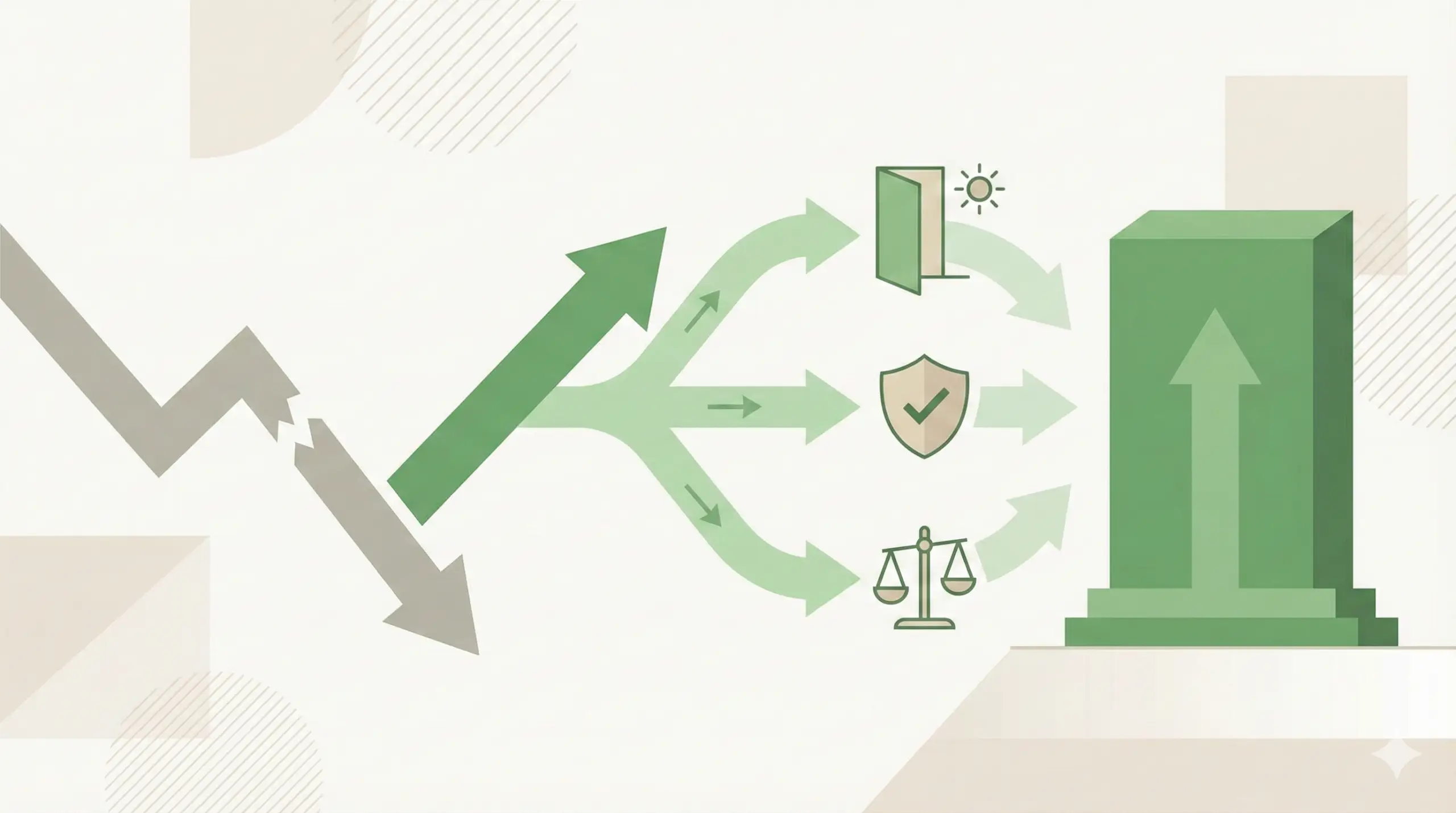
The debt consolidation process itself typically takes one to six weeks — but the total timeline depends entirely on which method you use, how prepared you are, and what happens after the consolidation is in place. Here’s the complete breakdown.
When you’re managing multiple high-interest debts and seriously considering consolidation, one of the first practical questions is almost always the same: how long is this actually going to take?
It’s a reasonable question that deserves a specific answer — not because the timeline is the most important variable in your decision, but because uncertainty about the process causes many borrowers to delay taking action that would benefit them significantly. Knowing what the process looks like, step by step and week by week, removes that uncertainty and lets you plan accordingly.
The short answer is that the consolidation process itself — from application to having your existing debts paid off — takes one to six weeks for most borrowers, depending on the method. The longer answer requires understanding what drives that variation and what happens in each phase.
Timeline by Consolidation Method
Different consolidation approaches have meaningfully different timelines. Here is what to expect for each.
Personal Loan Consolidation: 1 to 2 Weeks
A personal loan from an online lender, bank, or credit union is the fastest path to complete consolidation for most borrowers. The end-to-end process typically breaks down as follows:
Application and approval (1 to 3 business days): Online lenders in particular have streamlined this process significantly. Many can provide a preliminary decision within minutes of a completed application, with full approval and final terms communicated within one to three business days. Traditional banks and credit unions typically take somewhat longer — three to seven business days depending on their internal processes.
Loan funding (1 to 3 business days after approval): Once approved and the loan agreement is signed, funds are typically disbursed within one to three business days. Some online lenders offer same-day or next-day funding for qualified borrowers who complete the documentation process quickly.
Payoff of existing accounts (immediate to 3 business days): Once funds arrive, paying off existing credit card balances is immediate if done electronically through your bank’s transfer system. Some lenders allow you to designate specific payoff accounts and will disburse funds directly, eliminating one step.
Total from application to payoff: Typically 7 to 14 days for online lenders, and 14 to 21 days for bank or credit union loans.
Balance Transfer Credit Card: 2 to 4 Weeks
The balance transfer process has several sequential steps, each with its own timeline.
Card application and approval (instantaneous to 7 days): Many online card applications receive instant or near-instant approval decisions. In some cases, particularly for premium products, the issuer may require additional verification, extending this to several business days.
Card arrival (5 to 10 business days): Even if approval is instant, the physical card — or digital account access for issuers that provide it — typically takes five to ten business days to arrive. Some issuers provide digital account access immediately upon approval, allowing transfers to begin before the physical card arrives.
Transfer initiation and processing (2 to 7 business days): Once you have access to the new account, you initiate the transfer request. The receiving bank processes the transfer and sends payment to the originating credit card issuer. Depending on the issuers involved, this can take two to seven business days to complete and appear as a paid balance on your original accounts.
Credit report update (30 to 45 days): The paid-off original accounts will not immediately reflect zero balances in your credit report. Creditors typically report updated balances on their monthly reporting cycle. Expect the credit report to reflect the changes within one to two billing cycles.
Total from application to payoff: Typically 2 to 4 weeks from application to confirmed payoff of original accounts.
Debt Management Plan: 3 to 6 Weeks for Setup, 3 to 5 Years for Completion
A debt management plan (DMP) through a nonprofit credit counseling agency is a fundamentally different type of consolidation — not a loan or a credit product, but a structured repayment arrangement facilitated by a counselor who negotiates reduced interest rates with your creditors on your behalf.
Initial counseling session and assessment (1 to 2 weeks): The process begins with a comprehensive financial counseling session in which the counselor reviews your income, expenses, debts, and overall financial situation. This may require one or more sessions before a formal plan is proposed.
Creditor negotiation and enrollment (2 to 4 weeks): The counseling agency contacts each of your creditors to negotiate reduced interest rates and modified payment terms. Not all creditors participate in DMP programs, and negotiation outcomes vary. This phase takes two to four weeks to complete across all creditors.
Monthly payment commencement: Once creditors are enrolled and terms are agreed, you begin making a single monthly payment to the counseling agency, which distributes funds to your creditors according to the plan.
Total program duration: Most DMPs run for 36 to 60 months — three to five years — depending on the total debt amount and the negotiated payment terms.
What Slows the Process Down: The Variables That Matter
The timelines above assume a well-prepared borrower with complete documentation and no unusual complications. In practice, several factors consistently cause delays.
Documentation Gaps
This is the single most common cause of processing delays. Lenders need to verify your income, employment, and identity — and if you can’t provide the required documents quickly and completely, the application sits in a queue waiting for the information.
Documents to prepare before applying:
- Two to three months of recent pay stubs (or two years of tax returns if self-employed)
- Two to three months of recent bank statements
- A complete list of existing debts with creditor names, account numbers, current balances, and minimum payments
- Government-issued photo identification
- Proof of address (utility bill, bank statement)
Having these assembled before you submit a single application eliminates the most common source of delay. Treat this as a pre-application prerequisite, not a response to a lender request.
Recent Life Changes
Lenders verify employment and income through channels that take time. A recent job change, address change, or significant income fluctuation will trigger additional verification steps — typically adding three to seven business days. If you’ve had a major life change recently, communicate it proactively with your lender rather than allowing it to surface during verification and create unexplained discrepancies.
Credit Profile Complexity
Straightforward applications from borrowers with clean, consistent credit profiles move through underwriting quickly. Applications with complexity — multiple income sources, recent negative marks, existing delinquencies, or high debt-to-income ratios — require more underwriter attention and take longer to process. If your situation is complex, applying with lenders who specialize in your credit profile type produces faster results than applying with lenders whose typical borrower profile is different from yours.
Multiple Applications
Applying to five lenders simultaneously does not accelerate the process — it generates five hard inquiries on your credit report and creates confusion if multiple approvals arrive simultaneously. Apply to one or two carefully selected lenders based on preliminary research into their rate ranges and qualification criteria. Pre-qualification tools that use soft inquiries allow you to assess likely offers without triggering hard inquiries.
The Step-by-Step Process: From Decision to Execution
Step 1: Complete Your Debt Inventory (Days 1 to 3)
Before researching specific products or lenders, build a complete picture of your current debt situation. For every account you’re considering consolidating, record:
- Current balance
- Interest rate (APR)
- Minimum monthly payment
- Account number and creditor contact information
- Whether the account is current or delinquent
Calculate your total balance (how much you need to consolidate) and your blended average APR (the weighted average interest rate across all accounts). These two numbers are the baseline against which you evaluate every consolidation offer.
Step 2: Determine Your Consolidation Method (Days 3 to 7)
Use the following criteria to identify the appropriate consolidation method:
Total balance determines whether a balance transfer is realistic (most cards have limits under $15,000 to $20,000) or whether a personal loan is necessary for larger amounts.
Monthly cash flow determines whether you can clear a balance transfer within the promotional window. Divide the transfer amount plus the transfer fee by the number of promotional months. If the required monthly payment exceeds your available cash flow, a personal loan with a longer term is more appropriate.
Credit score determines what rates and terms you’ll qualify for. Strong credit (720+) opens the most competitive options in both categories. Fair credit (640 to 719) may still qualify for personal loan rates lower than current credit card APRs, though the best balance transfer offers may not be available.
Behavioral assessment: If you know from experience that you tend to accumulate balances on cards when available credit exists, the structural commitment of a personal loan — fixed payment, defined term, no revolving credit available — may produce better real-world outcomes than a balance transfer, even if the balance transfer would be cheaper in an optimal scenario.
Step 3: Research and Pre-Qualify (Days 5 to 10)
For personal loans, research three to four lenders using pre-qualification tools that use soft inquiries. Capture: APR range, origination fee, loan terms available, and minimum credit score requirements.
For balance transfers, research two to three card options. Capture: introductory APR period length, transfer fee percentage, credit limit for your profile (if assessable), and standard APR after the promotional period ends.
Run a total cost calculation for each option: total interest paid plus all fees over the payoff period. The lower total cost is the better choice financially, adjusted for the behavioral and cash flow considerations described above.
Step 4: Apply and Maintain Focus (Days 8 to 14)
Submit your application to your chosen option with complete documentation prepared and ready. Respond to any lender requests for additional information within 24 hours to avoid introducing delays.
If applying for a personal loan: Accept the loan terms, sign the agreement, and confirm the disbursement timeline. If funds go directly to you rather than to your creditors, plan the payoff sequence immediately.
If applying for a balance transfer: Begin the transfer process as soon as you have account access. Initiate transfers for the full amount you intend to move immediately rather than in stages — every day your existing balance remains on a high-APR card, interest is accruing.
Step 5: Execute the Payoff Immediately (Days 14 to 21)
The most common and most costly mistake in the debt consolidation process is allowing a gap between receiving the funds or establishing the new account and actually paying off the existing balances.
If you receive personal loan funds into your checking account, transfer payment to each existing creditor immediately — that day, if possible, or the next business day. Do not allow the funds to sit in your account. Every day they remain there while interest accrues on your existing balances is an unnecessary cost.
After payoff, call each creditor to confirm the account is being recorded as paid in full and request written confirmation. Keep this documentation permanently.
Step 6: Set Up the New Payment on Autopay
Immediately set up automatic payment for your personal loan or balance transfer card monthly payment. The payment discipline required on a balance transfer card is particularly high — many issuers terminate the promotional rate upon a single missed or late payment. Automate the payment before the first due date arrives.
The Credit Score Timeline After Consolidation
Understanding what happens to your credit score throughout the consolidation process helps you interpret the changes you observe without unnecessary concern.
Week 1 to 2 (Application phase): The hard inquiry from your application produces a small, temporary score reduction — typically two to five points. This is normal and expected.
Month 1 to 2 (Payoff reflected in reports): As your existing credit card balances are paid off and reported to the bureaus, your credit utilization rate drops significantly. This typically produces a meaningful credit score improvement — often 20 to 50+ points depending on how high your utilization was before consolidation. The personal loan or balance transfer card appears as a new account, which may slightly reduce average account age.
Months 3 to 6: Consistent on-time payments on the new account begin accumulating positive history. Score continues upward as the hard inquiry’s impact diminishes.
Months 6 to 12: For most borrowers, the net credit score impact of consolidation is strongly positive by this point. Lower utilization and consistent payment history outweigh the initial hard inquiry and new account effects.
Frequently Asked Questions
Do I need to close my existing credit cards after paying them off through consolidation?
Generally, no — and in most cases you should not close them. Keeping paid-off credit card accounts open preserves their credit limits as part of your total available revolving credit, which supports your utilization rate. It also preserves the account age, which benefits your credit history length. If an account carries an annual fee that isn’t justified by its benefits, closing it may be appropriate. Otherwise, keep it open and do not carry a new balance.
What if I’m approved for a lower amount than I need?
If a personal loan approval comes in lower than your total consolidation target, consolidate as much as possible with the loan and then evaluate whether a balance transfer, additional loan from a different lender, or accelerated direct paydown is the best approach for the remainder. Partial consolidation still reduces your blended average interest rate and simplifies your payment structure, even if it doesn’t cover every account.
Can I consolidate debts that are already in collections?
Personal loan lenders typically require accounts to be in good standing for standard consolidation products. A debt management plan through a nonprofit credit counseling agency may be able to address collection accounts depending on whether the collector participates in DMP programs. If multiple accounts are in collections, consulting with a nonprofit credit counselor is the most appropriate starting point.
After the Consolidation: Protecting What You’ve Built
The one to six weeks it takes to complete the consolidation process is the beginning, not the end. The consolidation establishes the structure; your behavior within that structure determines the outcome.
The structural risk is well-documented: paid-off credit cards now have available credit. That available credit creates the potential to accumulate new balances while the consolidation loan or balance transfer repayment continues in parallel. Borrowers who fall into this pattern find themselves with the original debt on the new consolidated account plus new debt accumulating on the original cards — a materially worse position than before consolidation.
Prevent this through deliberate behavioral management. Establish a clear rule about credit card use during the consolidation repayment period and hold to it. The freedom that consolidation creates — simplified payments, reduced interest burden, improved cash flow — is the resource that should be directed toward completing the repayment, not toward new spending.
When the consolidation is complete, the financial habits developed during the repayment period are the foundation of the credit profile you’ve built. They are worth more than any single tool or strategy.
This article is intended for informational purposes only and does not constitute legal or financial advice. Financial product terms, rates, and availability vary by lender and are subject to change. Please consult a qualified financial advisor for guidance specific to your individual situation.