Credit Card Hardship Programs: What They Are, How to Qualify, and How to Use Them Strategically
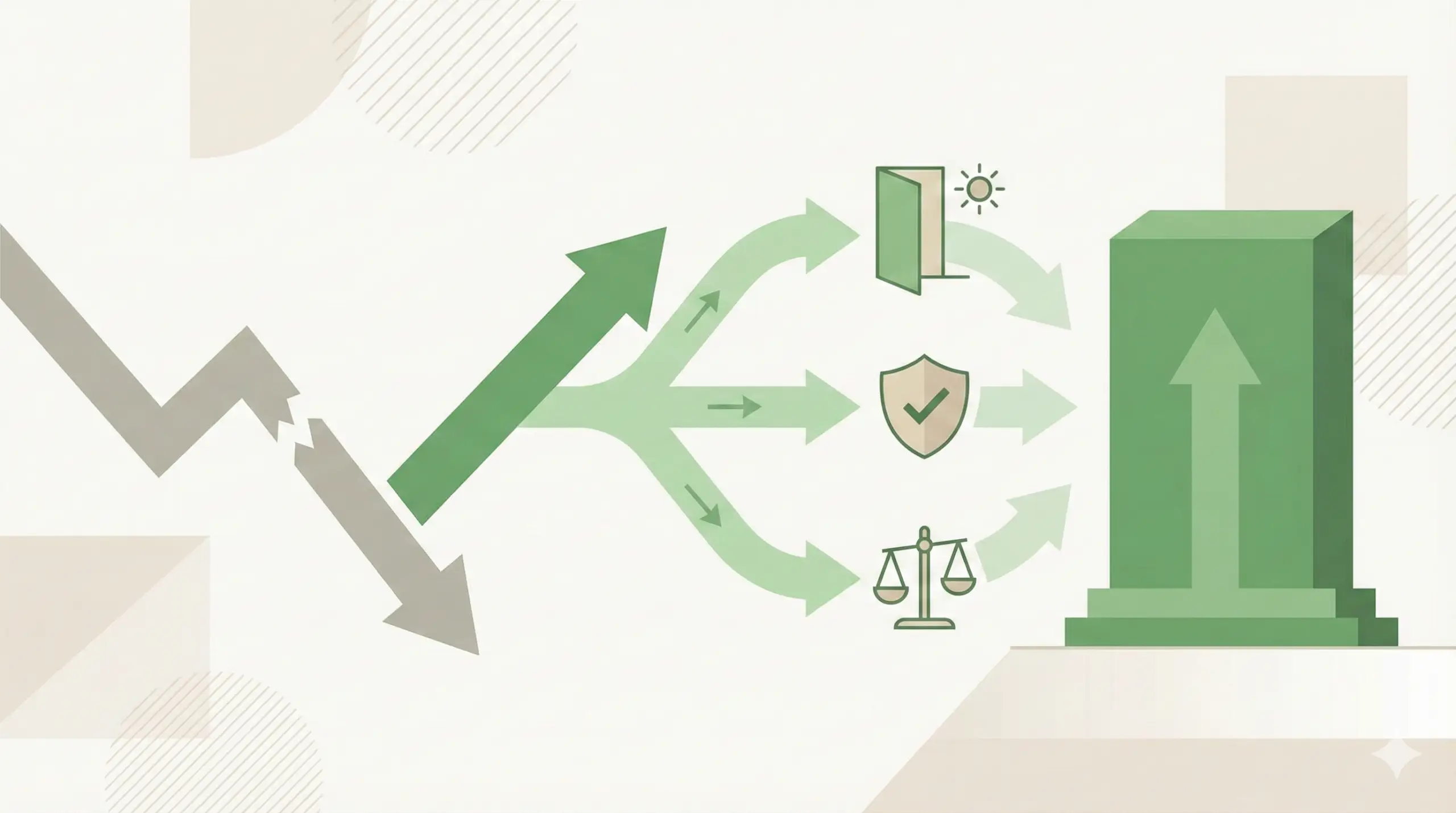
Credit card hardship programs are temporary modification agreements offered directly by card issuers — typically reducing your interest rate, waiving fees, and lowering minimum payments for a defined period. They are not debt settlement, they do not require third-party involvement, and for borrowers who engage proactively, they represent the lowest-cost, lowest-credit-impact path through a period of genuine financial difficulty.Most credit card issuers have hardship programs. Most cardholders don’t know they exist — or don’t know how to access them — until they are already significantly behind and their negotiating position has weakened. Understanding what these programs are, when to engage them, and how to navigate the process effectively is the difference between a temporary adjustment that costs you minimal credit damage and a delinquency spiral that ends in charge-off, collections, and years of credit repair.
What a Credit Card Hardship Program Actually Is
A hardship program is a temporary modification to your credit card account terms, offered directly by the card issuer, in response to documented financial difficulty. It is a bilateral arrangement — you and the bank agree to modified terms for a defined period, after which your account returns to standard terms or is re-evaluated.The typical modifications available through a hardship program include one or more of the following:
Reduced interest rate: The most financially significant modification. Interest rate reductions to 0% to 9.99% are not uncommon on accounts that were previously at 20% to 29% APR. This single change can dramatically reduce the total cost of carrying and repaying the balance. Fee waivers: Late fees, over-limit fees, and in some cases annual fees may be waived or suspended for the program duration. Reduced minimum payment: The required monthly payment may be lowered to accommodate reduced income, providing cash flow relief while the balance continues to be paid down. Temporary payment deferral: Some issuers offer a defined pause on payments — typically one to three months — for borrowers experiencing acute short-term disruption (job loss, medical emergency, natural disaster). Extended repayment term: Some programs restructure the balance into a longer repayment schedule with lower payments, sometimes with a fixed payoff date rather than the open-ended revolving structure.What Hardship Programs Are Not
A hardship program is not debt settlement. The full balance remains owed and will be repaid — the program modifies the terms, not the obligation.It is not a nonprofit Debt Management Plan (though some features are similar). DMP programs through NFCC-accredited agencies consolidate multiple creditors under a unified plan and typically involve account closure. A hardship program is a direct arrangement with a single issuer.
It is not a product offered through or administered by third-party debt relief companies. If a company is offering to enroll you in “hardship programs” on your behalf for a fee, they are providing a service that you can and should access directly — for free — by contacting your card issuer.
Why Issuers Offer These Programs — and Why Timing Matters
Credit card issuers offer hardship programs for the same reason they negotiate settlements: the alternative is worse. A borrower who defaults, charges off, and enters collections costs the issuer collection resources and typically produces recovery at a steep discount. A borrower who enters a hardship program and continues making reduced payments, even at a lower interest rate, produces better economic outcomes for the issuer than a default.This is also why timing is the most important factor in accessing these programs. Issuers make hardship programs available to borrowers who are currently paying or who are in early delinquency — typically within the first 30 to 90 days of missed payments. The further behind you fall, the fewer the options:
- Current (not yet delinquent): Maximum program flexibility — issuers have the strongest incentive to prevent a delinquency from starting
- 30 days past due: Still generally eligible for most hardship programs; some issuers consider this the ideal contact window
- 60 to 90 days past due: Some programs still available; options narrowing
- 120+ days past due: Approaching charge-off threshold; hardship programs may no longer be available; negotiation shifts toward settlement
Qualifying for a Hardship Program: What Issuers Evaluate
There is no universal standard across issuers — each has its own internal criteria, program structures, and approval processes. However, the evaluation typically focuses on: Documented financial hardship: The event or circumstance that has affected your ability to pay. Commonly recognized hardship categories include: involuntary job loss or significant income reduction, medical emergency or serious illness (yours or an immediate family member’s), death of a spouse or primary household income earner, natural disaster, divorce or separation, and military deployment. Account history with the issuer: Borrowers with longer relationships and consistent prior payment history are generally viewed more favorably than recent customers. A five-year history of on-time payments followed by a sudden hardship presents a very different risk profile than a recently opened account that is already in early delinquency. Ability to make reduced payments: The program is designed to keep you paying — at modified terms. Demonstrating that you can sustain the proposed reduced payment is part of the evaluation. If your income has been entirely eliminated, a temporary deferral may be more appropriate than a payment reduction. Specificity and credibility of the hardship explanation: A specific, verifiable explanation (job loss confirmed by severance documents, medical emergency confirmed by bills or treatment records) carries more weight than a vague statement of financial difficulty.The Application Process: How to Do It Correctly
Step 1: Know Your Numbers Before You Call
The issuer’s representative will ask about your current income and expenses. Going into this conversation without your numbers prepared weakens your position and extends the call.Before contacting the issuer, have ready:
- Current monthly take-home income (or previous income if recently unemployed)
- Total fixed monthly obligations (housing, utilities, insurance, other debt minimums)
- The specific hardship event: what happened, when it happened, and the expected timeline for resolution
- What monthly payment you can realistically sustain under the modified arrangement
Step 2: Contact the Right Department
The general customer service number on the back of your card is the entry point. When you connect, do not describe your situation to the first representative. Instead, ask directly for the hardship department, financial hardship team, or account assistance department. These teams have specific authority to offer program modifications that standard customer service representatives typically cannot approve.If the representative tells you there is no such department, ask to speak with a supervisor or an account specialist. Large issuers universally have hardship programs — the question is which department manages them, and this varies by issuer and sometimes by account type.
Step 3: Present Your Situation Concisely and Professionally
When you reach the right contact, state your situation directly: “I’ve been a customer for [years] with a consistent payment history. [Specific hardship event] has temporarily reduced my income, and I’m reaching out proactively to see what modification options are available to help me continue making payments while I work through this situation.”This framing accomplishes several things: it establishes your history as a good-faith borrower, names the specific hardship, frames the contact as proactive rather than reactive, and frames the outcome as continued payment — not forgiveness. This is the framing that positions you as a good candidate for hardship assistance rather than a potential charge-off.
Key points to communicate:- The nature and duration of the hardship
- That you want to continue paying and keep the relationship
- The specific modification that would make continued payment feasible
- Asset details beyond what is directly asked
- Information suggesting the hardship is permanent when it is temporary
- Overstated severity that doesn’t match your documentable situation
Step 4: Evaluate the Specific Offer Before Accepting
When a hardship program offer is made, do not accept it immediately. Ask for the complete terms before agreeing: Duration: How long does the modified arrangement last? Most programs run three to twelve months. What happens at the end of the program period — does the account return to standard terms, or is it re-evaluated? Interest rate: What is the modified rate? Is it fixed for the program duration or subject to change? Account status: Does enrollment require closing the account? Most hardship programs require the card to be closed or frozen during the program period — you cannot continue charging on the account while in a hardship arrangement. Credit reporting: How will the account be reported during the program? Ask specifically whether participation in the hardship program will be noted on your credit report and in what terms. Some issuers report “account in hardship plan” or “account in financial management program” — which may be visible to future lenders. Others do not report the program status at all. Minimum payment commitment: What is the required monthly payment under the program? Confirm this is actually sustainable for your situation before accepting. Defaulting on a hardship program payment typically terminates the program and may result in worse terms than if you had never enrolled. Get the terms in writing. Before making any payment under the modified arrangement, request written confirmation of all program terms — interest rate, duration, payment amount, account status, and credit reporting treatment. This is your reference document if any term is applied incorrectly.How Hardship Programs Affect Your Credit Report
This is the detail borrowers most frequently misjudge — in both directions.If You Enroll While Current
If you enroll before missing any payments, your on-time payment history remains intact. The hardship program itself may or may not appear as a notation on your report (depending on the issuer’s reporting practices), but your payment history continues uninterrupted. For borrowers who act early, credit damage from hardship program enrollment can be minimal to nonexistent.If You Are Already Delinquent
Enrolling in a hardship program does not retroactively remove late payment marks that have already been reported. The late marks that occurred before enrollment remain on your report for seven years from their respective dates. However, enrollment stops further delinquency marks from accumulating — which is significant. Each additional 30-day late cycle produces an additional negative mark. Stopping the accumulation through hardship enrollment can prevent what might otherwise become 90-day and 120-day marks (which are substantially more damaging than a single 30-day mark).Account Closure
Most hardship programs require account closure, which removes that account’s credit limit from your total available revolving credit. This can increase your overall credit utilization ratio — potentially reducing your score — particularly if the closed account had a high limit and you carry balances on other accounts. Managing utilization across your remaining open accounts after hardship enrollment can partially offset this effect.What It Is Not
Hardship program enrollment is not reported as a settlement, a charge-off, or a collection account. These are materially more negative credit entries. A hardship program that prevents a delinquency from progressing to charge-off status preserves the credit position the charge-off would have destroyed.What to Do If Your Application Is Denied
Denial is not necessarily final. Different representatives have different levels of authority, and escalation often produces different results. Request to speak with a supervisor. A supervisor in the hardship or account retention department may have authority to approve arrangements that the initial representative cannot. Provide documentation. If the denial was based on insufficient information, offer to provide supporting documentation — a layoff notice, medical bills, or other evidence of the hardship event. Some issuers will reconsider with documentation they didn’t initially have. Try again in a few weeks. Issuer policies and individual representative determinations vary. If the hardship is ongoing, calling back and reaching a different representative sometimes produces a different outcome. Consider alternatives. If a single issuer’s hardship program is unavailable, a nonprofit credit counseling agency (NFCC-accredited) can often negotiate interest rate reductions directly with creditors — including issuers who declined your direct application — through the Debt Management Plan process. The DMP structure provides leverage that individual borrowers sometimes lack.After the Hardship Program: Building Durability
The hardship program is a bridge. What you build on the other side determines whether the financial stability it provides is temporary or lasting. Build a cash reserve before the program ends. The interest savings from a reduced-rate hardship program create an opportunity to accumulate a small emergency reserve. Even $500 to $1,000 provides a buffer that reduces the probability of needing a hardship program again — because the next unexpected expense has a funded solution rather than going on a credit card. Do not reopen or replace the closed account immediately. The account closed as part of the hardship enrollment should remain closed until your financial position is fully stable. Adding new credit immediately after a hardship period increases the risk of recreating the same debt load. Address the underlying cash flow issue. A hardship program addresses the symptom — unmanageable debt payments — but does not address the spending pattern or income gap that produced the unsustainable balance. A realistic budget review after the program ends identifies what structural changes are needed to prevent recurrence.Frequently Asked Questions
Can I enroll multiple credit cards in hardship programs simultaneously?
Yes — if you have multiple accounts with different issuers, you can contact each issuer separately about their hardship programs. Each issuer has its own program and evaluates your account independently. Note that a nonprofit Debt Management Plan through an NFCC-accredited counselor may be more efficient for managing multiple accounts simultaneously, as the counselor negotiates with all creditors on your behalf under a single monthly payment.What if I miss a payment during the hardship program?
Most hardship programs terminate upon a missed payment — reverting the account to standard (or worse) terms. If you anticipate a missed program payment before it happens, contact the issuer immediately. Many issuers will work with you to adjust the program rather than terminate it, but proactive communication is required. Missing the payment without contact typically produces automatic termination.Is there a limit to how many times I can use a hardship program with the same issuer?
Most issuers do not publish explicit limits, but repeated hardship program enrollment on the same account may result in stricter terms, shorter program durations, or denial. Hardship programs are intended for temporary, recoverable financial difficulty — not as a permanent interest rate reduction strategy.This article is intended for informational purposes only and does not constitute financial or legal advice. Credit card hardship program terms, eligibility criteria, and credit reporting treatment vary by issuer. Please contact your card issuer directly or consult an NFCC-accredited credit counselor for guidance specific to your situation.
📖 Complete guide: Debt Management: The Complete 2026 Guide
Related: How To Negotiate Credit Card Debt A Professional Guide · Can Credit Card Debt Be Forgiven A Practical Guide · How To Pay Off Debt On A Low Income A Strategic Guide