Buying a home is arguably one of the biggest financial milestones you’ll ever hit. If you’re reading this, you’ve likely moved past the “is this a good idea?” phase and into the “how do I actually make this happen?” reality. And let’s be honest: the most stressful part of that transition is usually the credit score conversation.
We often hear the myths—that you need a perfect 800+ score or that you’re doomed if you’ve had a minor hiccup in your financial past. The truth is much more nuanced. As a professional, you’re used to dealing with complex systems, so let’s pull back the curtain on how lenders actually view your credit and, more importantly, how you can position yourself for success.
Understanding the “Minimum” Credit Score Reality
First, let’s clear the air: there isn’t one single, universal “minimum” credit score for a mortgage. It depends entirely on the type of loan you’re applying for.
Think of it like applying for a job. A specific role might require a “minimum” level of experience, but if you exceed that, you become a more attractive candidate. Lenders work similarly. While you might clear the bare-minimum hurdle, your credit score ultimately dictates your interest rate—and that, my friend, is where the real money is saved or lost.
Conventional Loans (The Gold Standard)
For a standard conventional loan, most lenders look for a FICO score of 620. If you have a 620, you’re in the game. But don’t celebrate just yet. Getting approved with a 620 is very different from getting approved with a 740. With a 740, you’re getting the best rates on the market. With a 620, you’ll likely pay a higher interest rate, which adds up to thousands of dollars over the life of your mortgage.
FHA Loans (The Accessibility Option)
FHA loans are backed by the Federal Housing Administration, which means they are designed to be more accessible. If you have a credit score as low as 580, you may qualify for a mortgage with as little as a 3.5% down payment. If your score is between 500 and 579, you might still qualify, but you’ll likely need to put down 10%. It’s a great safety net, but it comes with mandatory mortgage insurance premiums that you need to account for in your monthly budget.
VA and USDA Loans (The Specialty Loans)
If you’re a veteran or looking to buy in a designated rural area, you’re in luck. VA and USDA loans are incredible tools. While they don’t always have a hard-coded minimum score set by the government, most lenders will still look for at least a 580 to 620 to feel comfortable. These loans are fantastic because they often require zero down payment.
The “Hidden” Metrics: Why Your Score Isn’t Everything
Here is where many professionals get tripped up. You might have a “good” score, but get denied. Why? Because lenders aren’t just looking at a number; they are looking at the story your credit report tells.
1. Debt-to-Income Ratio (DTI)
You can have an 800 credit score, but if your monthly debt payments (car, student loans, credit cards) consume 60% of your gross monthly income, no lender is going to touch you. They want to see that you have enough breathing room to pay your mortgage even if life throws a curveball. A general rule of thumb? Aim to keep your total DTI below 43%.
2. Credit History Length
An 800 score achieved over two years of credit history is viewed differently than an 800 score built over fifteen years. Lenders love stability. It shows that you aren’t just a “flash in the pan” with your finances, but someone who has consistently managed credit for a long time.
3. Recent Inquiries and New Credit
Are you planning to buy a house in six months? If so, stop opening new credit cards or financing new furniture. Every time you open a new account, your average age of accounts drops, and you get a “hard inquiry” on your report. It’s a small hit, but it shows “credit seeking behavior,” which can make lenders nervous.
Step-by-Step: How to Prepare Your Credit for a Mortgage
If you’re currently sitting below your goal score, don’t panic. Credit scores are dynamic—they aren’t permanent marks on your record. You can change them if you have a strategy.
Step 1: Pull Your Free Reports
Don’t just look at the score your bank app gives you. Go to AnnualCreditReport.com and pull the actual reports from Equifax, Experian, and TransUnion. You might be surprised to find errors—a paid-off account still showing as open, or worse, a collection account that isn’t even yours. Disputing these errors is the fastest way to see a jump in your score.
Step 2: Tackle Your Credit Utilization
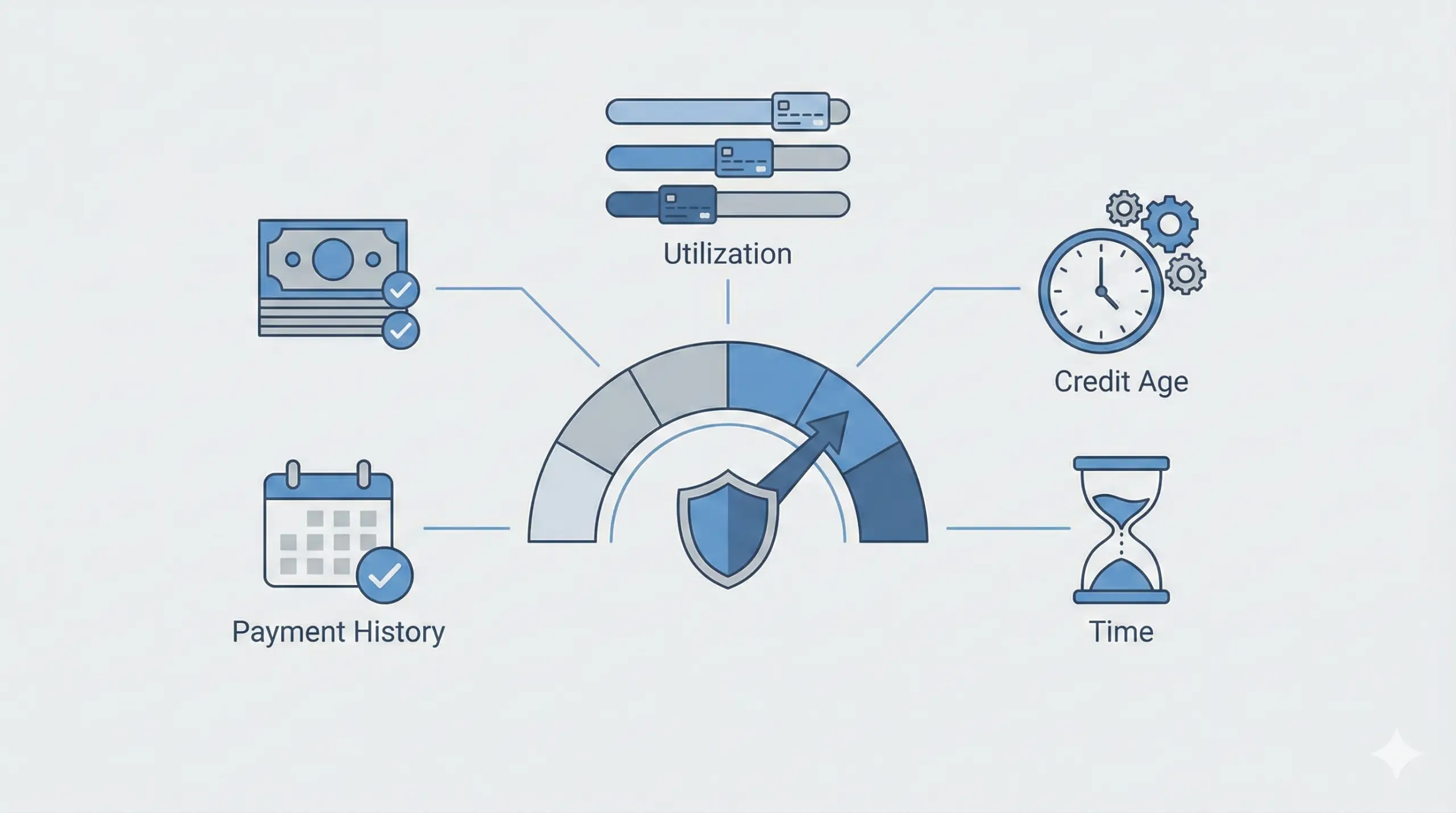
This is the single most effective way to boost your score quickly. If you have a credit card with a $10,000 limit, and you’re carrying a $5,000 balance, your utilization is 50%. Lenders want to see that below 30%, and ideally, below 10%. If you have the cash, pay down those balances before you apply for your pre-approval.
Step 3: Stop Closing Old Accounts
It’s tempting to tidy up your financial life by closing old cards you don’t use anymore. Don’t do it. That credit limit contributes to your overall utilization ratio, and the account age contributes to your credit history length. Just tuck the card in a drawer and forget about it.
Step 4: Automate Everything
A single missed payment can drop your score by 50 to 100 points in a heartbeat. Set every single bill to autopay—even if it’s just the minimum. You can always pay more manually later, but automation is your safeguard against human error.
Common Pitfalls to Avoid (The “Don’t Do This” List)
We’ve seen it happen too many times: a client does everything right for months, then makes one rookie mistake right before closing.
- The “Big Purchase” Trap: Do not buy a new car, a boat, or expensive appliances on credit while you are in the middle of the mortgage process. It changes your DTI and can kill your loan at the 11th hour.
- The “Gap” in Employment: Lenders like to see at least two years of steady employment in the same field. If you’re planning a career switch, try to do it after you’ve secured your home, not while you’re trying to close.
- Large Unexplained Deposits: If you suddenly deposit $10,000 into your account, you have to prove where it came from. Lenders have strict anti-money laundering rules. If you’re receiving a gift from family, make sure you have the proper “gift letter” documentation ready to go.
Final Thoughts: The Path to Homeownership
Getting to the finish line isn’t about being perfect; it’s about being prepared. If you find your score isn’t where it needs to be, don’t view it as a failure—view it as a “to-do list.”
Ask yourself: is my debt-to-income ratio in check? Is my credit utilization under 30%? Have I checked my reports for errors?
When you approach your mortgage application with this level of clarity and organization, you aren’t just another applicant to the lender. You’re a professional who understands the value of their financial health. And that, in the long run, is what makes the process—and the outcome—so much smoother.
You’ve got this. Take it one step at a time, keep your focus on the long-term goal, and before you know it, you’ll be holding the keys to your new front door.
Further Reading
📖 Complete guide: How to Improve Your Credit Score: The Complete 2026 Guide
📖 Complete guide: First-Time Home Buyer Guide 2026
Related articles:
→ How to Improve Your Credit Score Before a Mortgage
→ Boost Your Credit Score for the Best Mortgage Rates
→ How to Secure a Mortgage with Bad Credit
→ Can You Buy a House With Bad Credit?