Can You Reset Your Credit Score Legally? The Complete Guide to Rebuilding Your Credit Profile
There’s no magic reset button for your credit score — but the legal strategies available to you are often just as powerful. Here’s the complete, practical roadmap to repairing, rebuilding, and transforming your credit profile from the ground up.If you’ve spent any time searching for ways to fix your credit, you’ve almost certainly encountered some version of the phrase “credit reset” — sometimes attached to legitimate advice, sometimes attached to services that range from misleading to outright illegal.
Let’s establish the truth clearly at the outset: you cannot erase accurate negative information from your credit report, regardless of how it got there or how much you’ve changed since. The credit bureaus are designed to maintain historical records. That’s their function. A genuine “reset” — a complete erasure of your credit history — doesn’t exist through any legal means.
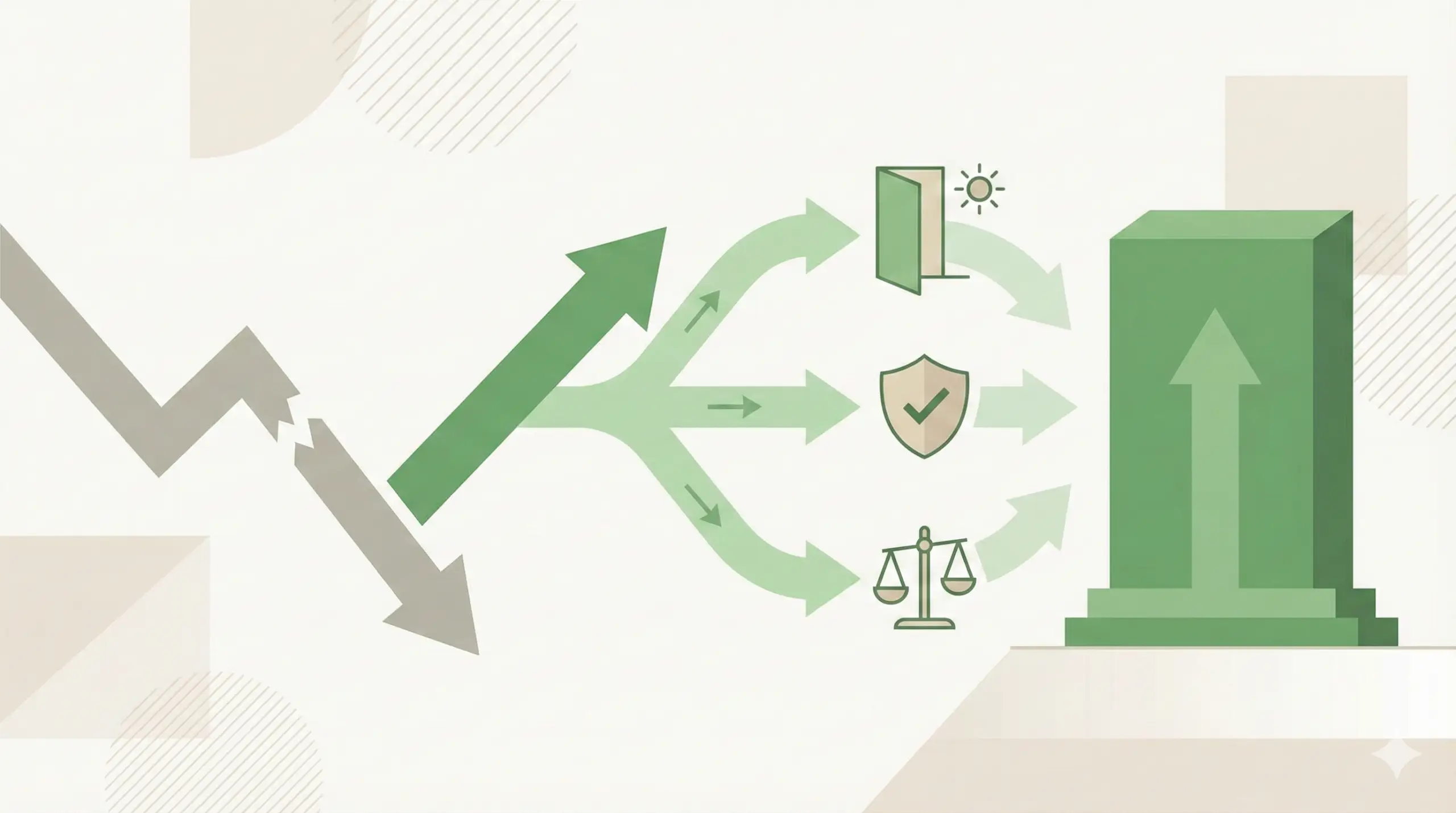
What does exist is something arguably more empowering: a structured, evidence-based process for correcting inaccurate information, strategically managing the factors that influence your score most heavily, and building a credit profile that increasingly reflects your current financial behavior rather than your past difficulties.
For most borrowers, this process produces dramatic score improvements within 12 to 24 months. Some changes — particularly around credit utilization — can produce measurable results in as little as 30 to 60 days.
Here’s how it works.
Understanding Your Credit Score: The Inputs That Drive the Output
Your credit score is a mathematical calculation, not a judgment. It responds predictably to specific inputs. Understanding which factors carry the most weight is the foundation of any effective rebuild strategy.The FICO scoring model — the most widely used by lenders — weights five factors:
- Payment history: 35% — Whether you pay on time, every time
- Credit utilization: 30% — How much of your available revolving credit you’re using
- Length of credit history: 15% — How long your accounts have been open
- Credit mix: 10% — The variety of account types (credit cards, installment loans, mortgage)
- New credit: 10% — Recent credit applications and new accounts
Step 1: Conduct a Complete Credit Report Audit
You cannot build an effective strategy around information you haven’t reviewed. Your first action is to pull your complete credit reports from all three major bureaus — Equifax, Experian, and TransUnion — and review every line.You are entitled to free reports from all three bureaus through AnnualCreditReport.com — the only federally authorized source. Do not use third-party sites that charge fees or require subscriptions for this initial access.
What to Look for in Your Reports
Accounts that don’t belong to you. Mixed-file errors — where another consumer’s accounts appear on your report — are more common than most people realize, particularly among people with common names or those who share an address with a family member. Identity theft is another source of unfamiliar accounts. Incorrect payment status. Payments reported as late that were actually made on time, accounts marked as currently delinquent that have been paid, or balances reported higher than they actually are. Duplicate entries. A debt that was sold to a collection agency sometimes appears twice — once from the original creditor and once from the collector — as two separate negative entries. Only one entry is accurate. Incorrect personal information. Wrong Social Security numbers, names, addresses, or employer information can indicate file-mixing errors that affect the accuracy of the entire report. Outdated negative items. Most negative items must be removed from your credit report after seven years from the date of first delinquency under the Fair Credit Reporting Act. Bankruptcies have different timelines (seven years for Chapter 13, ten years for Chapter 7). If negative items remain beyond their legal reporting window, they are in violation of federal law and must be removed. Pro tip: Review all three bureau reports, not just one. Creditors are not required to report to all three bureaus, and errors are often bureau-specific. A negative item that appears on two bureaus but not the third was likely reported incorrectly to the two where it appears, or the data transferred differently.Step 2: Dispute Every Inaccuracy — Precisely and With Documentation
Under the Fair Credit Reporting Act (FCRA), you have the legal right to dispute any information in your credit report that you believe is inaccurate, incomplete, or unverifiable. When you file a dispute, the bureau is required to investigate within 30 to 45 days and remove any item that cannot be verified.This is one of the most powerful — and most underused — tools in credit rehabilitation.
How to File an Effective Dispute
Be specific, not general. A dispute that says “this account is wrong” provides the bureau with nothing to investigate. A dispute that says “this account shows a payment marked late on March 2022 — enclosed is my bank statement confirming the payment cleared on March 8, 2022, the due date” gives the bureau specific, documented information to act on. Attach supporting documentation. Bank statements, payment confirmation emails, account correspondence, and any other records that substantiate your position strengthen your dispute significantly. Disputes supported by documentation are resolved more quickly and more favorably. Submit disputes in writing via certified mail for any significant items. While bureau online portals are convenient and often faster, certified mail with return receipt creates a documented paper trail that is valuable if you need to escalate — including filing a complaint with the Consumer Financial Protection Bureau (CFPB) or pursuing legal action under the FCRA. Follow up. After the investigation period, pull your updated report and verify that the disputed item was corrected or removed. If the bureau “verified” an item you believe is inaccurate, you have the option to submit additional documentation, request the bureau’s verification records, or dispute with the original creditor directly.Goodwill Adjustments: A Frequently Overlooked Option
For accurate negative items — particularly isolated late payments from an otherwise clean history — you can contact the original creditor directly and request a goodwill adjustment: a request that they update your account history to remove or modify the late payment notation as a courtesy.This is not a legal right, and creditors are not required to comply. But for long-standing customers with otherwise strong payment records, a well-written, polite goodwill letter explaining the circumstances of the missed payment and the overall history of the account is surprisingly effective. Many lenders have established policies for honoring one-time goodwill adjustment requests. The cost of asking is zero.
Step 3: Attack Your Credit Utilization Rate
If you want a fast, meaningful credit score improvement, reducing your credit utilization rate is your most effective tool. Because utilization is calculated and reported monthly, changes here can produce measurable score changes within 30 to 60 days — faster than almost any other strategy.How Utilization Is Calculated
Credit utilization is the ratio of your current revolving credit balances to your total revolving credit limits, expressed as a percentage.$$\text{Utilization Rate} = \frac{\text{Total Balances}}{\text{Total Credit Limits}} \times 100$$
A borrower with $4,000 in balances across cards with a combined limit of $10,000 has a 40% utilization rate. That rate is reported to the bureaus and factored into the score calculation.
The target: Below 30% is the standard guidance. Below 10% is associated with the strongest credit scores. Above 30% creates a measurable drag on your score, regardless of whether you pay the balance in full each month.The Statement Date Timing Strategy
This is the detail most borrowers miss. The balance reported to the credit bureaus is typically the balance on your statement closing date — not your payment due date.This means you can carry a high balance throughout the month, pay it off before the due date, and still have a high utilization rate reported — because the bureau saw the balance at statement close.
The fix: Pay your balance down before the statement closing date, not just before the payment due date. Call your credit card company or check your online account to identify your statement closing date. Ensure your balance is at your target utilization level before that date each month.Increasing Available Credit
Another approach to reducing utilization without reducing spending is increasing your total available credit limit. Requesting a credit limit increase on an existing card — particularly one you’ve managed responsibly — adds to your total available credit and automatically reduces your utilization ratio if your balances remain constant. Important: Many limit increase requests trigger a hard inquiry. Ask your card issuer whether their process uses a hard or soft inquiry before requesting. Some issuers conduct periodic automatic limit reviews that use only a soft inquiry.Step 4: Protect the Length of Your Credit History
The average age of your open credit accounts is a meaningful scoring factor — and one that many borrowers inadvertently damage by closing accounts they no longer actively use. Do not close old accounts unless they carry fees that clearly outweigh any benefit. Every account you close reduces your total available credit (increasing your utilization rate) and may reduce the average age of your credit accounts. Both effects move your score in the wrong direction.For accounts you rarely use, a simple solution is placing a small recurring charge — a streaming service subscription, a monthly utility payment — on the card and setting it to autopay. This keeps the account active and in good standing without requiring active management or risking an unnoticed balance buildup.
Step 5: Be Strategic About New Credit Applications
Every application for new credit triggers a hard inquiry on your credit report — a notation that you applied for credit. Hard inquiries remain on your report for two years and affect your score for approximately one year.A single hard inquiry typically reduces your score by a modest amount — usually five points or fewer. The concern is volume and pattern. Multiple hard inquiries in a short period signal to lenders that you are actively seeking credit, which may indicate financial stress. The cumulative effect of several inquiries in a brief window is more damaging than any single application.
Rate shopping exception: When you are comparison-shopping for a mortgage, auto loan, or student loan, multiple inquiries from the same type of lender within a defined window — typically 14 to 45 days, depending on the scoring model — are counted as a single inquiry. This protects borrowers who are genuinely shopping for the best terms.Be selective and intentional about credit applications. Each application should serve a clear strategic purpose, not be a speculative attempt to access credit you may not need.
Step 6: Build Consistent, Positive Credit History
Disputing errors and managing utilization address existing problems. Building a positive future payment history is the long-term engine of credit score improvement.Payment Automation
Set up autopay for every credit account you hold. Even if you intend to pay the full balance, configure the minimum payment autopay as a safety net. A single 30-day late payment can reduce an excellent credit score by 90 to 110 points — an effect that persists for years. No missed payment is trivial enough to leave to chance.Secured Credit Cards
For borrowers with limited or severely damaged credit histories, a secured credit card is the most accessible credit-building tool. You make a cash deposit that serves as your credit limit, use the card for manageable routine purchases, and pay the balance in full each month. Your on-time payment history is reported to the bureaus monthly, building a positive track record consistently.Credit-Builder Loans
Offered by many credit unions and community banks, credit-builder loans are structured specifically for credit rehabilitation. You make fixed monthly payments into a held account; the funds are released at the end of the term. Your payment history is reported to the bureaus throughout. They are low-risk, low-cost tools for adding an installment account — a different account type than revolving credit cards — to your credit profile.Authorized User Status
If a family member or close friend with excellent credit is willing to add you as an authorized user on one of their long-standing, well-managed accounts, you receive the benefit of that account’s positive history on your credit report. You do not need to use the card or even have physical access to it. The primary account holder’s credit is not meaningfully affected, and you receive a genuine credit profile boost.What to Absolutely Avoid: Schemes That Create More Problems
“Credit Repair” Companies Promising Guaranteed Results
Legitimate credit counseling organizations exist and provide genuine value. Predatory “credit repair” companies that charge upfront fees and guarantee to remove accurate negative information do not. The only legal basis for removing negative information from a credit report is inaccuracy — no company can remove accurate information through any legitimate process, regardless of what they promise.File Segregation / Credit Privacy Number Schemes
This is not a gray area — it is illegal. Schemes that promise to create a “new credit identity” using a Credit Privacy Number (CPN) or similar mechanism are fraudulent. Using a different Social Security number or identification number to obtain credit when you are not entitled to a new SSN constitutes federal fraud. People who engage in these schemes face criminal prosecution, not just credit complications.Closing Multiple Accounts Simultaneously
Closing several accounts at once removes available credit from your profile, increases your utilization rate, potentially reduces your average account age, and produces multiple simultaneous negative scoring effects. If account simplification is a goal, close accounts one at a time, starting with the most recently opened ones, over an extended period.Realistic Timeline: What to Expect
Credit score improvement follows a curve — faster at first as the most damaging errors are corrected and utilization is addressed, then progressively incremental as your positive payment history accumulates. 30 to 60 days: Measurable improvement from utilization reduction and dispute resolution of clear errors. 3 to 6 months: Meaningful score movement from consistent on-time payments, corrected report inaccuracies, and strategic account management. 12 to 24 months: Substantial profile transformation for most borrowers. Scores that were in the “Fair” range (580–669) commonly reach “Good” (670–739) or above within this window with consistent discipline. 3 to 7 years: Natural expiration of most negative items from your credit report, progressively reducing their impact as your positive history grows.The single most important habit across all timeframes is consistent on-time payment. No strategy overcomes a pattern of missed payments. Every other technique operates against a foundation of payment reliability.
Frequently Asked Questions
Can paying off a collection account remove it from my report?
Not automatically. Paying a collection account changes its status from “unpaid” to “paid” or “settled” — but the collection entry itself can remain on your report for seven years from the original date of first delinquency. Some debt collectors will agree to “pay for delete” arrangements — removing the collection entry in exchange for payment — but this practice is not universally offered and is not legally required.Does checking my own credit score hurt it?
No. Checking your own credit report or score generates a soft inquiry, which has no effect on your credit score. Only hard inquiries — generated when you apply for credit — affect the score. You can and should check your credit reports regularly without any negative consequence.How often should I review my credit reports?
At minimum, once per year — pulling all three bureau reports at the same time. If you are actively rebuilding your credit, reviewing every three to four months allows you to track progress, catch new errors quickly, and verify that disputes were resolved correctly. Setting up free monitoring through one or more of the credit bureaus provides ongoing alerts for significant changes.Is there a difference between FICO and VantageScore?
Yes. Both FICO and VantageScore are credit scoring models, but they weight factors slightly differently and use different calculation methodologies. Most mortgage lenders use specific FICO score versions. Auto lenders and credit card issuers may use either. The general principles of credit health — on-time payments, low utilization, limited new credit applications — improve both models.The Underlying Truth About Credit Recovery
Your credit score is not a permanent assessment of your financial character. It is a snapshot of specific behaviors over a defined period, calculated through a mathematical model that responds predictably to changes in your financial habits. Dispute what is inaccurate. Reduce what is high. Pay what is due. Open what is needed strategically. Close nothing without analysis. These five disciplines, applied consistently, will produce a credit profile that increasingly reflects your current financial reality rather than your past difficulties.The timeline requires patience. The process requires organization. But neither requires extraordinary resources or unusual access — only the discipline to act consistently within a clear framework.
Pull your reports today. Start with what you can see. The improvement begins with that first hour of organized attention.
This article is intended for informational purposes only and does not constitute legal or financial advice. Credit scoring models and reporting rules are subject to change. Please consult a qualified credit counselor or financial advisor for guidance specific to your situation.
📈 Credit Score Factor Estimator
📖 Complete guide: How to Improve Your Credit Score: The Complete 2026 Guide
Related: How To Rebuild Your Credit After Debt A Strategic Guide · How To Remove Negative Items From Your Credit Report Fast · How Debt Affects Credit Score A Strategic Guide For Pros