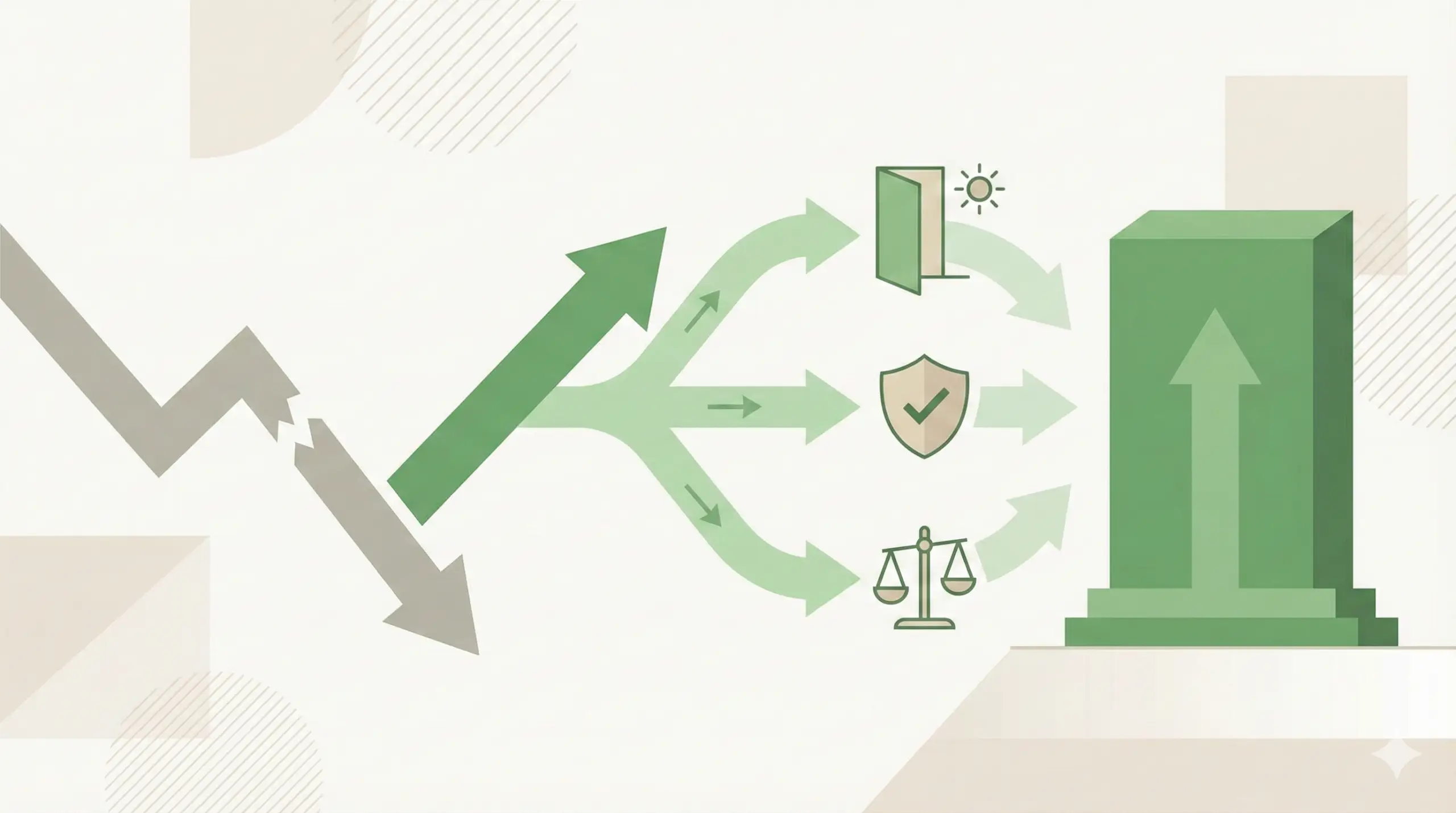
The assumption that bad credit disqualifies you from debt consolidation is understandable but inaccurate. What bad credit actually does is narrow your access to specific products — primarily unsecured personal loans from major banks at competitive rates — while leaving several other consolidation paths fully accessible or only marginally more difficult.
Understanding exactly which options remain available to you, what each one involves, and how to evaluate them against your specific debt situation is the difference between feeling stuck and having a clear strategy. This guide covers all of it.
First: What “Bad Credit” Actually Means in This Context
Credit score ranges vary slightly by scoring model, but the ranges most lenders use as practical thresholds are:- Exceptional: 800 and above
- Very Good: 740 to 799
- Good: 670 to 739
- Fair: 580 to 669
- Poor: Below 580
A lower score does not mean every door closes. It means the terms change, certain products become less accessible, and your options require more specific evaluation to ensure they actually improve your situation rather than simply moving debt around at comparable or higher cost.
Option 1: Nonprofit Credit Counseling and a Debt Management Plan
For borrowers with bad credit, this is consistently the most beneficial option — and one of the most underused.A Debt Management Plan (DMP) through a nonprofit credit counseling agency requires no minimum credit score. It is not a loan. It is a structured repayment arrangement in which the counseling agency negotiates directly with your creditors on your behalf — typically securing significantly reduced interest rates — and consolidates your payments into a single monthly amount.
How It Works
After an initial counseling session in which a certified counselor reviews your complete financial picture, the agency contacts each of your creditors and negotiates new terms for accounts included in the plan. For credit card debt, negotiated rates typically fall in the 6% to 9% range — regardless of the original APR. Many creditors also agree to waive late fees and over-limit fees for borrowers entering a DMP in good faith.Once creditors are enrolled (a process that takes two to four weeks), you make a single monthly payment to the counseling agency. The agency distributes the funds to each creditor according to the negotiated plan. You do not manage individual creditor relationships while the plan is active.
Most DMPs run for 36 to 60 months, depending on total balance and negotiated payment terms.
What It Costs
Nonprofit credit counseling agencies charge modest monthly fees — typically $25 to $50 — to administer DMPs. These fees are regulated by state law and are capped at defined amounts in most jurisdictions. The interest savings from rate reductions virtually always exceed the program fees by a substantial margin.A borrower with $15,000 in credit card debt at an average APR of 22% who enters a DMP at a negotiated rate of 8% saves approximately $8,000 to $10,000 in total interest over the repayment period.
The Restrictions
Most DMPs require you to agree not to open or use new revolving credit accounts while the plan is active. This is not a penalty — it is a condition of the creditor agreements that makes the negotiated terms possible. You will also typically be required to close or suspend the accounts being enrolled in the plan.How to Find a Reputable Agency
Work only with agencies accredited by the National Foundation for Credit Counseling (NFCC) or the Financial Counseling Association of America (FCAA). These organizations maintain accreditation standards for member agencies. Initial counseling sessions are typically available at no cost.Avoid for-profit companies using similar language — “credit counseling,” “debt consolidation” — but operating on fee structures that bear no relationship to the nonprofit model. The distinction between nonprofit credit counseling and for-profit debt settlement is fundamental and consequential.
Option 2: Credit Unions
Credit unions are meaningfully more accessible than commercial banks for borrowers with fair or poor credit — and they frequently offer better rates to the same borrower profile.Credit unions are member-owned, nonprofit financial cooperatives. Because they operate for the benefit of members rather than shareholders, they have both the structural flexibility and the practical incentive to lend to borrowers that large commercial banks decline or serve only at unfavorable rates.
In practice, this means credit unions regularly approve personal consolidation loans for borrowers in the 580 to 650 range who would be denied or offered uncompetitive rates at a major bank. Many credit unions also consider alternative factors — employment history, account relationship, income stability — rather than applying purely algorithmic approval criteria.
How to Access Credit Union Lending
Join a credit union first. Most credit unions require membership before you can apply for loans. Membership eligibility is typically based on geographic location, employer, professional association, or family connection to an existing member. Many credit unions have broad community membership eligibility.Once you are a member, establish a basic account relationship and, if possible, set up direct deposit. Borrowers with an established account relationship at the credit union typically receive more favorable consideration than new members applying for their first product.
Ask specifically about credit union personal loans for debt consolidation and credit builder loans — many credit unions offer both, with the credit builder loan specifically designed for borrowers working to rebuild their credit profile.
What to Expect on Rates
Credit union personal loan rates for fair to poor credit borrowers typically range from 15% to 22% — often several percentage points below what major banks or online lenders offer the same profile. For borrowers carrying credit card debt at 22% to 28%, even a small rate improvement produces meaningful savings over a multi-year repayment term.Option 3: Secured Personal Loans
A secured personal loan requires you to provide collateral — an asset that the lender can claim if you default — in exchange for loan approval that would otherwise be denied or offered only at unfavorable rates.Common collateral types for secured consolidation loans:
Savings-secured loans: Your own savings account balance serves as collateral, held by the lender during the loan term. Because the lender’s risk is essentially zero — they can simply take the funds if you don’t pay — approval rates are high even with poor credit, and rates are typically well below unsecured bad-credit loan rates. Certificate of deposit (CD) secured loans: Similar to savings-secured, using a CD as collateral. The CD earns interest during the loan term, partially offsetting the loan interest cost. Vehicle-secured loans: Some lenders offer consolidation loans secured against a paid-off or equity-rich vehicle. Rates are typically better than unsecured bad-credit loans, but the consequence of default — losing the vehicle — is more significant than losing savings you were already setting aside.The Fundamental Trade-off
Secured loans shift credit risk to you through the collateral pledge. Before using any asset as loan collateral, be clear and honest about your ability to make the required payments throughout the loan term. If income stability is uncertain, using a savings account as collateral is meaningfully safer than pledging a vehicle that is essential to your employment.Option 4: Co-Signer Loans
A co-signer is a person — typically a family member or close associate — who agrees to be equally responsible for repayment of your loan. The lender evaluates the application based on both the primary borrower’s and the co-signer’s creditworthiness. A co-signer with good to excellent credit can enable a primary borrower with poor credit to access products that would otherwise be unavailable or priced uncompetitively.What Co-Signing Actually Means
Co-signing is a significant financial commitment for the person agreeing to do it. The loan appears on both credit reports. If you miss payments, the co-signer’s credit score is damaged. If you default, the lender can pursue the co-signer for the full remaining balance. The co-signer’s ability to access their own credit — for a mortgage, a car loan, any future credit application — may be affected by the presence of this obligation on their report.Any family member or friend who co-signs a loan with you is extending a substantial expression of financial trust. Enter this arrangement only if you are fully confident in your ability to make every payment reliably, and discuss the full terms and consequences with the co-signer before proceeding.
How to Use This Option Responsibly
Be transparent about your complete financial situation with any prospective co-signer. Show them the loan terms, your budget, and your repayment plan. Set up autopay immediately upon loan funding to eliminate the risk of a missed payment affecting their credit. Keep them informed of your progress throughout the repayment period.Option 5: Home Equity Products (For Homeowners Only)
Homeowners with sufficient equity may qualify for home equity loans or home equity lines of credit (HELOCs) that offer among the lowest consolidation rates available — often 7% to 12% for qualified borrowers — with credit score requirements that are somewhat lower than comparable unsecured products.Many home equity lenders will consider borrowers with scores as low as 620, provided that the combined loan-to-value ratio (the total of the first mortgage plus the home equity product divided by the home’s current value) stays within their guidelines — typically 80% to 90%.
The Critical Risk Consideration
This option carries a risk that every other consolidation method does not: your home is the collateral. Unsecured credit card debt, regardless of how much of it you are carrying, cannot cost you your home. A home equity loan used to pay off that credit card debt can — if you fail to make payments, the lender can foreclose.Converting unsecured debt to secured debt is a fundamental risk transformation. It is not inherently wrong to use home equity for consolidation — the rates are often significantly better — but it should only be used by borrowers with stable income, a clear and documented repayment plan, and a genuine assessment of their ability to maintain payments even in adverse circumstances.
Options to Approach With Extreme Caution
High-Rate Online Lenders Targeting Bad Credit Borrowers
A significant number of online lenders specifically market personal loans to borrowers with poor credit at interest rates of 30% to 36% — at or near the maximum rate permitted in many states. Before accepting any loan at these rates, calculate the total interest paid over the loan term and compare it to the total interest that would accrue on your existing debts at their current APRs.If the consolidation loan rate is 34% and your blended average credit card rate is 24%, the loan does not reduce your interest burden — it increases it, while also potentially charging an origination fee. A loan that simplifies payment management but costs more in total interest is not a beneficial consolidation.
The only consolidation is a beneficial consolidation. If the available options do not produce a meaningful rate improvement, a Debt Management Plan or direct structured repayment may produce better financial outcomes.
Payday Loans and Payday Loan Consolidation Products
Payday loans are not a debt consolidation tool. They are short-term, extremely high-cost credit products — often carrying effective annual percentage rates of 300% to 400% or higher — that create a debt cycle rather than resolving one. Similarly, services marketing “payday loan consolidation” vary widely in legitimacy and cost structure.If payday loan debt is part of your current situation, include it in your DMP counseling session. Nonprofit credit counselors are familiar with payday loan debt and can advise on the most appropriate resolution path.
For-Profit Debt Settlement Companies
Debt settlement is fundamentally different from debt consolidation. Settlement companies typically instruct clients to stop paying creditors, allow accounts to become severely delinquent, and then attempt to negotiate lump-sum settlements for less than the full balance.The consequences: severe credit score damage, creditor lawsuits, potential wage garnishments, and tax liability on the forgiven debt (the IRS treats forgiven debt as income). The fees charged by for-profit settlement companies are typically substantial — often 15% to 25% of the enrolled debt.
Debt settlement may be appropriate in specific, extreme circumstances — typically as an alternative to bankruptcy. It is not appropriate as a routine alternative to consolidation for borrowers who have the income to service their debts through a DMP or structured repayment.
Preparing Your Application: Steps That Improve Your Outcomes
Dispute Credit Report Inaccuracies First
Inaccurate negative items — accounts showing balances after payoff, late marks on payments you made on time, accounts that don’t belong to you — suppress your score below what your actual payment behavior supports. Pull your reports from all three bureaus through AnnualCreditReport.com and dispute every inaccuracy with documentation before applying for any new credit.Successful disputes can produce meaningful score improvements within one to two billing cycles — improvements that may move you from “poor” to “fair” or from “fair” to the lower range of “good,” changing both your available options and the rates you’ll be offered.
Reduce Revolving Balances Before Applying
Credit utilization responds faster than any other credit factor — within a single billing cycle. If you have any capacity to reduce credit card balances before your application, doing so can produce a score improvement that improves your application outcome. Even a modest reduction in your highest-utilization accounts produces a measurable change.Calculate Your Debt-to-Income Ratio
Lenders evaluate DTI alongside credit score. If your DTI is above 43%, address it — either through temporary expense reduction that frees cash flow for debt payments, or through income supplementation — before applying. A high DTI can result in denial or unfavorable terms even for borrowers whose credit score meets the threshold.Apply Selectively and Sequentially
Each formal loan application generates a hard inquiry. For borrowers with already-damaged credit, multiple hard inquiries in a short period compound the score impact. Use pre-qualification tools — soft inquiries that have no score impact — to identify lenders likely to approve your profile before submitting formal applications. Apply to your best-matched option first, not to five simultaneously.Frequently Asked Questions
Can I consolidate if I have accounts currently in collections?
Traditional unsecured personal loan lenders typically require accounts to be in good standing. A Debt Management Plan through a nonprofit counselor may be able to address collection accounts depending on whether the collector participates in the program. If multiple accounts are already in collections, start with a credit counseling consultation — the counselor will assess what is addressable through a DMP and advise on the most appropriate path for accounts that aren’t.Will any of these options hurt my credit score further?
All formal credit applications generate hard inquiries with small, temporary score effects. However, the utilization improvement from paying off credit card balances — through a personal loan or DMP rate reduction that enables faster paydown — typically produces a net positive effect within six to twelve months. A DMP may have its own credit profile notations, but the consistent on-time payment history generated during the plan period is consistently positive over time.Is there a minimum income required for debt consolidation with bad credit?
Lenders require sufficient income to service the consolidated payment. There is no universal minimum, but your income must be stable and verifiable. Self-employed borrowers typically need to provide two years of tax returns. Borrowers whose income is inconsistent or unverifiable will find unsecured products difficult to access regardless of credit score — making a DMP the most reliably accessible option.The Path Forward
Bad credit narrows your options for debt consolidation. It does not eliminate them. A Debt Management Plan is accessible to virtually every borrower regardless of credit score, produces meaningful interest rate relief through creditor negotiation, and is administered by nonprofit agencies with regulated fees and genuine client interest alignment. Credit unions offer personal loan access to borrowers that commercial banks decline, at rates that are typically several percentage points better than online bad-credit lenders. Secured loans trade collateral risk for approval access — useful when cash collateral is available and the risk is understood. Credit score improvement through inaccuracy disputes and utilization reduction can move a borrower from “poor” to “fair” or from “fair” to “good” within one to three months — potentially opening better options than currently available.Start with your credit reports. Identify what is driving your current score and what is correctable. Consult a nonprofit credit counselor. Evaluate your options with total cost — not monthly payment — as your primary metric.
The path exists. The right starting point is an accurate picture of where you are.
This article is intended for informational purposes only and does not constitute legal or financial advice. Credit product availability, qualification criteria, and interest rates vary by lender and are subject to change. Please consult a qualified financial advisor or nonprofit credit counselor for guidance specific to your individual situation.
🔄 Debt Consolidation Savings Calculator
📖 Complete guide: Debt Consolidation: The Complete 2026 Guide
Related: How To Qualify For A Debt Consolidation Loan A Guide · What Credit Score Do You Need For Debt Consolidation · Debt Consolidation Loans The Ultimate Guide To Getting Out