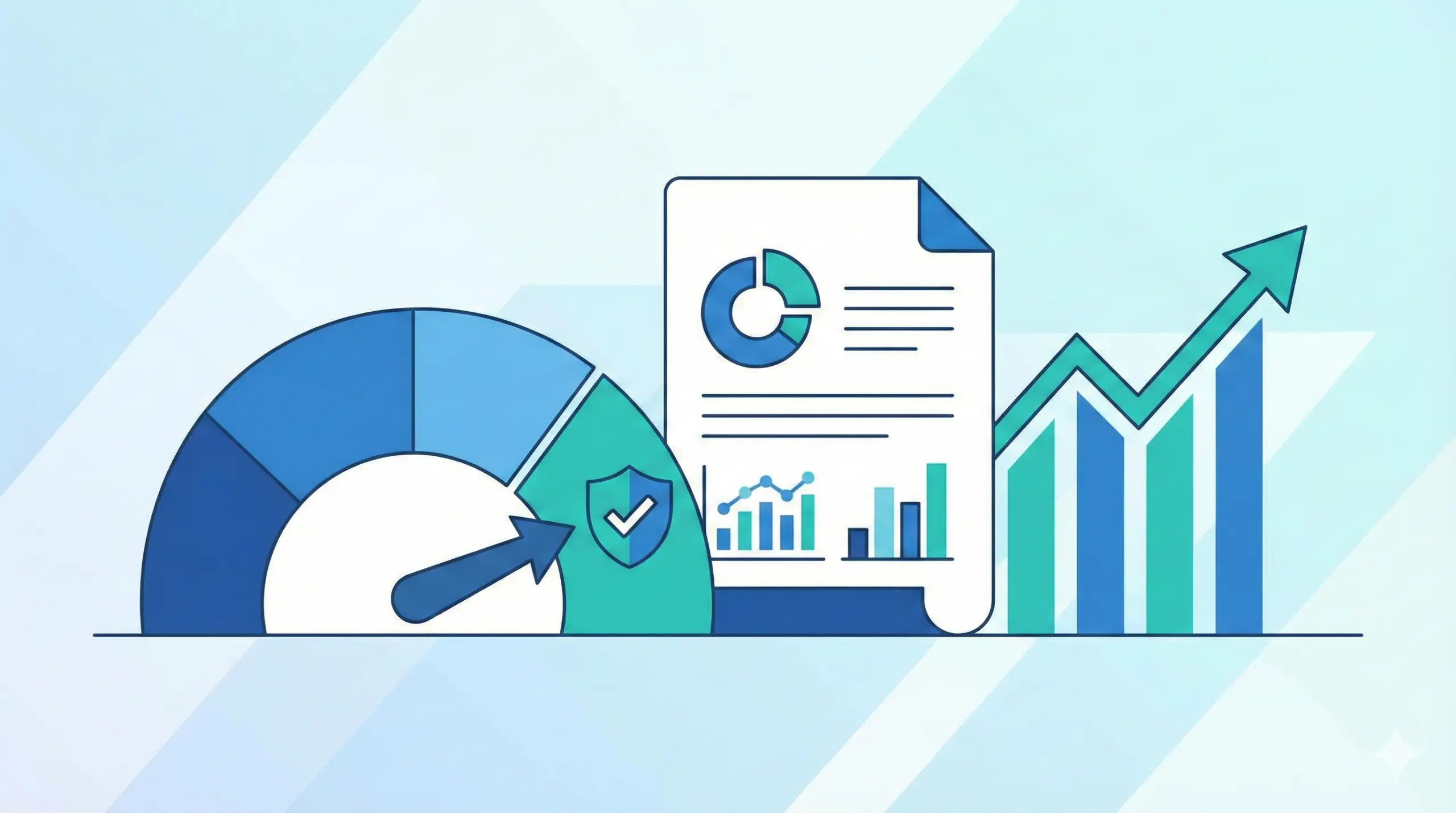
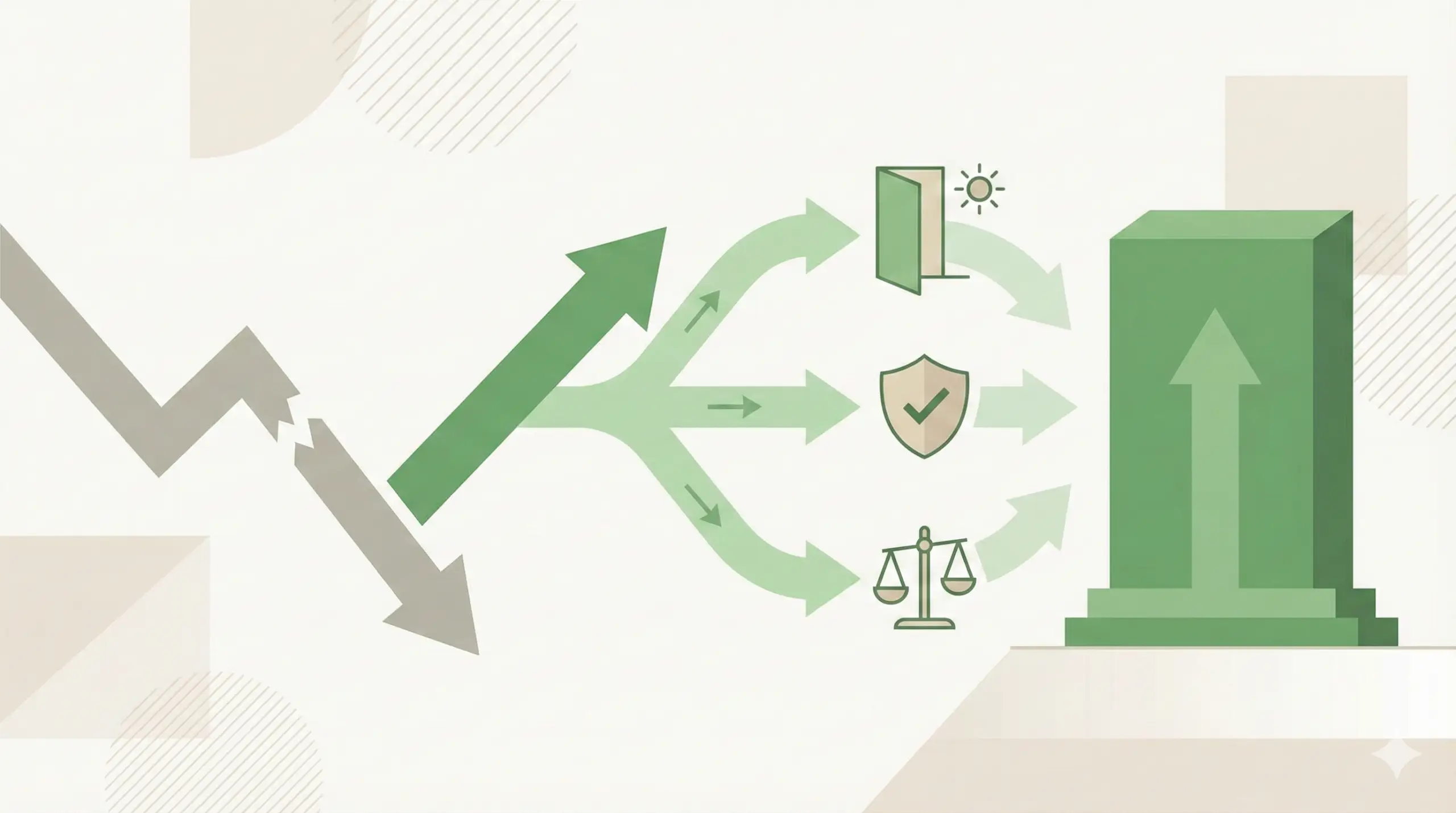
A damaged credit score is not a permanent condition. With the right sequence of actions, consistent habits, and a clear understanding of what actually moves the needle, you can rebuild your credit profile into one that opens financial doors rather than closing them.
Credit damage happens to capable, financially informed people all the time. A medical emergency, a job transition, a divorce, a business that didn’t survive — the circumstances vary, but the result is familiar: a credit score that no longer reflects who you are financially or where you’re headed.
The challenge, once you’ve stabilized your situation and are ready to rebuild, is knowing exactly what to do and in what order. There’s no shortage of advice on this topic, but much of it is vague, incomplete, or — in the case of for-profit credit repair services — misleading.
This guide cuts through that noise. Here is the complete, sequenced strategy for rebuilding credit after debt — what to do first, what to avoid, how each step affects your score, and what the realistic timeline looks like.
Before You Start: Pull Every Credit Report and Read It Carefully
The foundation of any effective credit rebuild is an accurate, complete picture of your current credit profile. You cannot dispute what you haven’t identified, you cannot track improvement without a baseline, and you cannot make strategic decisions without knowing what’s actually on your report.
You are entitled to free credit reports from all three major bureaus — Equifax, Experian, and TransUnion — through AnnualCreditReport.com. Pull all three at the same time. Creditors are not required to report to all three bureaus, and errors are frequently bureau-specific.
What to Look for in Each Report
Inaccurate account information: Accounts showing balances that have been paid, late payment marks after a discharge or settlement date, accounts that don’t belong to you, or balances reported higher than they actually are.
Accounts discharged in bankruptcy: Every account included in a bankruptcy discharge should be reported with a $0 balance and the appropriate “included in bankruptcy” notation. Accounts continuing to show outstanding balances after the discharge date are reporting errors.
Outdated negative items: Most negative items must be removed after seven years from the date of first delinquency under the Fair Credit Reporting Act. Chapter 7 bankruptcy entries must be removed after ten years; Chapter 13 after seven. Items remaining beyond their legal reporting window must be disputed and removed.
Duplicate collection entries: When a debt is sold to a collection agency, it sometimes appears twice — once from the original creditor and once from the collector. Only one entry is accurate and appropriate.
Dispute every inaccuracy before beginning any other rebuild strategy. Inaccurate negative information compounds the impact of accurate negative history. Removing errors is the fastest way to improve your score — and unlike everything else in this process, it can happen relatively quickly once a successful dispute is processed.
Phase 1: Stabilize Before You Build
Attempting to rebuild credit while still in financial distress produces limited results. The first priority is establishing a stable financial foundation from which rebuilding can actually compound.
Address Remaining High-Interest Revolving Debt
If you are still carrying high-interest credit card balances, reducing them is both a financial priority and a credit score priority. Credit utilization — the ratio of your revolving balances to your total revolving credit limits — accounts for approximately 30% of your FICO score. High utilization suppresses your score continuously, regardless of every other positive step you take.
The utilization thresholds that matter most:
- Above 50%: Significant, ongoing score suppression
- 30% to 50%: Measurable scoring drag
- Under 30%: Acceptable, with room for improvement
- Under 10%: Associated with the highest credit score tiers
Direct available funds toward your highest-utilization accounts first. Reducing a single card from 80% to 20% produces more immediate credit score improvement than distributing the same funds equally across multiple cards.
Establish Budget Stability and an Emergency Reserve
This step is often treated as separate from credit rebuilding — but it is foundational to it. Every credit rebuild failure follows the same pattern: progress is made, then a financial emergency occurs, credit cards are used, balances rise, and the score retreats.
A modest emergency fund — even one to two months of essential expenses — breaks this cycle. It ensures that an unexpected expense is absorbed in cash rather than debt, protecting the credit progress you’re building.
Build this reserve before aggressively accelerating debt payoffs beyond minimum payments. The protection it provides against backsliding is worth more than the marginal credit score improvement from slightly faster debt reduction.
Phase 2: Establish New Positive Credit History
Once your existing situation is stabilized, the next phase is opening the right accounts and building a consistent track record of on-time payments. This is how the negative history in your report gets progressively outweighed by new positive data.
Secured Credit Cards: The Most Reliable Starting Point
A secured credit card is the most accessible and most consistently effective credit-building tool for borrowers with damaged or limited credit profiles. It is available to virtually everyone, regardless of current credit score, because the borrower’s cash deposit — typically $200 to $500 — serves as the credit limit. The issuer’s risk is minimal, which is why approval rates are high even for damaged credit.
The card functions exactly like a standard credit card for purchase purposes. Your payment behavior — whether you pay on time, how much of the balance you carry — is reported monthly to the credit bureaus. This creates a stream of positive data points being added to your credit report.
The strategy for using a secured card effectively:
- Use the card for one or two small, recurring charges — a streaming subscription, a utility bill, a monthly purchase you would make regardless
- Pay the full balance before your statement closing date each month, not just before the due date
- Keep the balance well below 30% of the card’s limit — ideally below 10%
- Do not use the card for discretionary spending that could result in a balance you cannot pay in full
After 12 to 18 months of consistent on-time payments, many secured card issuers will upgrade your account to an unsecured card and return your deposit. At this point, you have a positive payment history, an established account, and a regular credit line — all building blocks for the next stage.
When evaluating secured cards, look for issuers that report to all three major bureaus, charge no or minimal annual fees, and have clear upgrade pathways to unsecured cards.
Credit-Builder Loans: Adding an Installment Account
Credit-builder loans serve a complementary purpose to secured credit cards. While a secured card adds revolving credit history, a credit-builder loan adds installment credit history — and having both types is associated with stronger credit profiles than revolving-only histories.
The structure is the reverse of a standard loan: funds are held in a savings account while you make fixed monthly payments over a defined term (typically 6 to 24 months). Your payments are reported to the credit bureaus throughout. At the end of the term, the accumulated funds are released to you.
Credit-builder loans are available through many credit unions and community development financial institutions. They serve a dual purpose — building credit history and building savings simultaneously. For borrowers who need to develop the habit of consistent monthly payments, they provide a low-stakes way to establish that track record.
Authorized User Status: Leveraging an Existing Strong Account
If a family member or trusted friend with an established, well-managed credit account is willing to add you as an authorized user, you receive the benefit of that account’s positive history on your credit report. The account’s age, payment history, and utilization rate are reflected in your credit profile — without you needing to use the card or even hold a physical card.
This strategy is most effective when:
- The primary account holder has a long, clean payment history on the account
- The account maintains consistently low utilization
- The account has been open for several years, adding length to your credit history
The primary account holder’s credit is not meaningfully affected by adding an authorized user. If their account is managed responsibly, the arrangement benefits you significantly at minimal cost to them.
One critical caveat: if the primary account holder misses payments or allows utilization to spike, those negative signals will appear on your credit report as well. Only enter authorized user relationships with people whose financial habits you know to be consistently disciplined.
Phase 3: Protect and Compound the Progress
Once positive credit history is being generated, the focus shifts to protecting and building on it consistently.
Automate Every Minimum Payment Without Exception
Payment history is the largest single factor in your FICO score, accounting for approximately 35% of the calculation. A single 30-day late payment can reduce a recovering credit score by 60 to 100+ points — damage that takes many months of consistent positive history to offset.
Set up automatic minimum payment processing on every account you hold. Even if you consistently pay far more than the minimum, the automatic payment serves as an absolute backstop — ensuring that a busy week, a travel schedule, or a forgotten due date never results in a late payment mark.
This is not optional. It is the single most important operational habit in credit management.
Manage Statement Closing Dates Actively
Your credit card issuer reports your balance to the bureaus on your statement closing date — not your payment due date. If you carry a high balance throughout the month and pay it off by the due date, the high balance may already have been reported to the bureaus before your payment was received.
Identify the statement closing date for each of your revolving accounts and pay your balance down to your target utilization level before that date. This produces the fastest possible utilization improvement because it controls what the bureaus see — not just what you owe after the fact.
Keep All Existing Accounts Open
This is the most consistently misunderstood advice in credit management, and violating it is one of the most common ways borrowers inadvertently set back their own progress.
When you close a credit card account, its credit limit is removed from your total available revolving credit. If you still carry any balances on other cards, your utilization rate increases immediately — not because you spent more, but because the denominator in the calculation shrank. Simultaneously, you may be reducing your average account age.
Keep every revolving account open, including old accounts you no longer actively use. Place a small recurring charge — a monthly subscription, a utility autopay — on dormant cards to prevent the issuer from closing them for inactivity. The maintenance cost is minimal; the credit profile benefit is ongoing.
Space Credit Applications Deliberately
Each new credit application generates a hard inquiry, producing a small temporary score reduction. For a borrower actively rebuilding credit, the timing and frequency of new credit applications matter.
As a general principle: apply for new credit when it serves a clear, strategic purpose — a secured card to begin building history, a credit-builder loan to add installment history, or an unsecured card when your profile has strengthened sufficiently to qualify for favorable terms. Do not apply speculatively or in quick succession.
If you are planning a significant credit application — particularly a mortgage — avoid all other new credit applications in the six to twelve months preceding it.
Strategies to Avoid: Common Mistakes That Reset Progress
Paying for Credit Repair Services That Promise Impossible Results
Any company claiming it can remove accurate, verified negative information from your credit report — regardless of the fee or the approach — is misrepresenting what is legally achievable. Accurate negative information cannot be removed before its reporting window expires. The only legitimate basis for removing information from your credit report is inaccuracy.
Legitimate nonprofit credit counseling services provide genuine value through budgeting assistance, creditor negotiation, and debt management plans. These are not the same as for-profit credit repair companies charging upfront fees for legally questionable services.
Applying for Multiple Cards Simultaneously
Borrowers sometimes attempt to accelerate the credit-building process by opening several new revolving accounts at once. This approach generates multiple hard inquiries, reduces the average age of accounts, and makes lenders nervous about the pattern of behavior — all of which work against the score improvement you’re trying to achieve.
Open one well-chosen account, manage it for six to twelve months, and then evaluate whether adding another account makes sense. Deliberate, sequential account-opening produces better outcomes than trying to accelerate through volume.
Ignoring the Per-Account Utilization Signal
Borrowers focused on their aggregate utilization sometimes overlook individual accounts with very high utilization. Credit scoring models evaluate both aggregate utilization and the utilization on each individual account. A single card at 85% creates its own negative signal, even if your overall utilization is acceptable. Prioritize bringing individual high-utilization accounts below 30%, and then below 10%.
Understanding the Rebuild Timeline: What to Realistically Expect
Credit rebuilding follows a predictable pattern, though the exact pace varies by starting point and the consistency of behavior.
Months 1 to 3: Disputes of inaccurate information are processed and resolved. New accounts are opened. Positive payment history begins accumulating. Initial improvements may be modest as the new positive data is limited.
Months 3 to 6: Consistent on-time payments begin producing compounding improvement. Utilization management starts producing measurable score changes. Borrowers who started in the “Poor” range (below 580) commonly move into the “Fair” range (580-669) in this window.
Months 6 to 12: Sustained positive behavior begins outweighing older negative history in its scoring impact. Borrowers often see meaningful movement through the “Fair” range and toward the “Good” threshold (670+).
Months 12 to 24: For borrowers who began with significant damage — multiple late payments, collections, or a bankruptcy — this period typically produces the most dramatic overall improvement. Negative items are aging and carrying less weight. Positive history is accumulating across multiple accounts. Many borrowers reach “Good” (670-739) or better during this window.
Years 2 to 7: Continued improvement as negative items approach and reach their reporting expiration dates. Borrowers with bankruptcies or extensive collections see the most significant improvements during this period as the oldest negative items age off the report.
Frequently Asked Questions
How soon after starting the rebuild process will I qualify for an unsecured credit card?
It varies by issuer and your starting credit profile, but many borrowers who begin with a secured card and maintain consistent positive payment history for 12 to 18 months find themselves qualifying for entry-level unsecured cards. As your score moves into the “Fair” and then “Good” range, more product options become available.
Can I rebuild credit without opening any new accounts?
Yes, but more slowly. If you have existing accounts in good standing and manage them carefully — paying on time and maintaining low utilization — your score will improve naturally as negative items age. Opening strategically chosen new accounts simply accelerates the process by adding positive history more quickly. For borrowers with no open accounts at all, opening at least one secured card or credit-builder loan is strongly advisable.
Will the negative items ever disappear completely?
Yes. Most negative items — late payments, collections, charge-offs — are legally required to be removed from your credit report seven years after the date of first delinquency. Chapter 7 bankruptcy entries are removed after ten years. Once these items are gone, your score is calculated based only on the positive history that remains.
The Long-Term Perspective: Building Credit as a Financial Habit
The borrowers who rebuild most successfully — and maintain that improvement — are those who treat credit management not as a temporary remediation project but as an ongoing financial practice.
Automate payments. Monitor utilization monthly. Review reports quarterly. Keep accounts open. Be deliberate about applications. These habits produce strong credit profiles when practiced consistently, and they prevent the deterioration that makes rebuilding necessary in the first place.
Your credit history is, at its core, a record of reliability. Every on-time payment adds to it. Every month of low utilization adds to it. Every year of account history adds to it. The accumulation is gradual and sometimes feels invisible — until the day you qualify for a mortgage rate you couldn’t have accessed two years ago, or a credit limit increase you wouldn’t have been considered for before.
The path is clear. The process is systematic. The results are achievable. Start with the reports, dispute the errors, open the right first account, automate the payments, and do not stop.
This article is intended for informational purposes only and does not constitute legal or financial advice. Credit scoring models and reporting rules are subject to change. Please consult a qualified financial advisor or nonprofit credit counselor for guidance specific to your situation.
📈 Credit Score Factor Estimator
📖 Complete guide: How to Improve Your Credit Score: The Complete 2026 Guide
Related: How Debt Affects Credit Score A Strategic Guide For Pros · How Fast Does Your Credit Score Improve After Paying Off Debt · How To Legally Repair And Rebuild Your Credit Score