Let’s be honest: The dream of homeownership in 2026 feels a bit like trying to catch a high-speed train while wearing dress shoes. You’ve got the career, you’ve got the credit score, and you’ve got the discipline—but saving for that massive down payment? That’s where the math often gets messy.
If you’re a professional navigating a market that doesn’t seem to want to cool down, you might be overlooking one of the most effective tools in your financial shed: Down Payment Assistance (DPA) programs.
Many people still labor under the misconception that DPA is only for first-time buyers with limited means or those struggling to stay afloat. That’s a myth that could be costing you tens of thousands of dollars in equity. In 2026, DPA programs have evolved into sophisticated instruments designed to help middle- and high-income professionals bridge the gap between their monthly savings and the reality of rising property values.
In this guide, we aren’t just looking at the theory. We’re breaking down the practical, step-by-step roadmap to leveraging DPA to get your keys in hand this year.
Why DPA is a Strategic Financial Move in 2026
Before we dive into the “how,” let’s reframe the “why.” Using down payment assistance isn’t just about “getting help”; it’s about capital preservation. If you can use a forgivable loan or a grant to cover 3% to 5% of your purchase price, you’re keeping that liquidity in your own pocket. Think of it as an emergency fund booster or an immediate renovation budget for that new kitchen you’ve been eyeing.
Exactly how these programs look in 2026 varies by state, but the core objective remains: local governments and nonprofits want to keep professionals—teachers, nurses, tech workers, and engineers—rooted in the communities where they work.
Phase 1: The Pre-Game Assessment (Don’t Skip This!)
You wouldn’t walk into a major quarterly meeting without your numbers, so don’t walk into a lender’s office without your DPA strategy.
1. Define Your “First-Time” Status
Most programs define a “first-time homebuyer” as someone who hasn’t owned a primary residence in the last three years. If you owned a place a decade ago but sold it, you might qualify again. Check the specific fine print for the programs in your target ZIP code—sometimes the definition is more flexible than you think.
2. Know Your Debt-to-Income (DTI) Ceiling
DPA providers love a clean DTI. As a professional, your income is likely solid, but your DTI might be squeezed by student loans or vehicle payments. Most DPA lenders look for a DTI below 45%. If you’re hovering around 50%, take three months to aggressively pay down revolving credit lines before applying. It makes the underwriting process significantly less painful.
Phase 2: Scout Your Territory (Finding the Right Program)
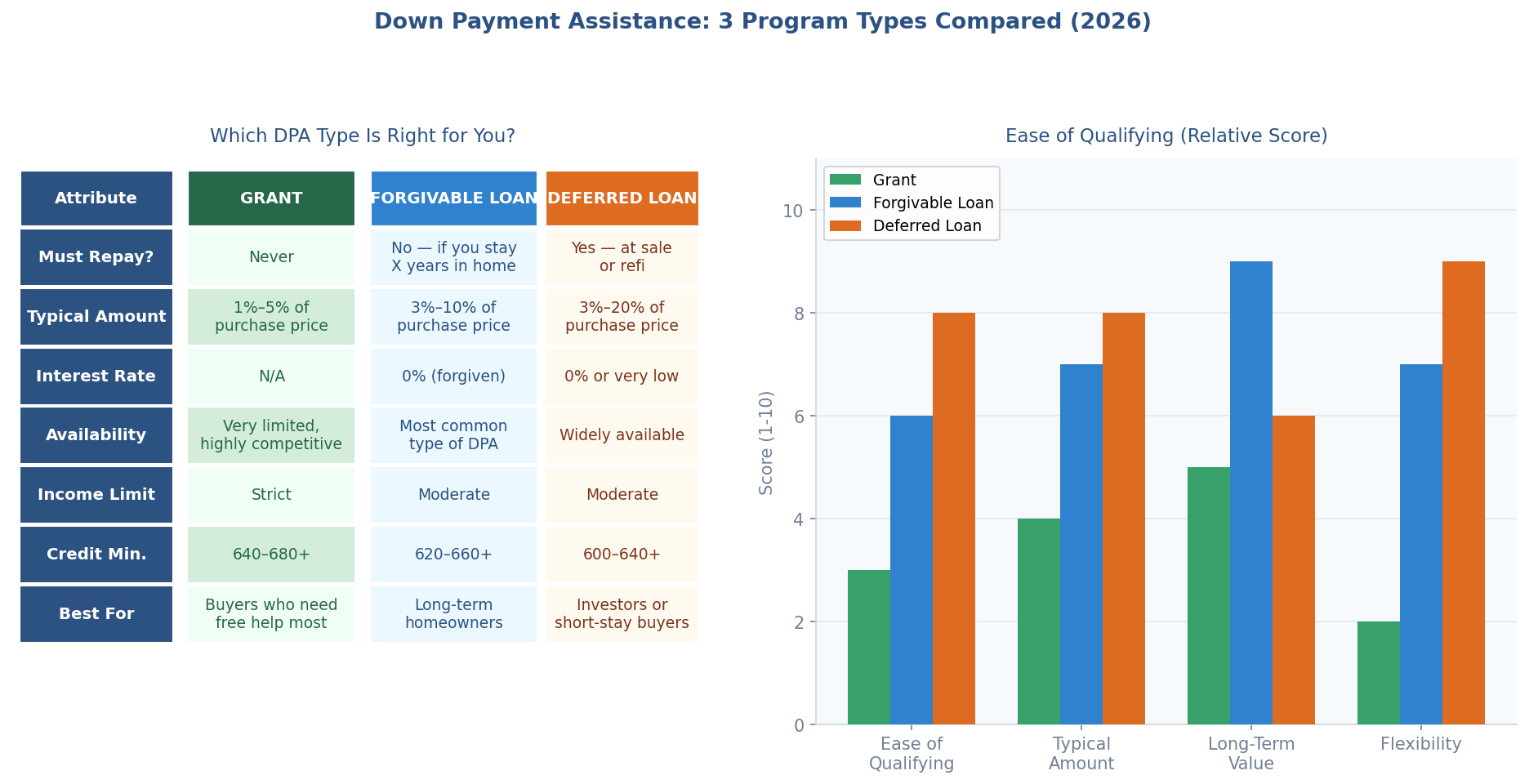
Not all DPA is created equal. You’ve got three main flavors to choose from:
- Grants: The “free money” category. These never have to be repaid. They are rare, highly competitive, and usually tied to specific high-need areas.
- Forgivable Loans: The gold standard for many. You get the money upfront, and as long as you live in the home for a set period (usually 5–10 years), the loan balance drops to zero.
- Deferred-Payment Loans: These are interest-free (or low-interest) loans that you pay back only when you sell the house, refinance, or pay off your primary mortgage.
Pro-tip: Don’t just search “DPA near me.” Visit your state’s Housing Finance Agency (HFA) website. They act as the primary clearinghouse for the most reliable programs.
Phase 3: Partnering with the Right Lender
This is where many people stumble. Not every loan officer knows how to handle DPA files. They involve extra paperwork, additional compliance checks, and a deeper level of coordination. You need a “DPA-proactive” lender.
How to interview a potential lender:
- Ask: “How many DPA-assisted closings have you handled in the last 12 months?” If they pause, keep walking.
- Ask: “Do you have an in-house DPA coordinator?” You want someone who knows the workflow so you don’t end up being the messenger between the state and the bank.
Phase 4: The Application Step-by-Step
Once you have your lender and your program, the actual application process looks like this:
- The Homebuyer Education Course: Most programs require a certificate of completion from an approved homebuyer education class. Don’t roll your eyes—it’s usually an online portal that takes an afternoon, and frankly, you’ll pick up one or two tax tips that pay for the time spent.
- The “Income Test”: You’ll need to provide your W-2s, pay stubs, and tax returns for the last two years. The program will look at your “household income” to see if you fall under their specific cap. Note: Sometimes they cap your income at 120% or 140% of the Area Median Income (AMI), which is quite generous for most major metros.
- Property Qualification: The home must meet specific criteria—usually related to the purchase price limit. You can’t use a DPA program to buy a luxury estate; these programs are for your primary, sensible residence.
Pitfalls to Avoid: Learn from the Mistakes of Others
I’ve seen enough deals go south to know where the bodies are buried in the paperwork. Here’s what you should watch out for:
- The “Gap” Timing: DPA funds are often reserved for your file, but they aren’t guaranteed until the funding is physically wired to the title company. Ensure your lender has a contingency plan if the local agency’s portal goes down.
- Ignoring the “Recapture Tax”: Some, though not all, programs have a “recapture” clause if you sell the home within the first few years. Read the fine print. You don’t want to be surprised by a tax bill because you decided to move for a job promotion two years early.
- Overspending on Closing Costs: Because you’re getting help with the down payment, it’s tempting to get lax about other closing costs. Keep your cash-to-close reserve intact until the final document is signed. Don’t go buying new furniture on credit before the loan clears!
Making the Leap: Is It Worth the Hassle?
Let’s be real for a second: Is it annoying to provide an extra three months of bank statements and take an online course? Yes. But consider the alternative. Saving 20% down on a $600,000 home is $120,000. That’s a massive amount of capital to pull out of the market. Even if you have the funds, keeping that money invested in the S&P 500 or your 401(k) while the DPA handles your down payment is a savvy, professional move.
It’s not just about the money, either. It’s about being an informed buyer. The process of qualifying for DPA forces you to look at your personal finances under a microscope. It makes you a more disciplined borrower, which is exactly the mindset you want to have when you’re taking on a 30-year commitment.
Final Checklist for Your 2026 Journey
- Financial Audit: Pay down credit card balances to boost your score by 20–30 points.
- HFA Check: Identify the top three DPA programs in your state/county.
- The “DPA-Fluent” Lender: Find a loan officer who has a proven track record with these specific programs.
- The Course: Knock out your homebuyer education certificate early.
- The Buffer: Keep a cash reserve that you do not touch under any circumstances.
By the time you reach the closing table, you won’t just be a homeowner; you’ll be a strategic player who successfully navigated a complex system to secure your financial future. And honestly? That’s the kind of win that feels better than any housewarming gift.
Go get those keys.
📖 Complete guide: First-Time Home Buyer Guide 2026
Related: How to Buy a House With No Money Down A Strategic Guide · How Much Down Payment Do You Really Need for a Home? · Down Payment Assistance: A Roadmap for First-Time Home Buyers · Closing Costs 2026 Estimate: A Professional Guide for Buyers