I spent months saving for a down payment before I realized I was leaving free money on the table – turns out, down payment assistance programs aren’t just for broke first-timers like I assumed. If you’re a solid earner with decent credit, you might qualify for programs that could put tens of thousands back in your pocket, and most people don’t even know they exist. Let me show you what changed in 2026 and how to actually use these programs to your advantage.
Down Payment Assistance 2026: A Professional Guide for Buyers
The dream of homeownership in 2026 feels challenging as property values continue rising. Many professionals overlook Down Payment Assistance (DPA) programs, mistakenly believing they are only for first-time buyers with limited financial means. In reality, these programs have evolved into sophisticated tools for middle- and high-income professionals seeking to preserve capital while entering the housing market.
Why DPA is Strategic in 2026
Using down payment assistance represents capital preservation. By leveraging a forgivable loan or grant to cover 3-5% of purchase price, buyers maintain liquidity for emergencies or home improvements. Local governments and nonprofits increasingly offer these programs to keep professionals – teachers, nurses, engineers, and tech workers – in their communities.
Pre-Application Assessment
Buyers should first clarify their first-time homebuyer status. Programs typically define this as someone who has not owned a primary residence within the last three years. Also, maintaining a debt-to-income ratio below 45% strengthens applications, as most DPA lenders prefer cleaner financial profiles.
Three Main DPA Program Types
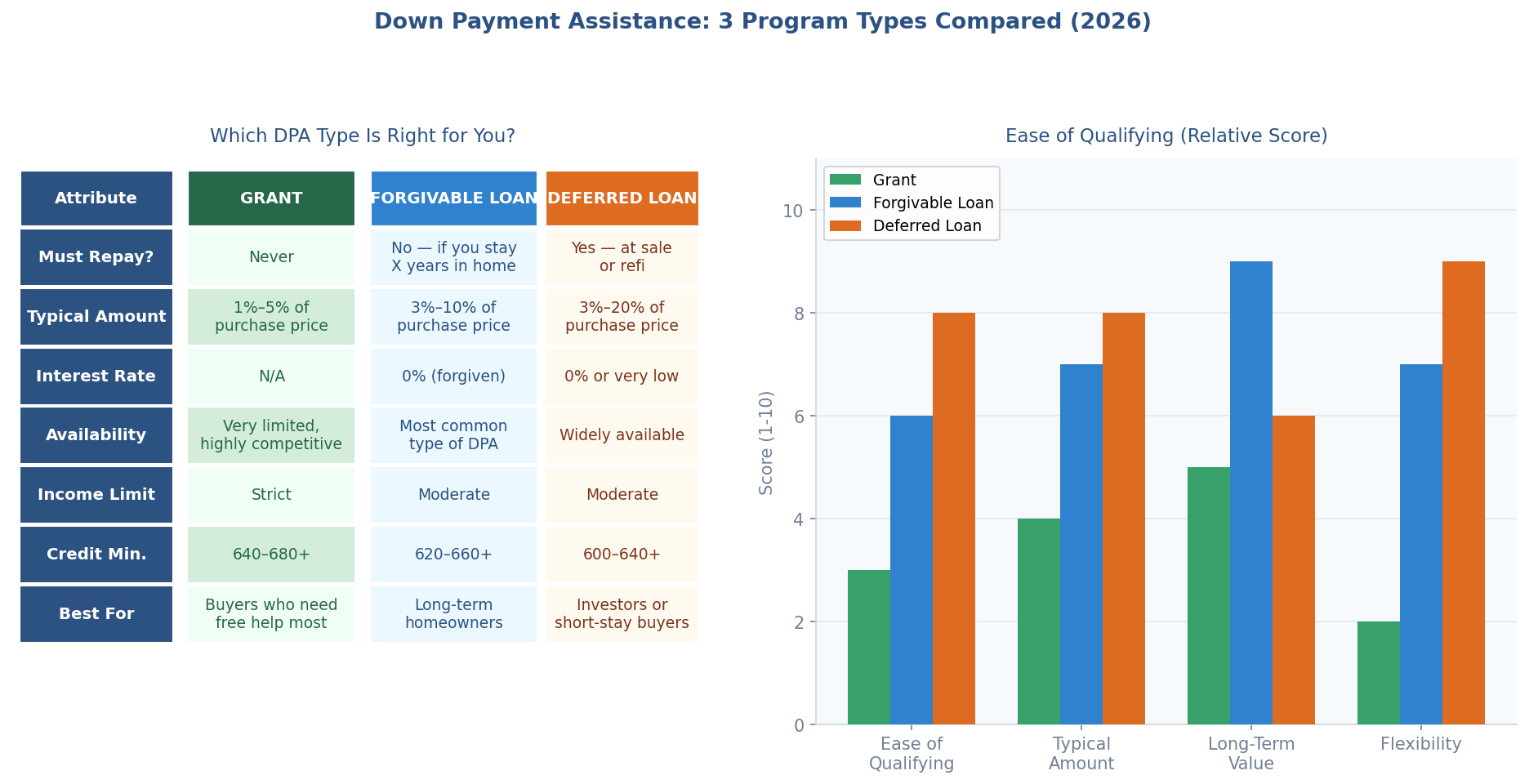
Grants are free money but rare and competitive. Forgivable loans require living in the home for 5-10 years before the balance drops to zero. Deferred-payment loans are interest-free or low-interest, repaid only upon home sale, refinancing, or mortgage payoff.
Finding the Right Lender
Not every loan officer handles DPA files effectively. Applicants should interview potential lenders, asking about their DPA-assisted closings in recent months and whether they employ an in-house DPA coordinator.
Application Process
Most programs require homebuyer education certification, typically completed online. Applicants must provide W-2s, pay stubs, and two years of tax returns. Property purchases must stay within program limits and serve as primary residences.
Critical Pitfalls
The timing of fund disbursement can create complications if agency systems malfunction. Some programs include recapture clauses triggering tax bills if homes sell within specified timeframes. Also, obtaining extra closing cost documentation before final loan clearance prevents unexpected financial stress.
Strategic Value
While the application process requires additional documentation and time, the financial benefit is substantial. For a $600,000 home purchase, saving a traditional 20% down payment equals $120,000 kept in investments rather than real estate equity.
—
Start by visiting your state’s housing finance agency website today to see which programs you actually qualify for – many first-time buyers are surprised by the options available to them. Drop a comment below or shoot me an email if you hit any roadblocks or have questions about a specific program; I’m here to help you navigate this stuff. You’re closer to homeownership than you think, and with the right assistance program, that down payment won’t be the barrier standing between you and your dream home. Happy homebuying – you’ve got this.