If you’ve been in the industry for a while, you know the drill: the moment a purchase agreement is signed, the clock starts ticking. For many professionals—whether you are a seasoned real estate agent, an investor, or a property manager—the distinction between an appraisal and an inspection often feels like common knowledge. But honestly? In the shifting market landscape of 2026, relying on “common knowledge” is a shortcut to deal-breaking headaches.
Misunderstanding these two vital components is one of the most frequent friction points I see in closing processes. One looks at the numbers, the other looks at the nails. Both are non-negotiable, but they serve entirely different masters. Let’s break down exactly how to manage these processes in 2026, ensuring your clients stay informed and your deals stay on track.
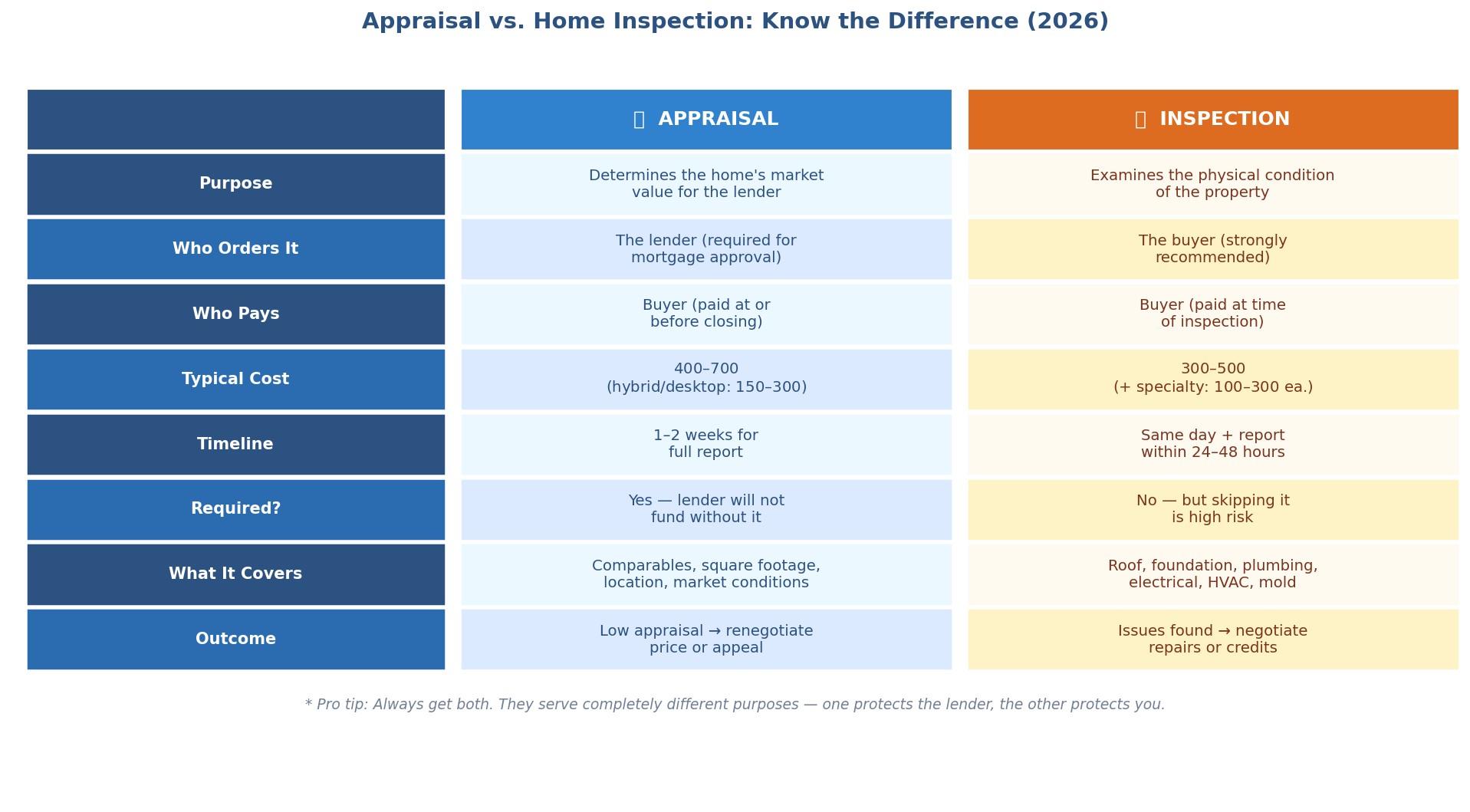
The Core Distinction: Value vs. Condition
Before we dive into the “how-to,” let’s clear the air. If you need a quick way to explain this to a first-time client, use this analogy: The appraisal is the bank’s safety check, while the inspection is the buyer’s insurance policy.
What is an Appraisal?
An appraisal is an unbiased professional opinion of a home’s value, typically ordered by the lender. In 2026, with the integration of advanced AVMs (Automated Valuation Models) and real-time market data, the appraiser’s job has become more about verifying data than just “guessing” a price. Their goal is simple: to ensure the property is worth the loan amount.
What is an Inspection?
An inspection is a deep dive into the physical state of the property. It’s not about market value; it’s about discovery. The inspector is looking for deferred maintenance, safety hazards, and structural integrity. They are the detectives of the real estate world, searching for what lies behind the drywall.
Step-by-Step: Managing the Appraisal Process in 2026
The appraisal process can feel like a “black box” where you simply wait for a result. But as a professional, you can—and should—be proactive.
1. Pre-Appraisal Preparation
Don’t just sit back. You know the property better than the appraiser who might be visiting for the first time. Prepare a “Property Highlight Sheet.”
- List recent upgrades: Did the client install a new HVAC system last month? List it.
- Provide comparable data: If you know of a specific sale that supports your client’s price, have it ready.
2. Facilitate Access
In 2026, many appraisals utilize hybrid or desktop methods. However, if an appraiser is visiting in person, ensure the property is ready. Clear the clutter. It sounds simple, but a clean, accessible home allows the appraiser to focus on the structure rather than tripping over boxes.
3. Review for Accuracy
When the report arrives, don’t just file it away. Scan it for factual errors. Did they miss a bathroom? Is the square footage off? If there’s a legitimate data discrepancy, request a reconsideration of value (ROV) with supporting evidence. Be professional, be data-driven, and you’ll get results.
Step-by-Step: Navigating the Inspection Process
Unlike the appraisal, which is often a “pass/fail” for the loan, the inspection is usually the stage where deals get renegotiated. It’s where the human element—and sometimes the panic—enters the room.
1. Set Client Expectations Early
Before the inspector even walks through the door, have “the talk” with your client. Remind them: No house is perfect. Even new builds have minor issues. Your goal is to separate “maintenance items” from “deal-breakers.”
2. The Walkthrough
Encourage your clients to attend the final thirty minutes of the inspection. Seeing an inspector point to a water stain is different than reading about it on a 40-page PDF. It turns a scary report into a manageable to-do list.
3. Categorize Findings
Once you receive the report, don’t send it to the seller as a “demands list.” Use a professional lens:
- Category A: Safety/Structural. (Electrical hazards, roof leaks, foundation shifts.)
- Category B: Functional. (Appliance failures, plumbing issues.)
- Category C: Cosmetic. (Scuffed paint, cracked tiles.)
Focus on Category A and B. That’s how you keep the transaction moving forward.
The 2026 Landscape: What’s Changed?
We aren’t in 2020 anymore. Technology has shifted the goalposts.
- Speed: Inspections are now often supported by drone footage for roofing and infrared thermography for insulation checks.
- Transparency: Digital platforms now allow for real-time updates on appraisal status, reducing the “are we there yet?” anxiety that used to define the process.
- Complexity: With stricter energy efficiency standards coming into play in 2026, inspectors are looking closer at sustainability metrics than they were a few years ago.
Common Pitfalls: Where Pros Trip Up
Even the best of us can let a deal slide if we aren’t careful. Here are three traps to avoid:
- Ignoring the “Low Appraisal” Signal: If the market is volatile, don’t wait until the appraisal comes in low to discuss options with your buyer. Have a “Gap Strategy” ready from day one.
- Weaponizing the Inspection: Don’t use an inspection report to nickel-and-dime a seller on minor cosmetic repairs. It kills goodwill. You want the seller to want to work with you.
- Lack of Communication: The biggest mistake? Going dark. Whether it’s an appraisal delay or a shocking inspection discovery, communicate early. Bad news doesn’t get better with age.
How to Handle Disagreements Professionally
What happens when the appraisal comes in $20,000 low? Or the inspection finds a cracked foundation?
Stay calm. This is where your expertise shines.
- For low appraisals: Look for alternative comparables, or look into a second opinion if the methodology was clearly flawed. If the price stands, revisit the financing or negotiate a split in the gap.
- For high-cost repairs: Get a contractor’s quote. Never estimate costs based on a “gut feeling.” Use data. If the repair is $5,000, don’t ask for a $15,000 price reduction. It builds credibility.
Final Thoughts: The Human Factor
At the end of the day, an appraisal and an inspection are just tools. They are cold, hard data points in an emotional transaction. Your role as a professional is to be the bridge between that data and your client’s peace of mind.
If you can explain these processes with clarity—and manage the emotions that come with the findings—you’ll find that your transactions don’t just close faster; they close smoother. And honestly, isn’t that what we’re all aiming for in 2026?
When you master the distinction between value and condition, you stop being just another person in the transaction chain. You become the advisor everyone wants to work with.
📖 Complete guide: First-Time Home Buyer Guide 2026
Related: Closing Costs 2026 Estimate: A Professional Guide for Buyers · Closing Costs Explained: A Guide for Savvy Homebuyers · Down Payment Assistance 2026: A Professional Guide for Buyers · How to Buy a House With No Money Down A Strategic Guide